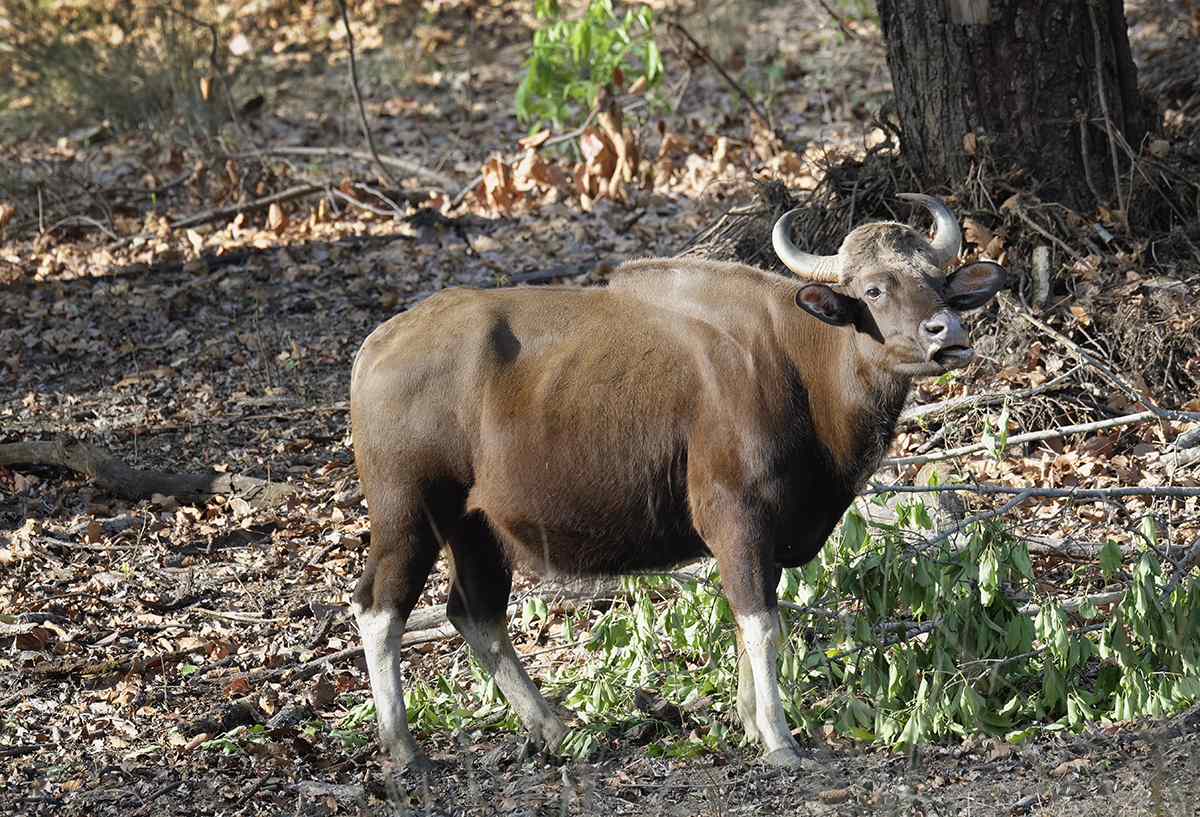
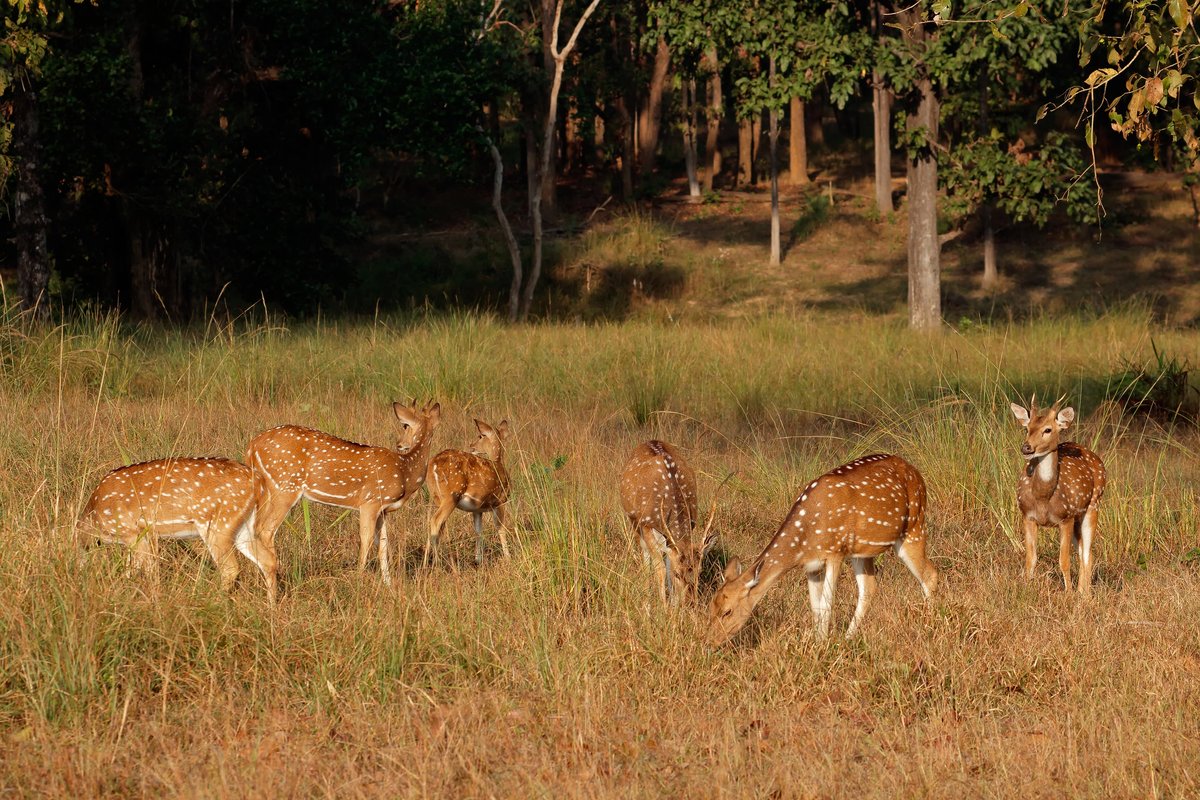
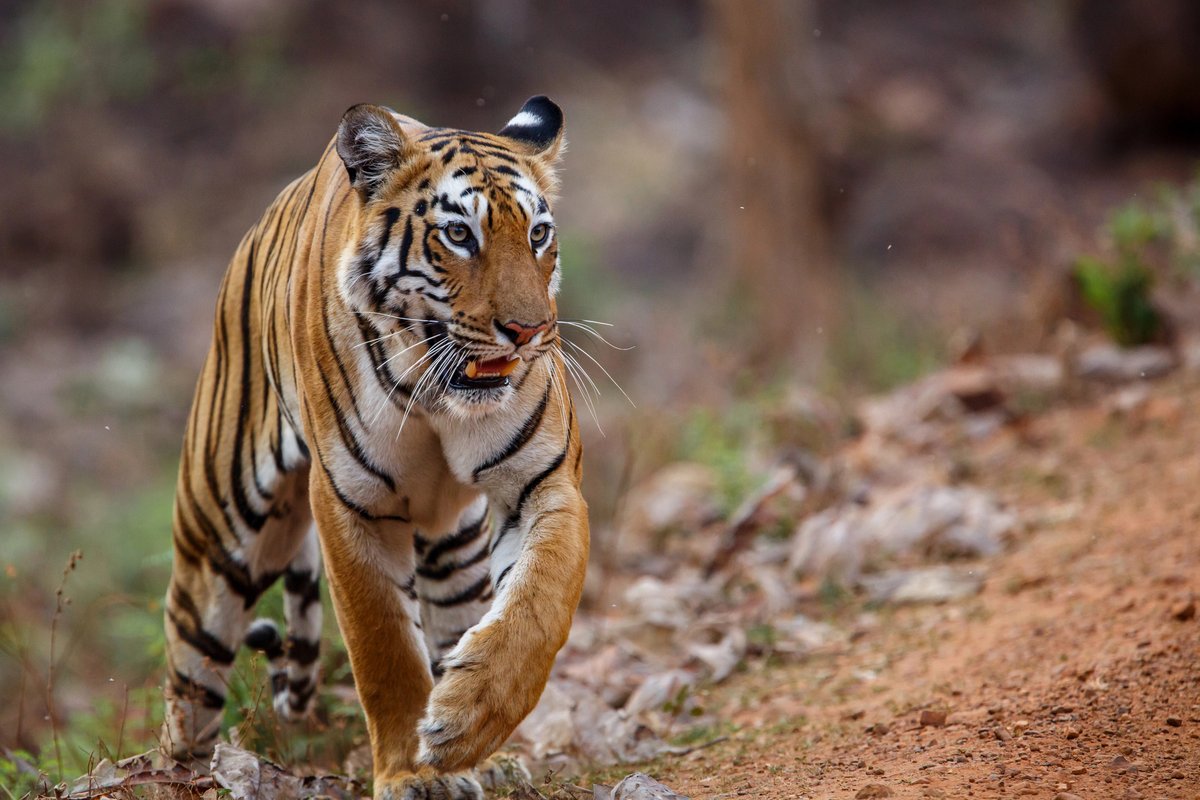
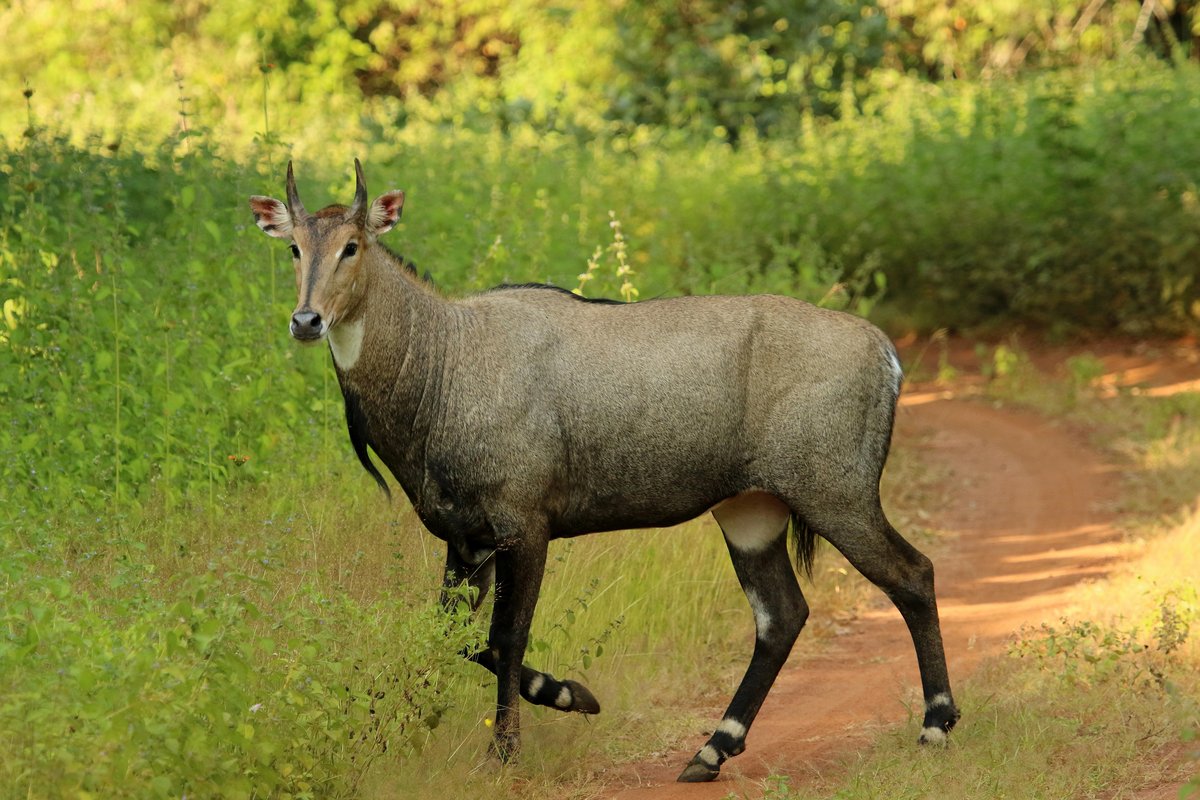
58 Nights/ 59 DaysPrivate tour with car & driverDelhi to Kanyakumari by roadJeep safaris in six national parks
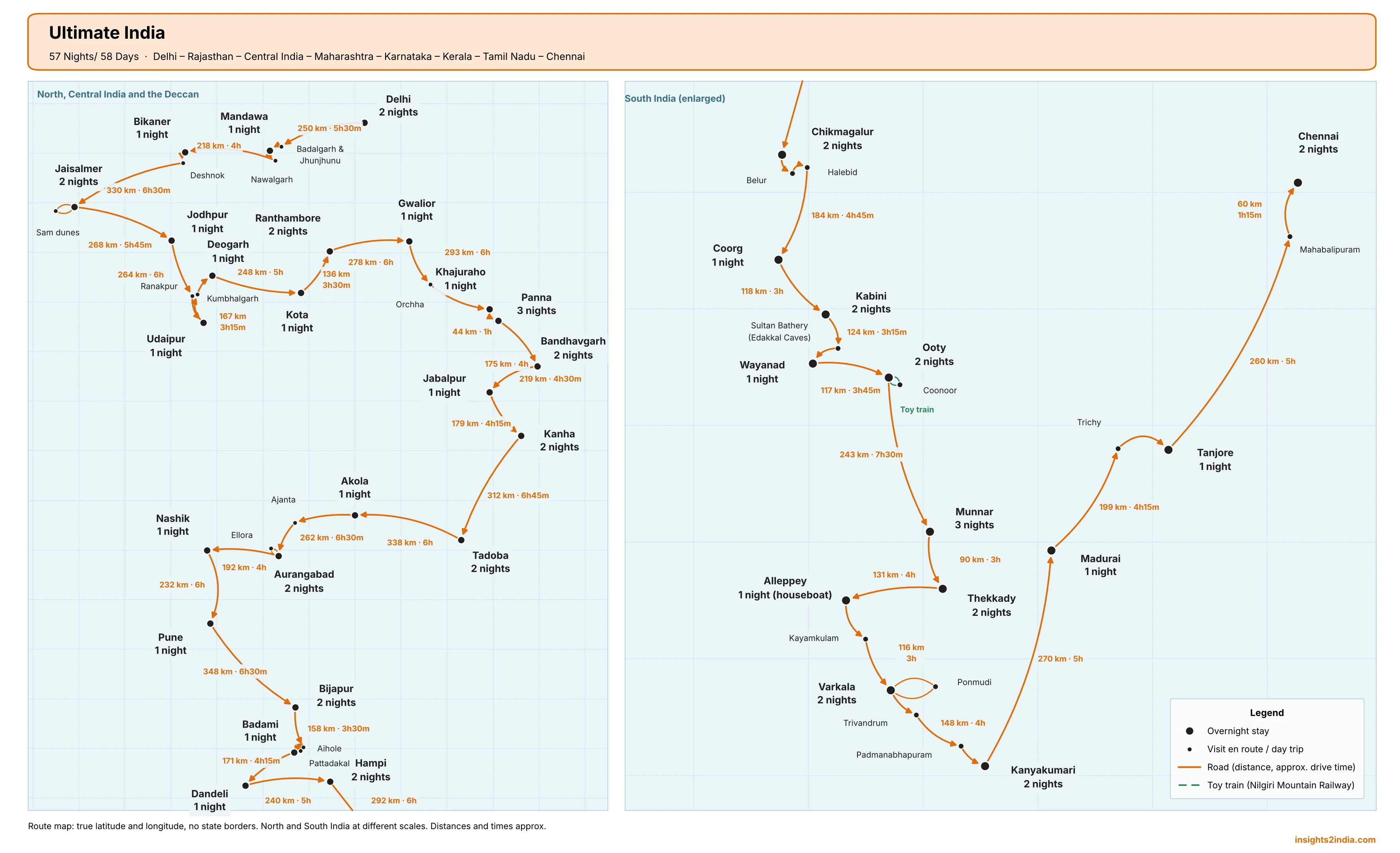
Our longest and most complete journey, travelling by road from Delhi to the southern tip of India. Begin among the painted havelis of Shekhawati, then cross the Thar Desert to Bikaner and the golden city of Jaisalmer, continuing to Jodhpur, Udaipur, the hilltop palace of Deogarh and Kota. Head into the heart of India for tiger safaris in Ranthambore, Panna, Bandhavgarh, Kanha and Tadoba, with the fort of Gwalior, medieval Orchha, the temples of Khajuraho and the Marble Rocks of Jabalpur along the way.
Cross the Deccan to the cave temples of Ajanta and Ellora, Nashik and Pune, then the domes of Bijapur, the Chalukyan temples of Badami, Aihole and Pattadakal, and the ruins of Hampi. Climb into the coffee hills of Chikmagalur and Coorg, the forests of Kabini and Wayanad, and the hill stations of Ooty and Munnar, before Kerala’s spice hills, backwaters and cliffs, Kanyakumari and the great temples of Madurai, Trichy, Tanjore and Mahabalipuram, ending in Chennai. Every tour is private and can be tailored to your dates, hotels and interests.
Tour highlights
New and Old Delhi, and the painted havelis of Shekhawati
Jaisalmer Fort and a sunset camel ride on the Sam dunes
Mehrangarh Fort, Ranakpur and Lake Pichola in Udaipur
Kumbhalgarh Fort and a night in the palace of Deogarh
Jeep safaris in Ranthambore, Panna, Bandhavgarh, Kanha, Tadoba and Nagarhole
Gwalior Fort, Orchha, the temples of Khajuraho and the Marble Rocks of Bhedaghat
The cave temples of Ajanta and Ellora
Gol Gumbaz, Bijapur, and the temples of Badami, Aihole and Pattadakal
The ruins of Hampi and the Hoysala temples of Belur and Halebid
The Nilgiri Mountain Railway, the tea hills of Munnar and Periyar in Thekkady
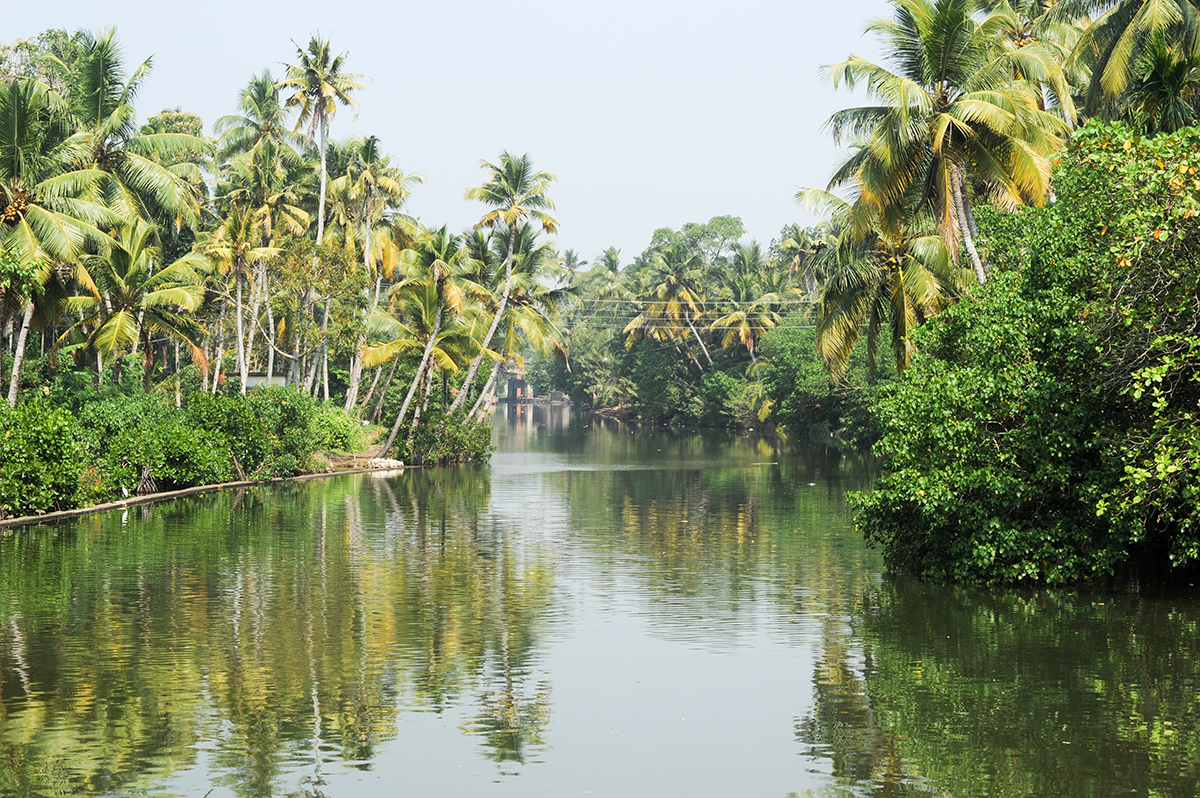
A night on a houseboat on the backwaters of Alleppey
Kanyakumari, the Meenakshi Temple, Madurai, and the Big Temple of Tanjore
Route Map (click to enlarge)
Day-by-day itinerary
Day 1
Arrive Delhi
Welcome to India! On arrival at Delhi's Indira Gandhi International Airport, our representative meets you after customs and escorts you to your hotel. The rest of the day is free to rest after your journey.
Overnight: DelhiVehicle: airport transfer onlyPlease note: this tour works best arriving on a Thursday, so that the Ajanta Caves (closed on Mondays), the Ellora Caves (closed on Tuesdays), Tadoba (closed on Tuesdays), the Madhya Pradesh parks (closed on Wednesday afternoons), the palaces of Kerala and Padmanabhapuram (closed on Mondays) and Fort St George in Chennai (closed on Fridays) are open on the days we visit; other arrival days can be arranged with small changes
Day 2
Delhi – New Delhi and Old Delhi
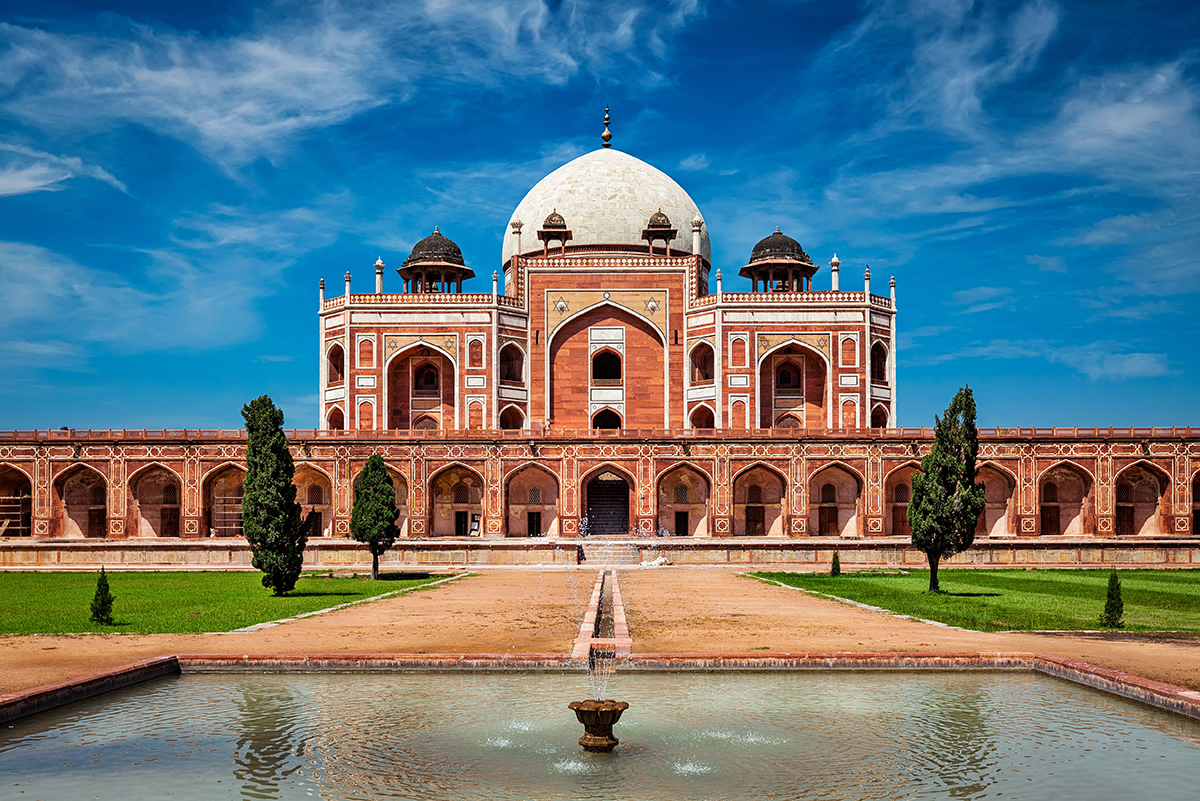
Photo: humayuns-tomb-delhi.jpg
Humayun's Tomb, Delhi
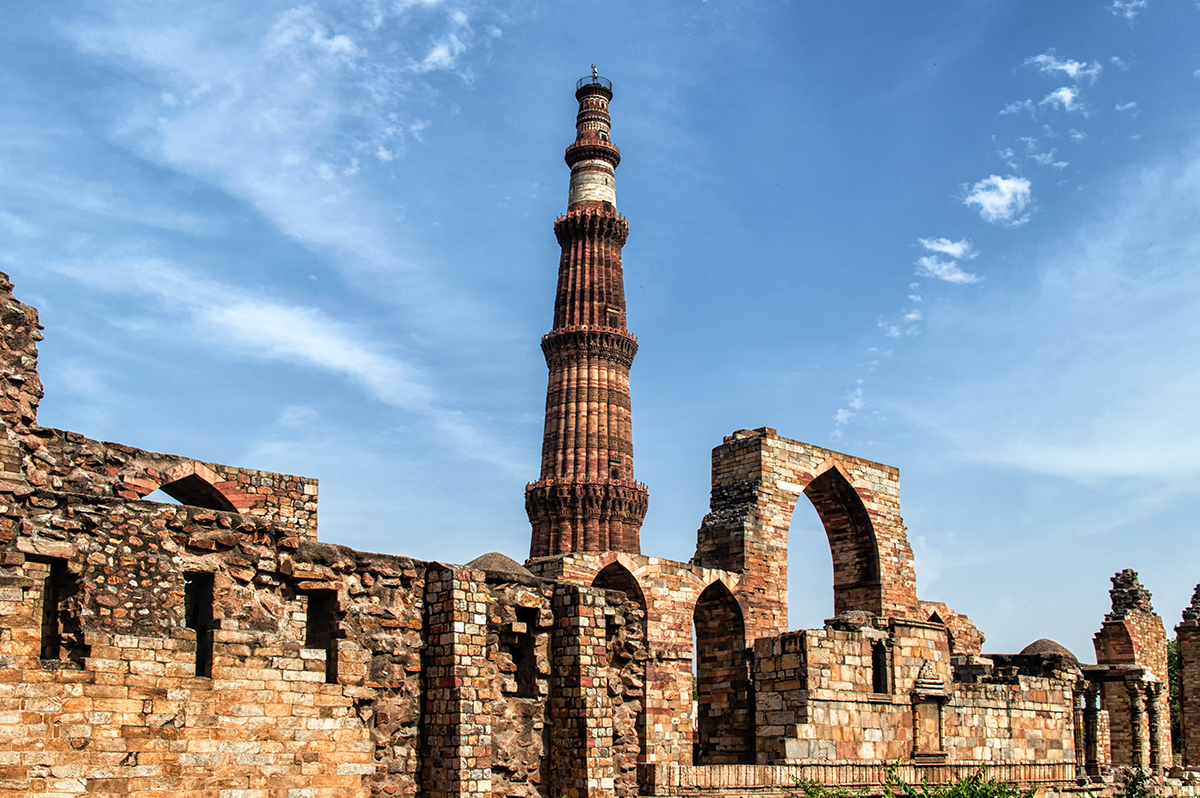
Photo: qutub-minar-delhi.jpg
Qutub Minar, Delhi
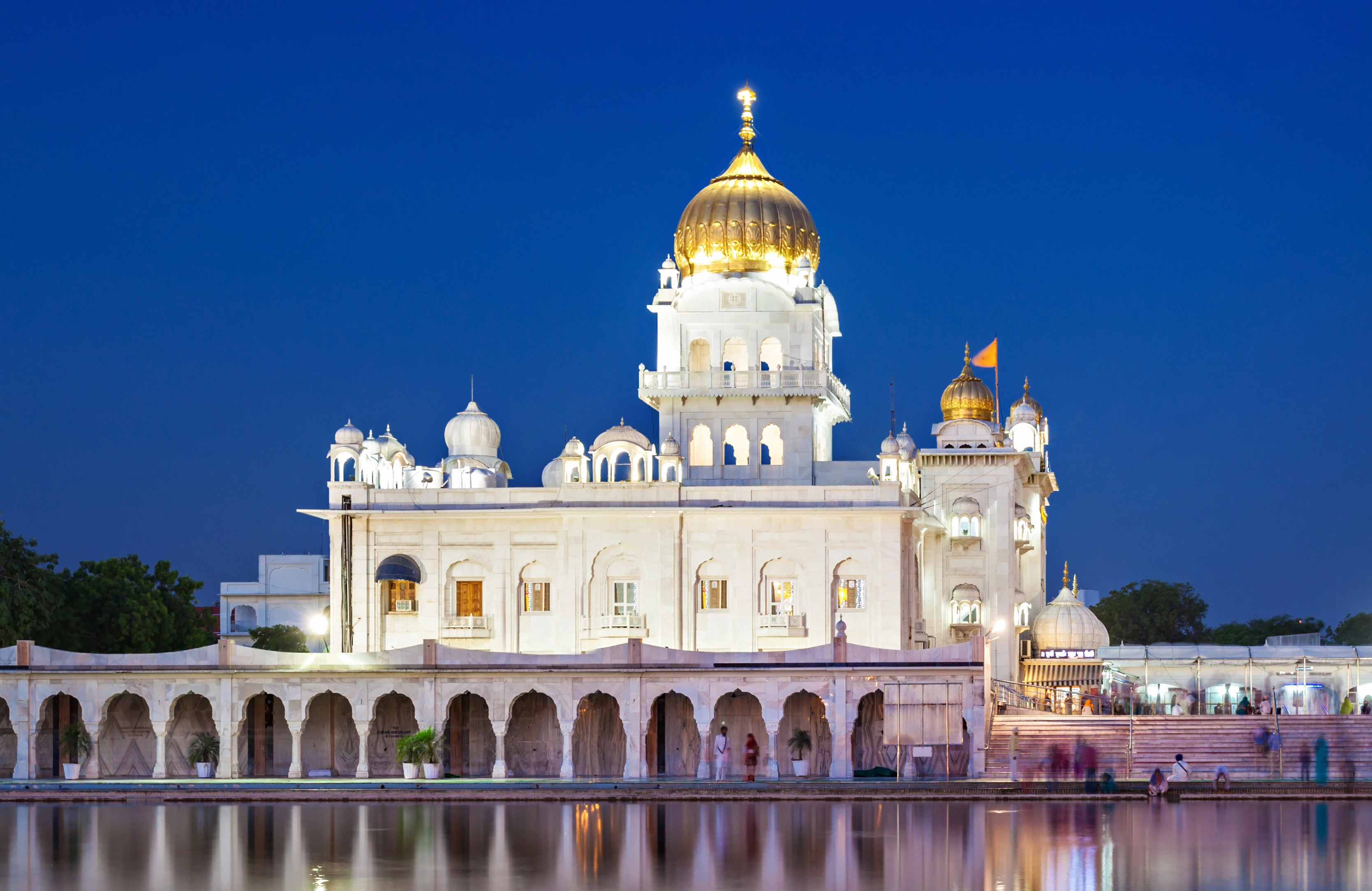
Photo: gurdwara-bangla-sahib-delhi.jpg
Gurdwara Bangla Sahib, Delhi
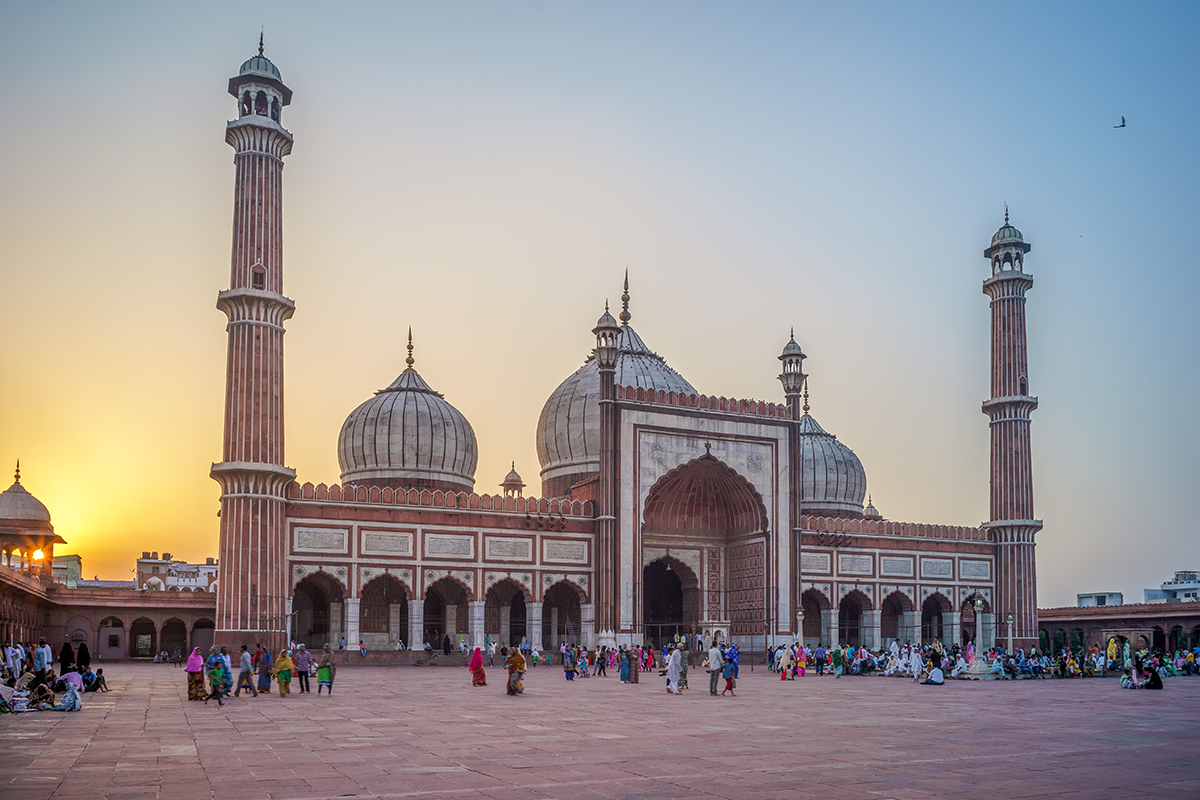
Photo: jama-masjid-delhi.jpg
Jama Masjid, Delhi
A full day with your guide exploring two very different Delhis. The morning is spent in New Delhi. Visit Humayun's Tomb, the 16th-century garden tomb that inspired the Taj Mahal, and the soaring Qutub Minar, a 73-metre tower begun in the 12th century. Drive along Kartavya Path past India Gate, Rashtrapati Bhavan and the Parliament buildings of Lutyens' Delhi.
Then visit Gurdwara Bangla Sahib, Delhi's most important Sikh shrine, with its golden dome and sacred pool. Here you can see the langar, the community kitchen where volunteers prepare free meals for thousands of visitors every day, whatever their faith. Please cover your head and remove your shoes before entering.
In the late afternoon and evening, discover Old Delhi, the walled city of Shahjahanabad built by the Mughal emperor Shah Jahan. Stop at Raj Ghat, the memorial to Mahatma Gandhi, then see the Red Fort (from outside), with its massive red sandstone walls. Visit Jama Masjid, one of India's largest mosques, then board a cycle rickshaw for a ride through the lanes of Chandni Chowk, alive in the evening with spice sellers, sweet shops and centuries-old havelis.
Leave Delhi after breakfast and drive west into Shekhawati, the semi-desert region of northern Rajasthan often called the world's largest open-air art gallery (265 km, about 6 hours). In the 18th and 19th centuries, wealthy Marwari merchant families built grand havelis here and covered them, inside and out, with colourful frescoes.
Arrive in Mandawa, a small town founded by the Shekhawat rulers in 1755, and check in to your hotel. The rest of the day is free to relax.
Overnight: MandawaDrive: about 265 km
Day 4
Mandawa, Mukundgarh, Dundlod and Nawalgarh – the painted havelis
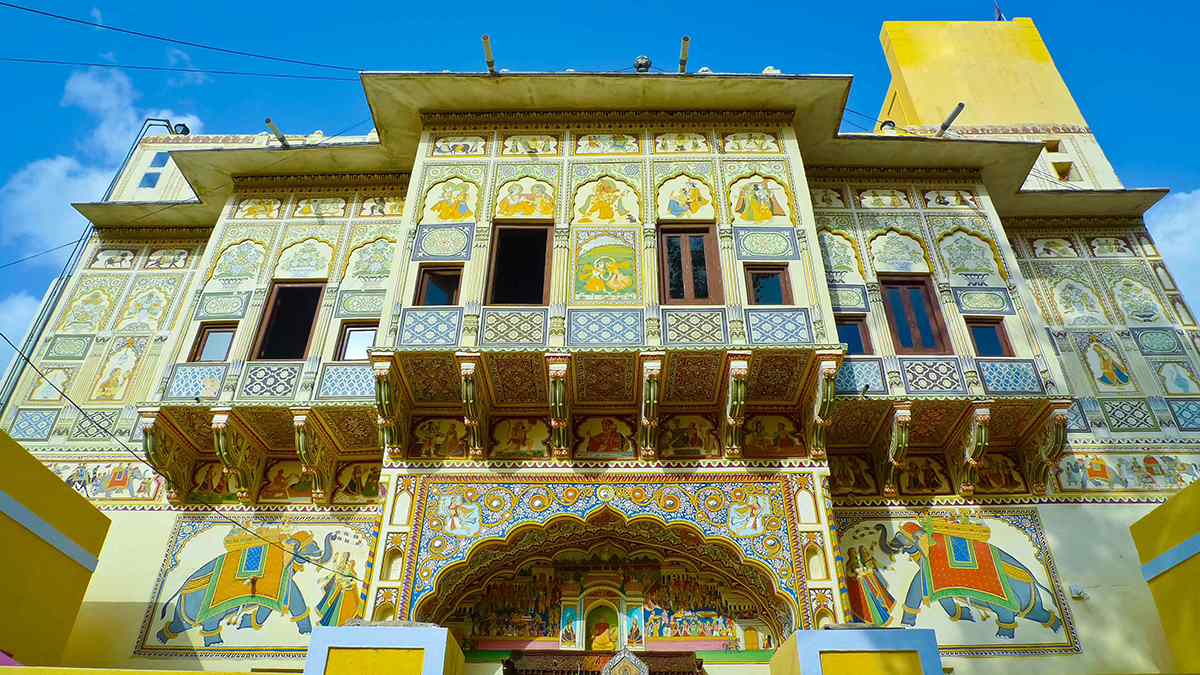
Photo: mandawa-haveli.jpg
Painted Haveli, Mandawa
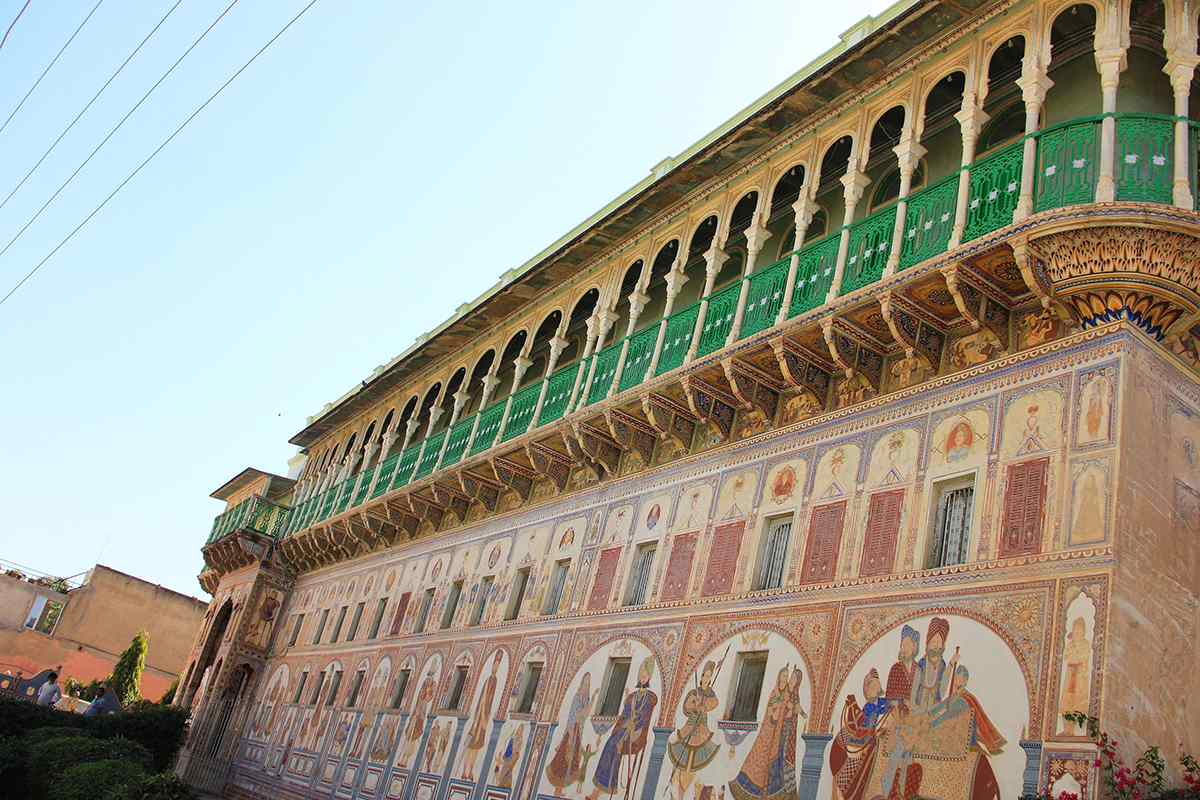
Photo: nawalgarh-haveli.jpg
Painted Haveli, Nawalgarh
Spend the morning on a guided walk through the lanes of Mandawa, where almost every wall tells a story. The frescoes show gods and goddesses, scenes from the epics, Rajput battles and royal processions, and, in later havelis, delightful glimpses of the modern world that fascinated the merchants: trains, motor cars, aeroplanes and gramophones. Among the finest are the Gulab Rai Ladia Haveli, the Goenka Double Haveli with its painted elephants and horses, and the murals on the Naveti Haveli.
In the afternoon, explore the painted towns nearby. At Mukundgarh, the sprawling fort, now a hotel, has spacious courtyards, overhanging balconies and huge ramparts, and the havelis of the town are painted with mythological stories, historical events and social satire, with a touch of European style that arrived with the British. Continue to the small village of Dundlod, whose fort was built in 1750; the wealthy Goenka merchant family settled here, and their prosperity shows in their richly painted havelis and the beautiful chhatri of Ram Dutt Goenka.
End the day in Nawalgarh, another town rich in painted havelis. Visit the beautifully restored Dr. Ramnath A. Podar Haveli Museum and the Morarka Haveli, whose murals have kept their bright original colours, before returning to Mandawa.
Overnight: MandawaIncludes: guide, car, heritage walk
Day 5
Mandawa to Bikaner
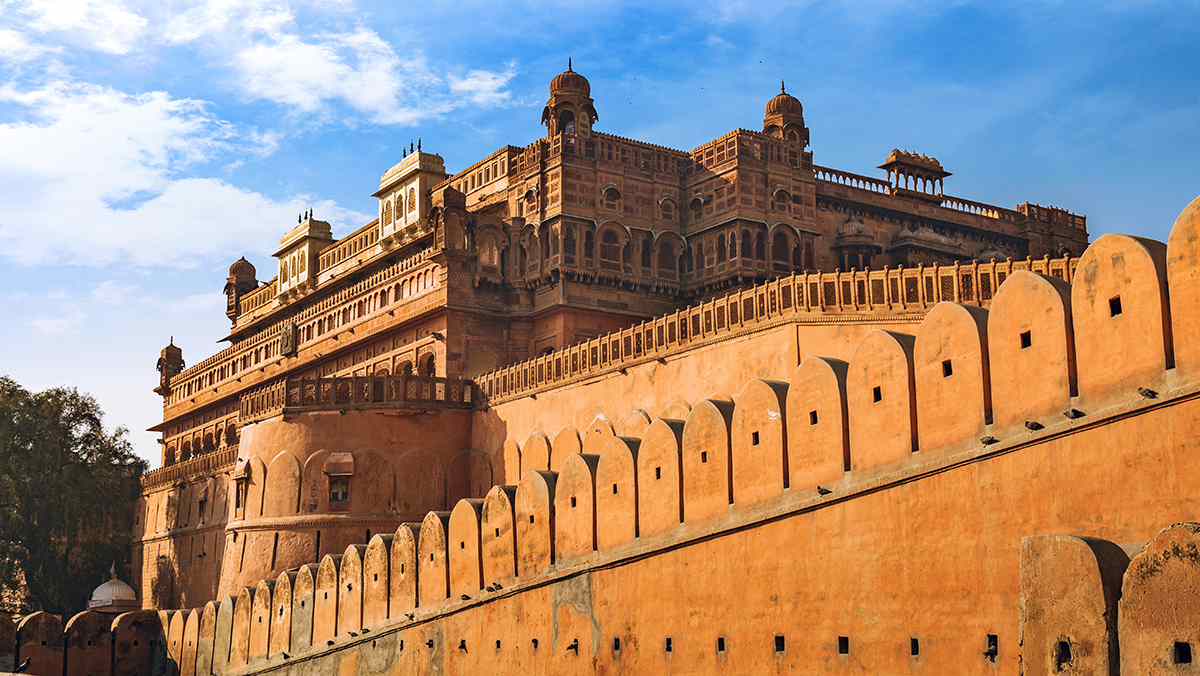
Photo: junagarh-fort-bikaner.jpg
Junagarh Fort, Bikaner
Drive to Bikaner (190 km, about 4 hours). If ever beauty has bloomed in a desert, it has been at Bikaner. Founded in 1488 AD by Rao Bika Ji, it is a city of imposing palaces and richly sculptured temples of red and yellow sandstone.
In the afternoon, visit Junagarh Fort, an unassailable fortress that has never been conquered. Built in 1593 by Raja Rai Singh, one of the most distinguished generals in the army of Emperor Akbar, it is encircled by a moat. Inside are magnificent palaces such as the Anup Mahal, Ganga Niwas and Rang Mahal, and the Har Mandir, the temple of the royal family. Later, visit the Bhandasar Jain Temple, the oldest existing building in Bikaner, carved in red sandstone and white marble and famous for its mirror work, frescoes and gold-leaf paintings.
Overnight: BikanerDrive: about 190 kmIncludes: guide, car
Day 6
Bikaner to Jaisalmer via Deshnok
Photo: karni-mata-temple-deshnok.jpg
Karni Mata Temple, Deshnok
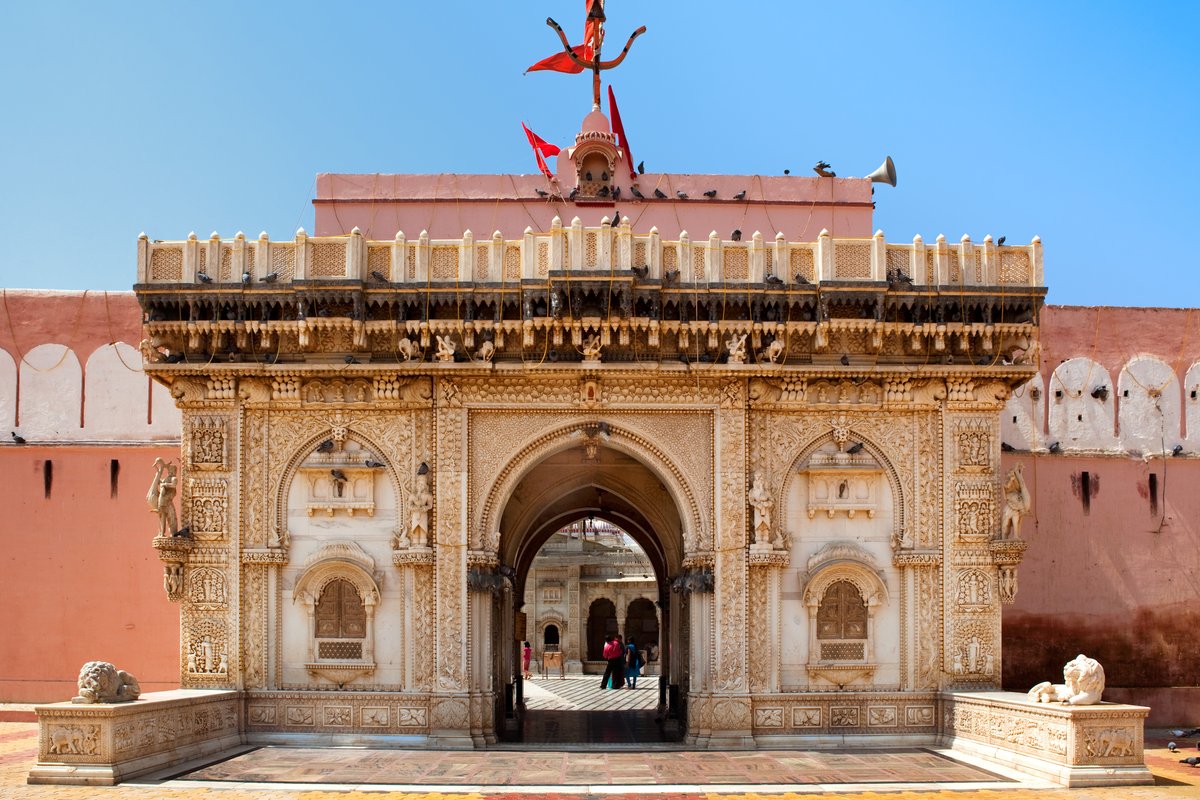
Leave Bikaner after breakfast and stop at Deshnok (33 km) to visit the Karni Mata Temple, dedicated to a 15th-century mystic considered an incarnation of the goddess Durga. Built by Maharaja Ganga Singh in the early 20th century, its entrance is lavishly decorated with sculptured marble panels, delicately worked doorways and silver doors. The temple is famous for the many rats that live here and are revered by pilgrims as the souls of Karni Mata's devotees.
Continue across the Thar Desert to Jaisalmer (about 300 km, 6 hours), the golden city that rises like a mirage from the sands, and check in to your hotel.
Overnight: JaisalmerDrive: about 330 km
Day 7
Jaisalmer – the Golden City and the dunes of Sam
Photo: jaisalmer-fort.jpg
Jaisalmer Fort, Jaisalmer
Photo: patwon-ki-haveli-jaisalmer.jpg
Patwon Ki Haveli, Jaisalmer
Photo: sam-sand-dunes-jaisalmer.jpg
Sam Sand Dunes, Jaisalmer
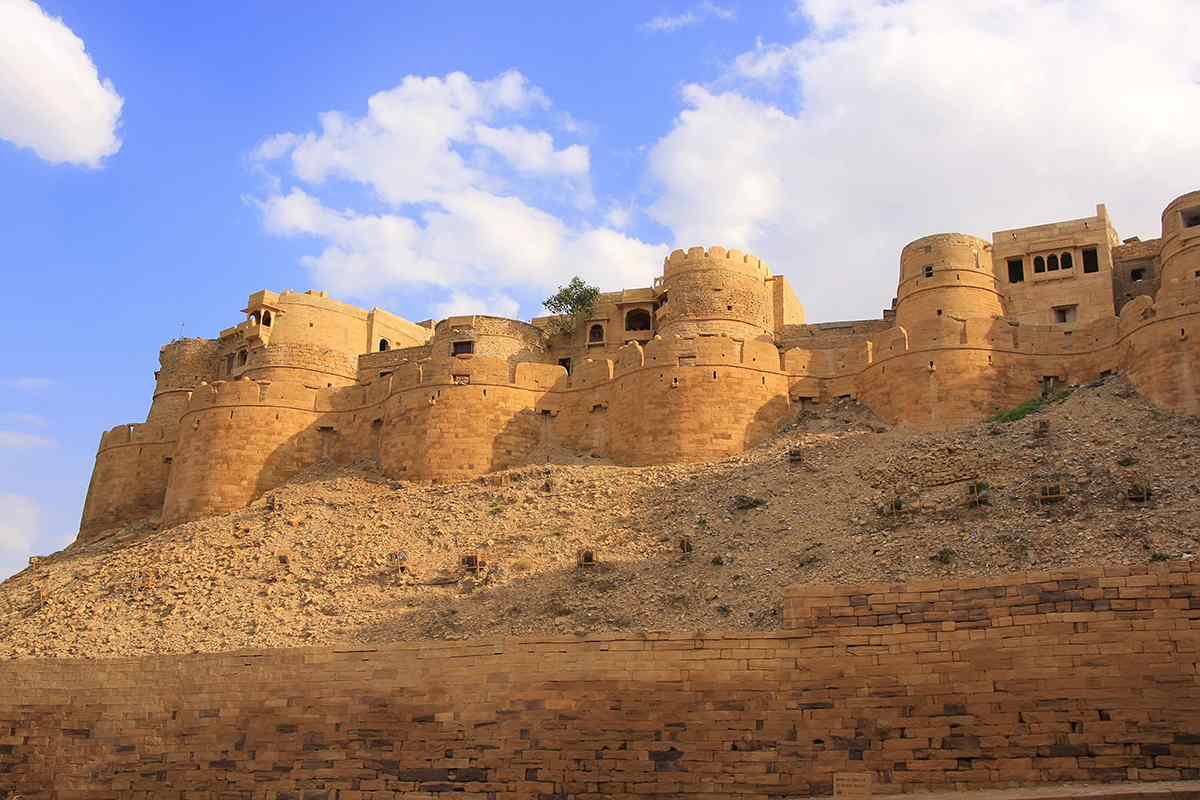
Jaisalmer lies in the heart of the Thar Desert, a city steeped in colour and rich tradition that was once a major centre on the trading route between India and the west. Visit Jaisalmer Fort, the only living fort in India, which houses a whole township within its golden ramparts. It has an enchanting web of narrow lanes dotted with exquisite havelis, three beautifully sculpted Jain temples from the 12th to 15th centuries and five interconnected palaces; at its centre is the Raj Mahal, now the Fort Palace Museum.
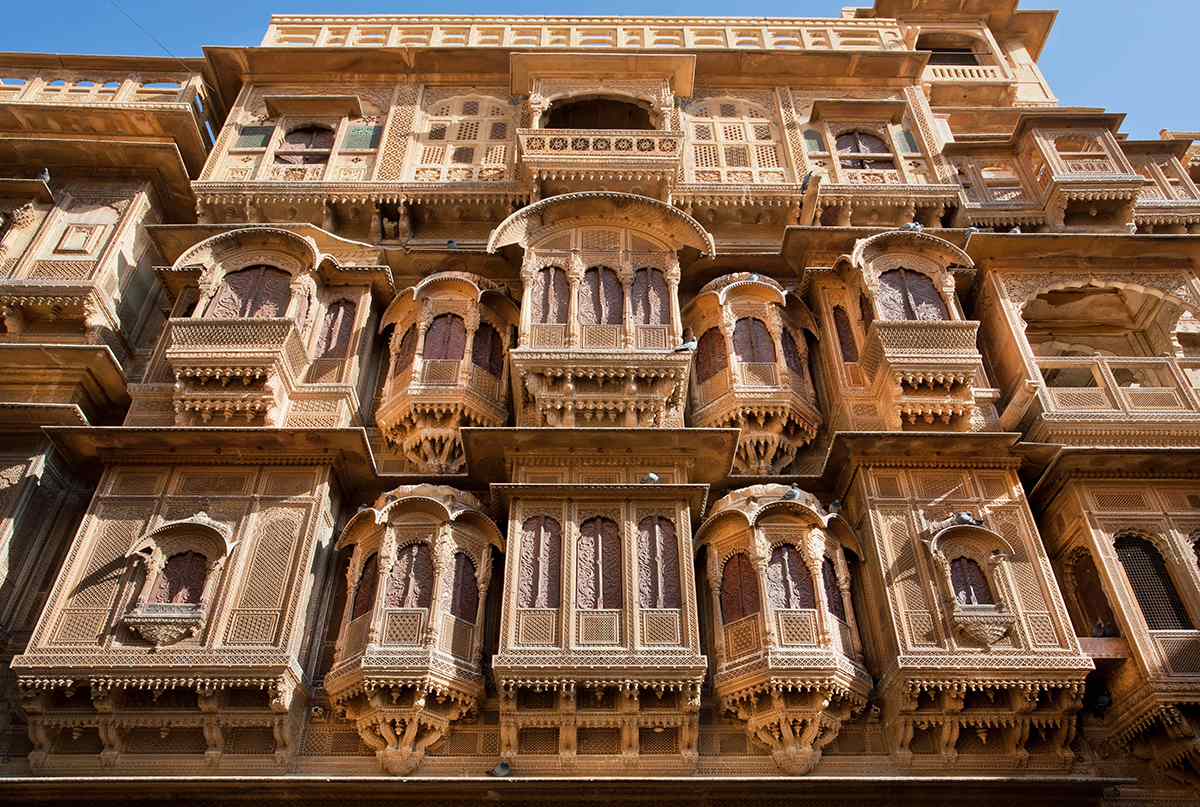
Visit Salim Singh ki Haveli, built around 300 years ago, and Patwon ki Haveli, the largest and most elaborate mansion of its kind in Jaisalmer, followed by Nathmal ki Haveli, a grand mansion that blends Rajput and Islamic architecture. Later, drive past the beautiful Gadisar Lake, built in the 14th century, with temples and shrines along its banks.
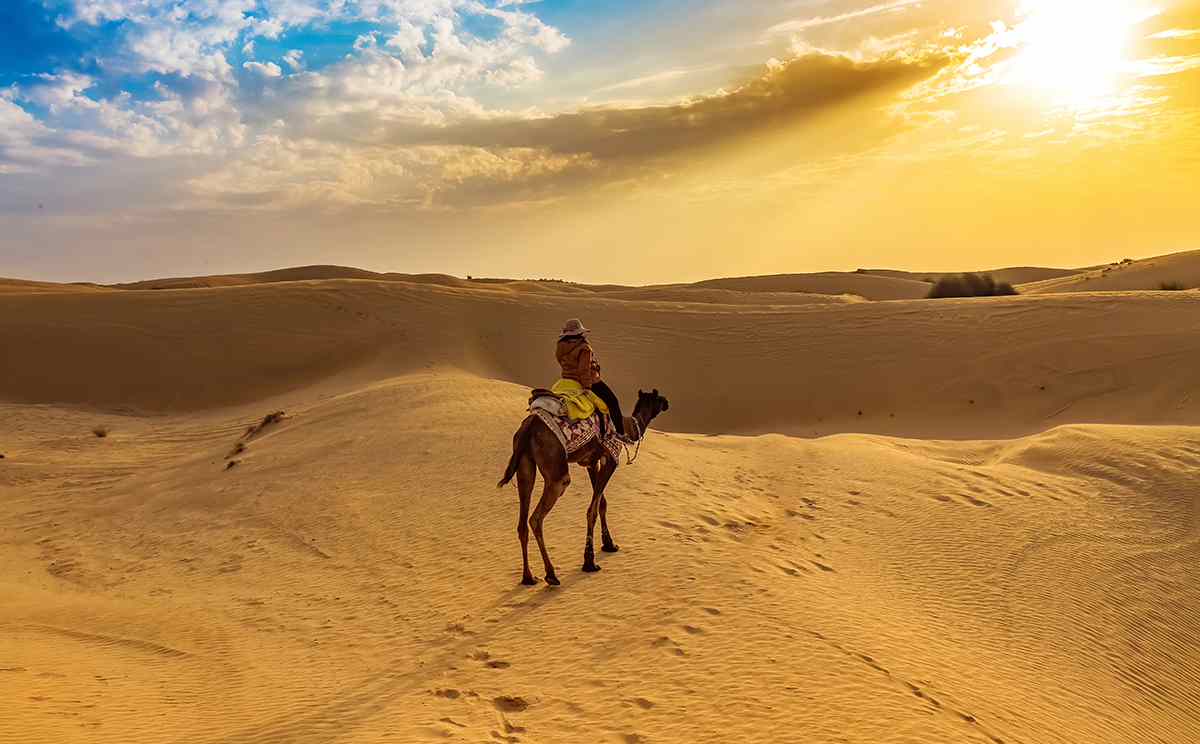
In the late afternoon, drive to the Sam Sand Dunes (40 km, about 1 hour) and enjoy a camel ride across the dunes to watch the sun set over the desert.
Leave Jaisalmer early and drive across the desert to Jodhpur (about 268 km, 5 hours 45 minutes), the Blue City, founded in 1459 by Rao Jodha, chief of the Rathore clan. Check in to your hotel.
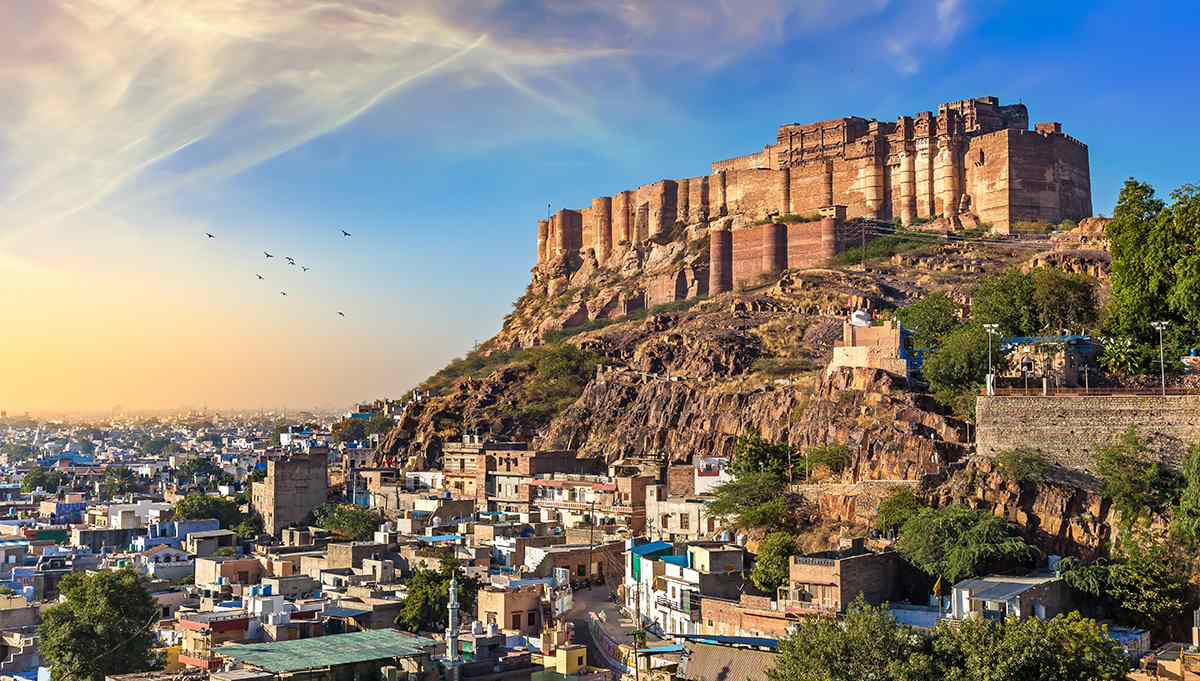
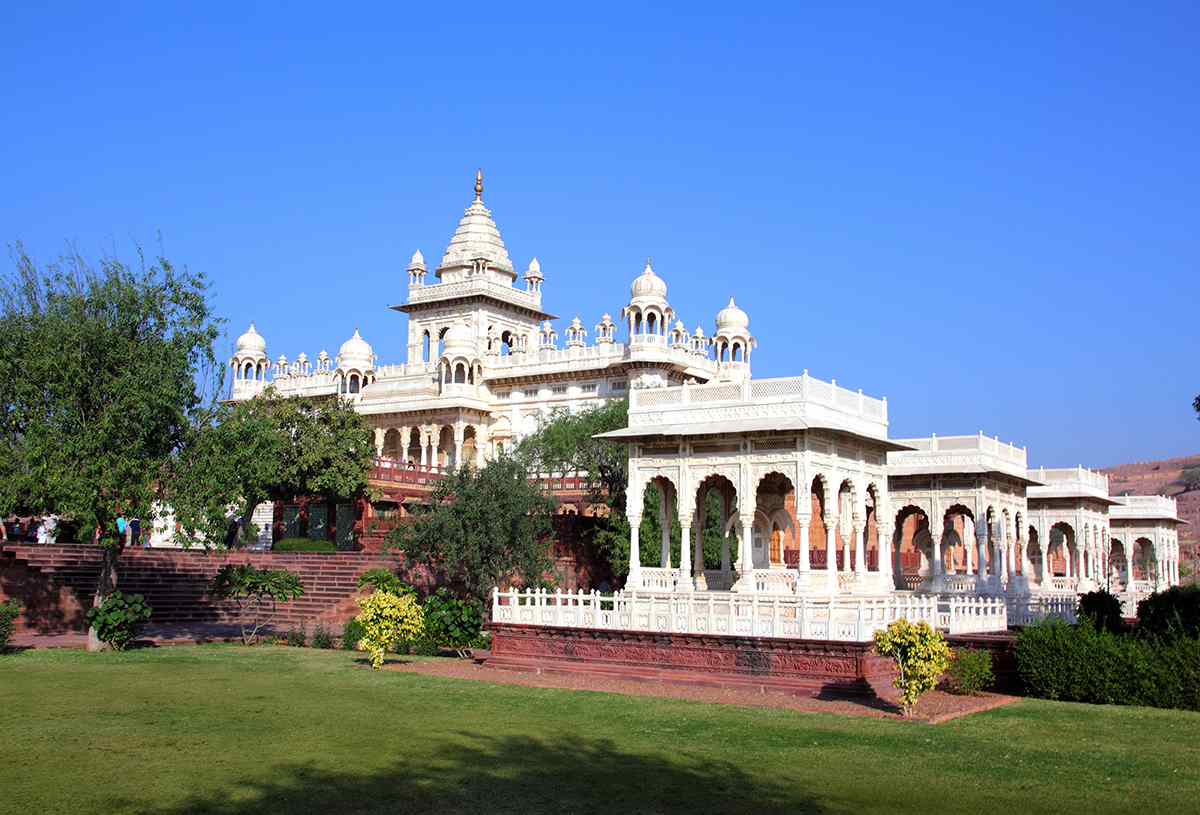
In the afternoon, visit Mehrangarh Fort, one of the largest forts in India. Built around 1460, it stands 125 m above the city, enclosed by imposing thick walls, and its palaces are known for their intricate carvings and spacious courtyards; the museum holds royal palanquins, armour and miniature paintings. From its ramparts the old city spreads out below in shades of blue. Nearby stands Jaswant Thada, a cenotaph built in 1899 of marble sheets so thin and polished that they glow warmly in the sun. Later, see Toorji ka Jhalra, a stepwell built around 1740 by a queen of Marwar, its rose-red sandstone walls carved with dancing elephants, lions and niches for deities, and end the day among the colourful stalls of Sardar Market around the century-old Clock Tower.
Overnight: JodhpurDrive: about 268 kmIncludes: guide, car
Day 9
Jodhpur to Udaipur via Ranakpur
Photo: ranakpur-jain-temple.jpg
Ranakpur Jain Temple
Photo: udaipur-city-palace.jpg
City Palace, Udaipur
Photo: boat-ride-lake-pichola.jpg
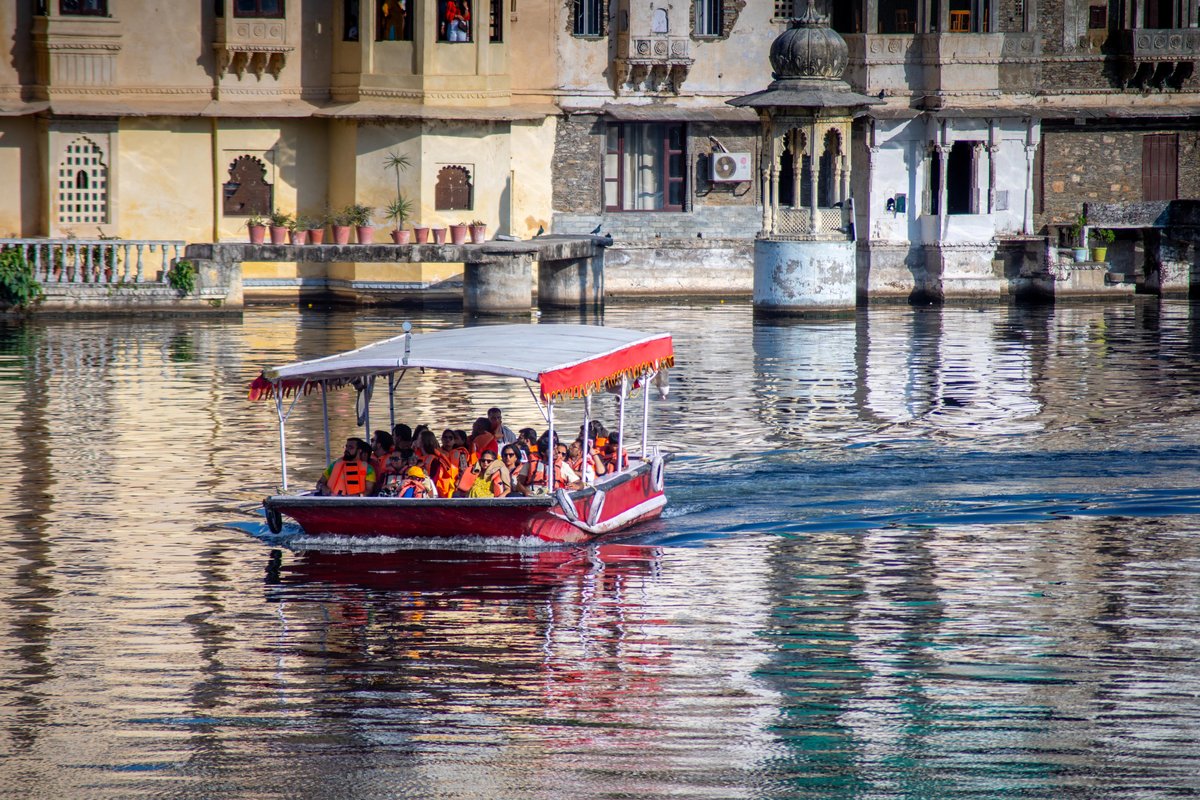
Boat ride on Lake Pichola, Udaipur
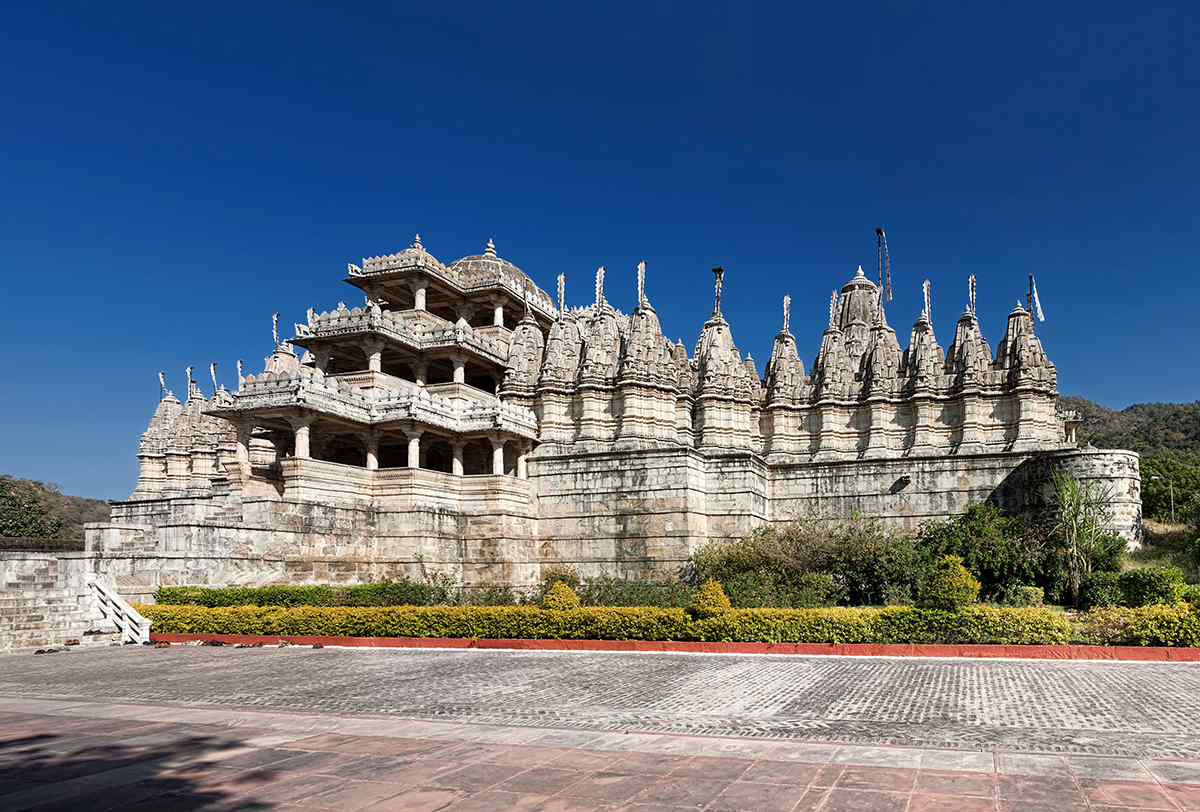
Drive south through the Aravalli hills to Ranakpur, home to one of the finest Jain temples in India. Built in the 15th century from pale marble, the Chaumukha Temple is famous for its 1,444 intricately carved pillars, no two of which are alike. Explore it at your own pace with an audio guide.
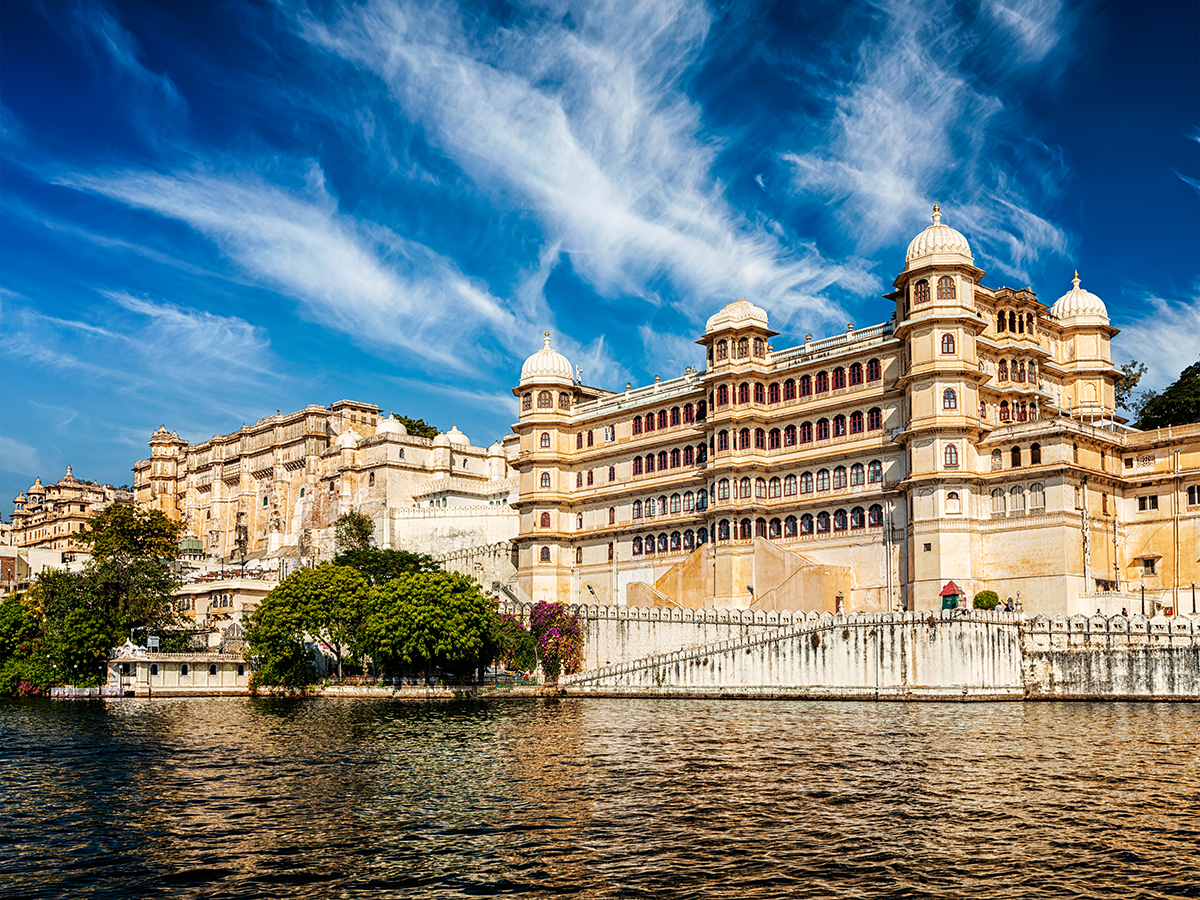
Continue to Udaipur, the City of Lakes, founded by Maharana Udai Singh II in the 16th century, and check in to your hotel. Later, visit the vast City Palace, a complex of courtyards, balconies and towers overlooking the lake, and the Jagdish Temple with its finely carved stonework. Stroll through Saheliyon-ki-Bari, the Garden of the Maidens, with its fountains, lotus pools and marble elephants.
In the late afternoon, enjoy a boat ride on Lake Pichola, gliding past bathing ghats, the white Lake Palace and the island palace of Jag Mandir as the city glows in the setting sun.
Overnight: UdaipurDrive: about 264 kmIncludes: guide, car, boat ridePlease note: the Ranakpur temple is open to visitors from 12 noon
Day 10
Udaipur to Deogarh via Kumbhalgarh
Photo: kumbhalgarh-fort.jpg
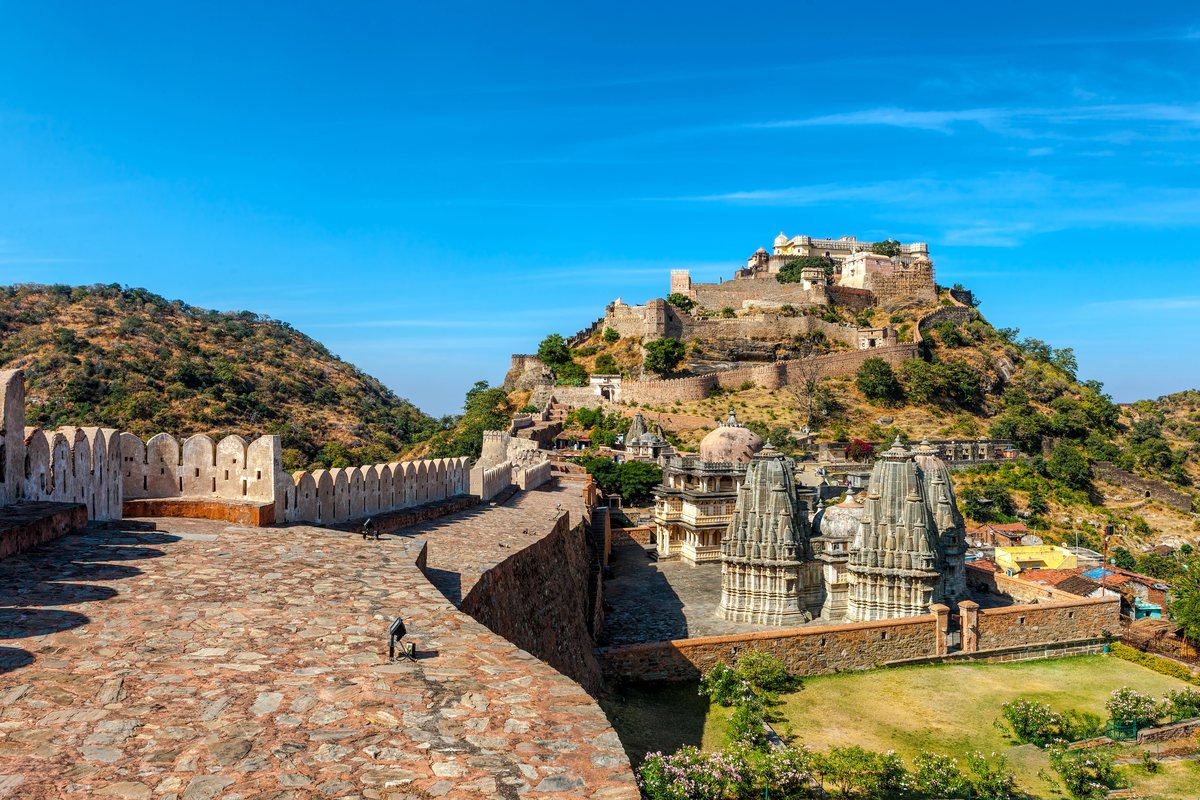
Kumbhalgarh Fort
Leave early and drive into the Aravalli hills to Kumbhalgarh (about 85 km, 1 hour 45 minutes). Built in the 15th century by Rana Kumbha and set at about 1,100 metres, the fort witnessed many battles but was conquered only once. Its massive walls run for some 36 km over the hills, enclosing palaces, temples, fields and cenotaphs.
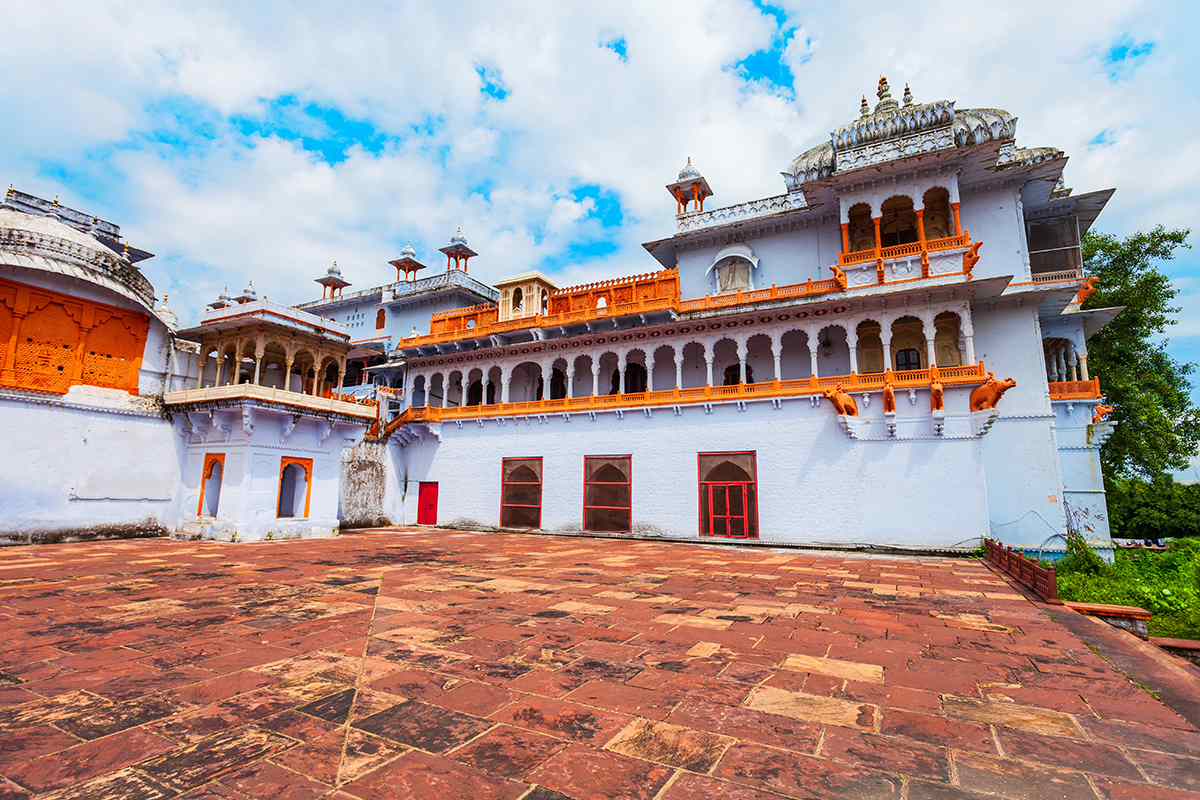
Continue to Deogarh (about 82 km, 1 hour 30 minutes) and check in to Deogarh Mahal, the 17th-century hilltop palace of the Rawats of Deogarh, one of the sixteen senior noble families of the Mewar court. Spend the afternoon exploring the palace, with its courtyards, painted rooms, balconies and views over the lakes and the town below.
Overnight: DeogarhDrive: about 167 kmIncludes: guide in Kumbhalgarh, car
Day 11
Deogarh to Kota
Photo: city-palace-kota.jpg
City Palace, Kota
Drive east to Kota (about 248 km, 5 hours), set on the banks of the Chambal river, and check in to your hotel.
In the afternoon, visit the City Palace of Kota, the capital of the Hada Rajput rulers, set within the old fort above the Chambal. Its Rao Madho Singh Museum displays royal arms, silver and fine miniature paintings of the Kota school, famous for their lively hunting scenes. Nearby, on Kishore Sagar lake, stands Jag Mandir, a charming island palace.
Overnight: KotaDrive: about 248 kmIncludes: guide, car
Day 12
Kota to Ranthambore
Drive to Ranthambore (about 136 km, 3 hours 30 minutes) and check in to your jungle lodge.
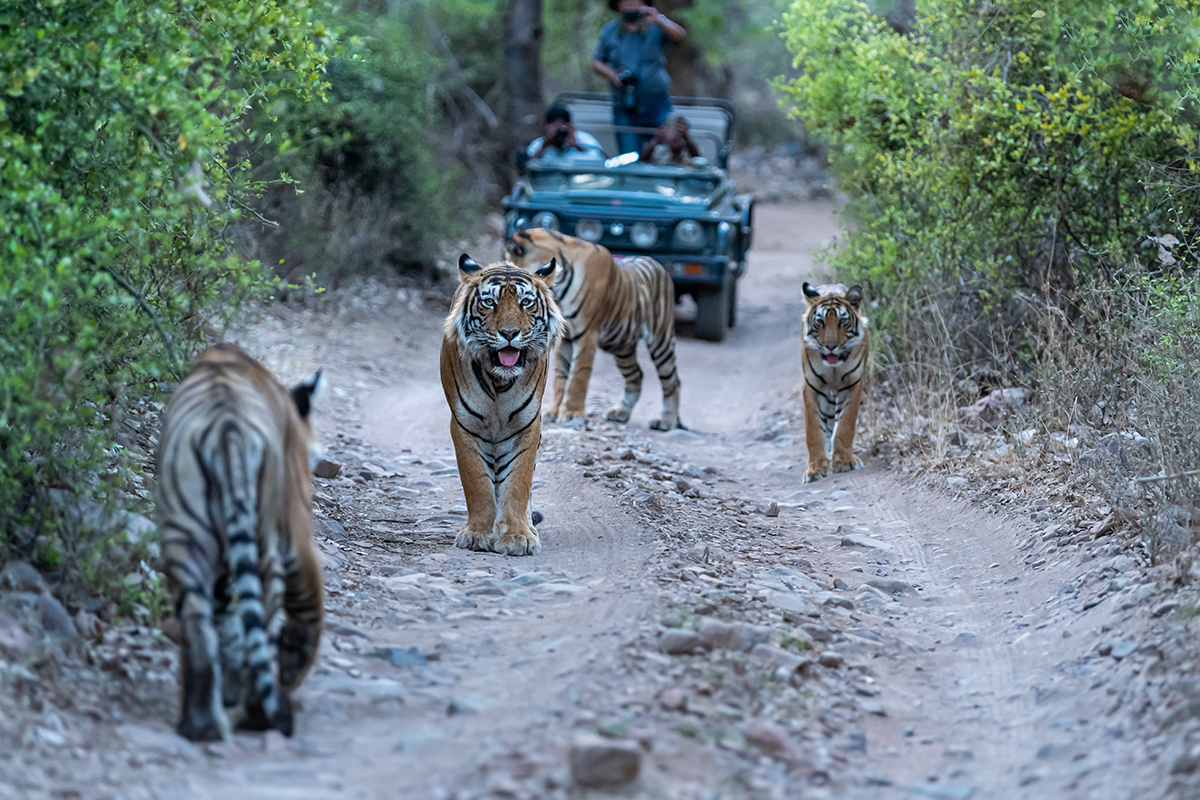
In the afternoon, set out on your first jeep safari in Ranthambore National Park, one of the best places in India to see the Bengal tiger in the wild. The park's dry forests, lakes and rocky ridges are also home to leopards, sloth bears, sambar and spotted deer, crocodiles and over 300 species of birds.
Overnight: RanthamboreDrive: about 136 kmIncludes: jeep safari with naturalist, all meals
Day 13
Ranthambore – tiger safaris
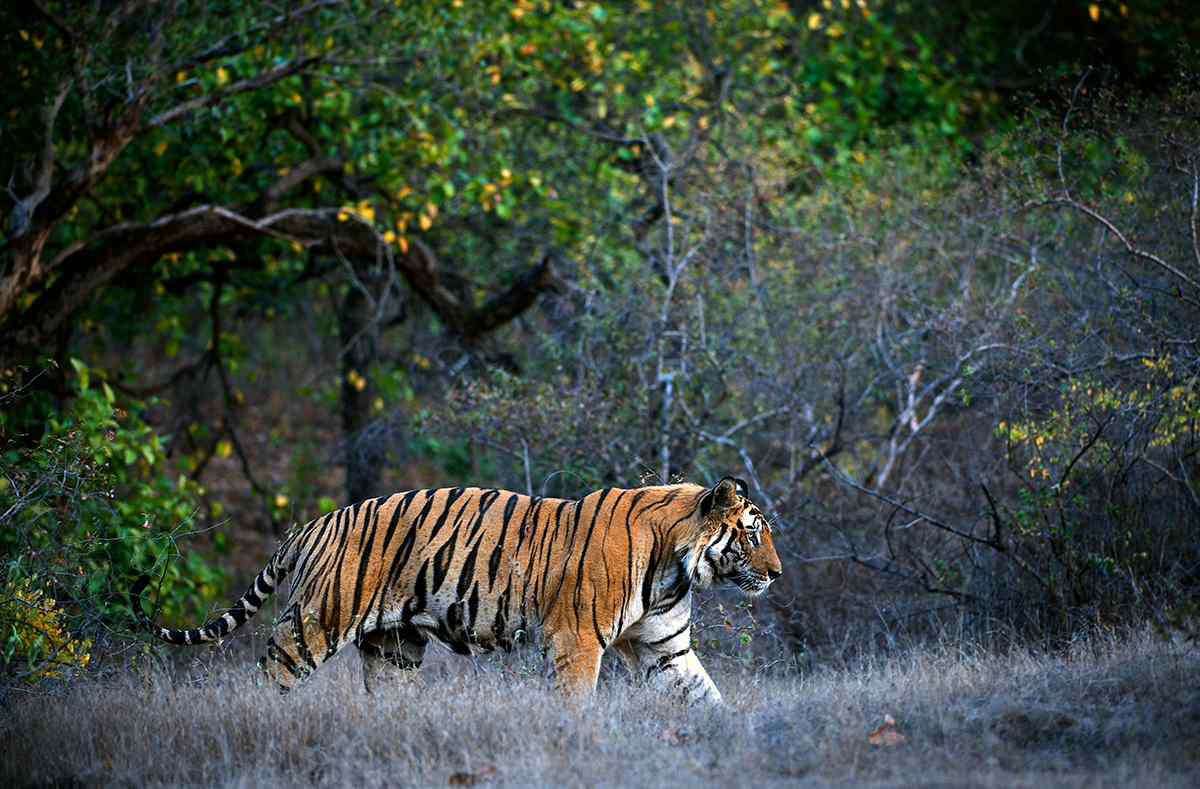
Photo: tiger-ranthambore.jpg
Tiger in Ranthambore National Park
Photo: ranthambore-fort.jpg
Ranthambore Fort, Ranthambore
Two more jeep safaris today, in the early morning and the afternoon, for the best chance to see a tiger.
Overlooking the park is the 10th-century Ranthambore Fort, a UNESCO World Heritage Site, whose ruined walls, gateways and temples rise from the jungle. Between safaris, relax at your hotel.
Overnight: RanthamboreIncludes: 2 jeep safaris with naturalist, all meals
Day 14
Ranthambore to Gwalior – the fort on the hill
Photo: gwalior-fort.jpg
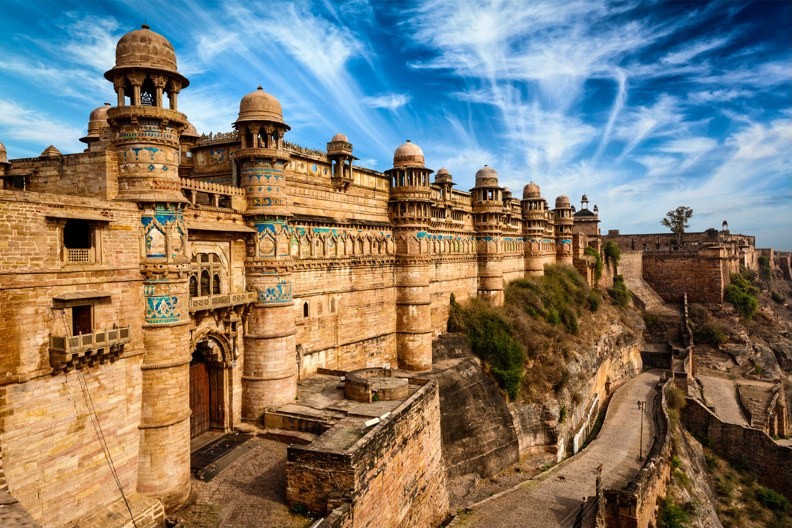
Gwalior Fort, Gwalior
Drive to Gwalior (about 278 km, 6 hours) and check in to your hotel.
In the afternoon, explore Gwalior Fort, which sprawls across a long sandstone ridge above the city, its turreted ramparts enclosing palaces, temples and water tanks. The finest of the palaces is the Man Singh Palace, built between 1486 and 1517 by the Tomar ruler Man Singh and known as the Painted Palace for the glazed tiles on its walls, with bands of turquoise, green and yellow showing tigers, elephants, peacocks and crocodiles.
On the south side of the plateau stands the 8th-century Teli-ka-Mandir, the oldest monument in the fort, with its tall, unusual vaulted roof. At the eastern edge, the two Sasbahu Temples, built late in the 11th century, look out over the city, and below the walls are huge rock-cut figures of the Jain tirthankaras, carved between the 7th and 15th centuries. Close to the Gwalior Gate, the Gujari Mahal, built by Man Singh for his beloved queen Mrignayani, now houses a museum of sculpture.
Overnight: GwaliorDrive: about 278 kmIncludes: guide, car
Day 15
Gwalior to Khajuraho via Orchha
Photo: jahangir-mahal-orchha.jpg
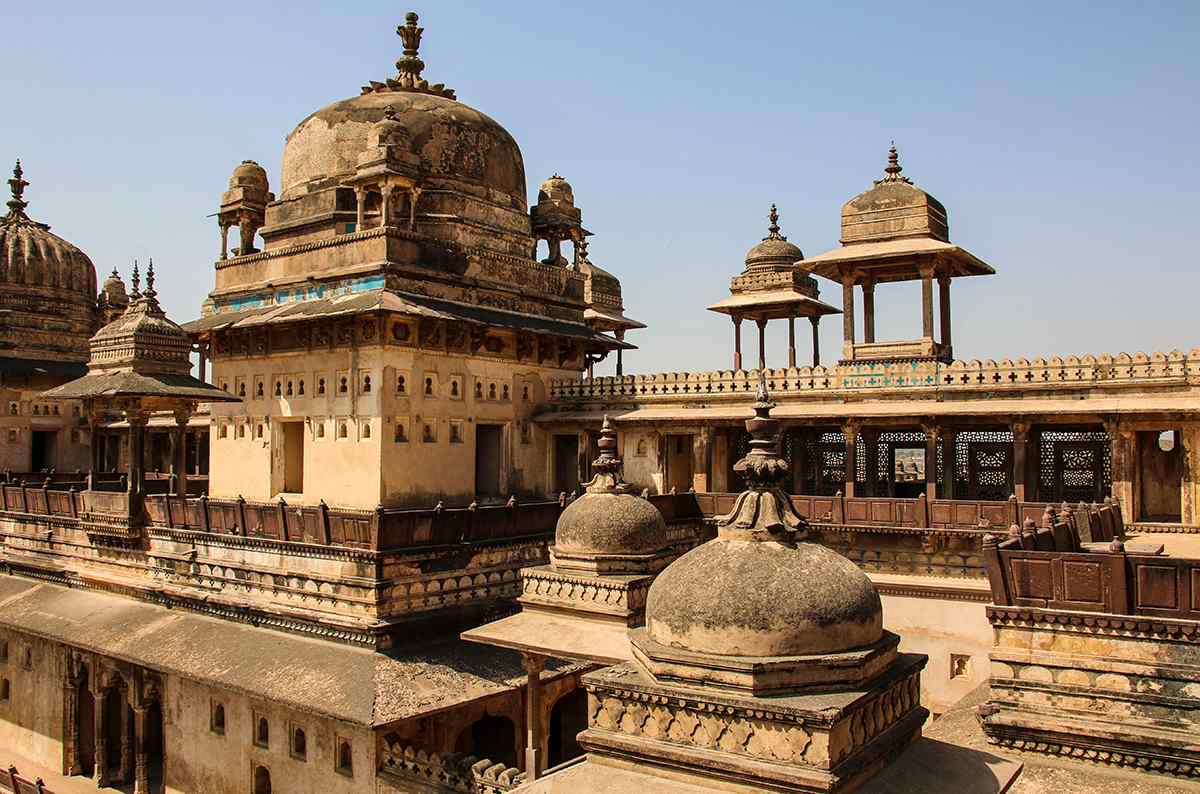
Jahangir Mahal, Orchha
Photo: orchha-chhatris.jpg
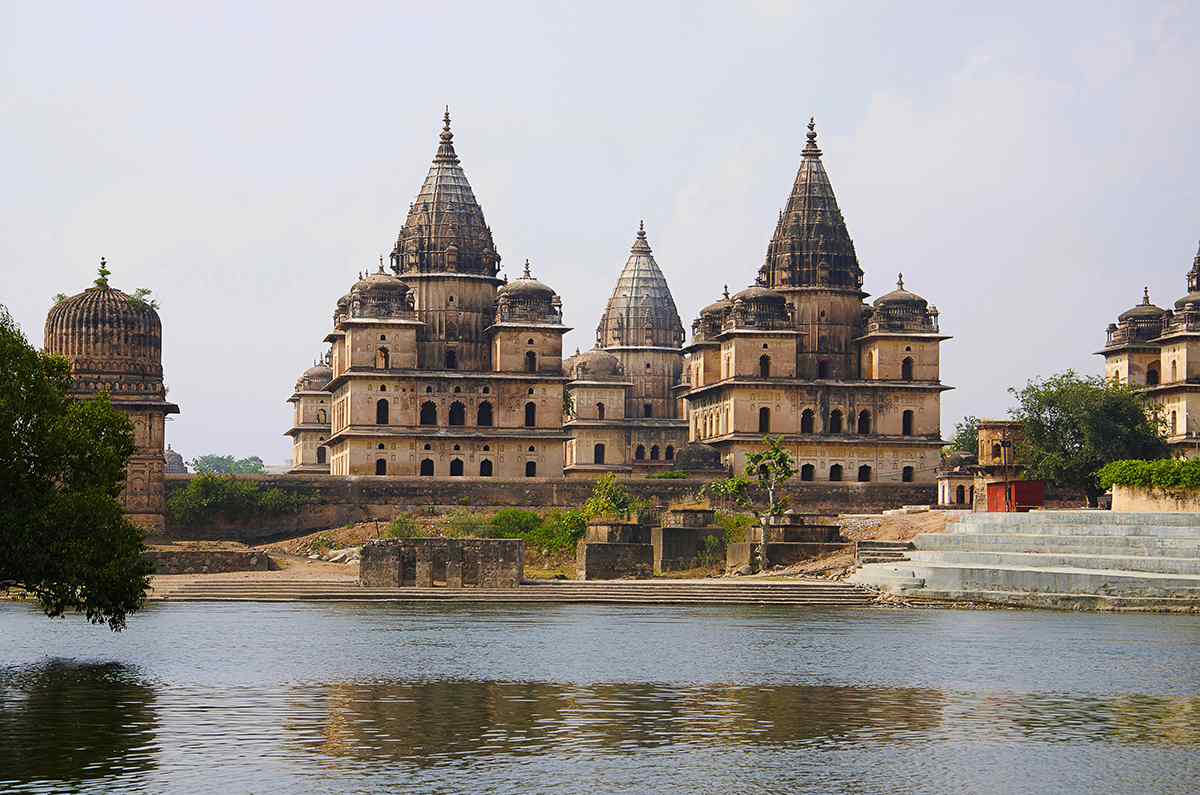
Royal Cenotaphs, Orchha
After breakfast, drive to Orchha (about 121 km, 3 hours), a medieval town of palaces and temples on the banks of the Betwa river, once the capital of the Bundela kings. Explore the grand Jahangir Mahal, built to welcome the Mughal emperor Jahangir, the Raja Mahal with its colourful wall paintings, and the towering Chaturbhuj Temple. See the row of royal cenotaphs along the riverbank.
Later, drive to Khajuraho (about 172 km, 3 hours) and check in to your hotel.
Overnight: KhajurahoDrive: about 293 kmIncludes: guide in Orchha, car
Day 16
Khajuraho to Panna
Photo: lakshmana-temple-khajuraho.jpg
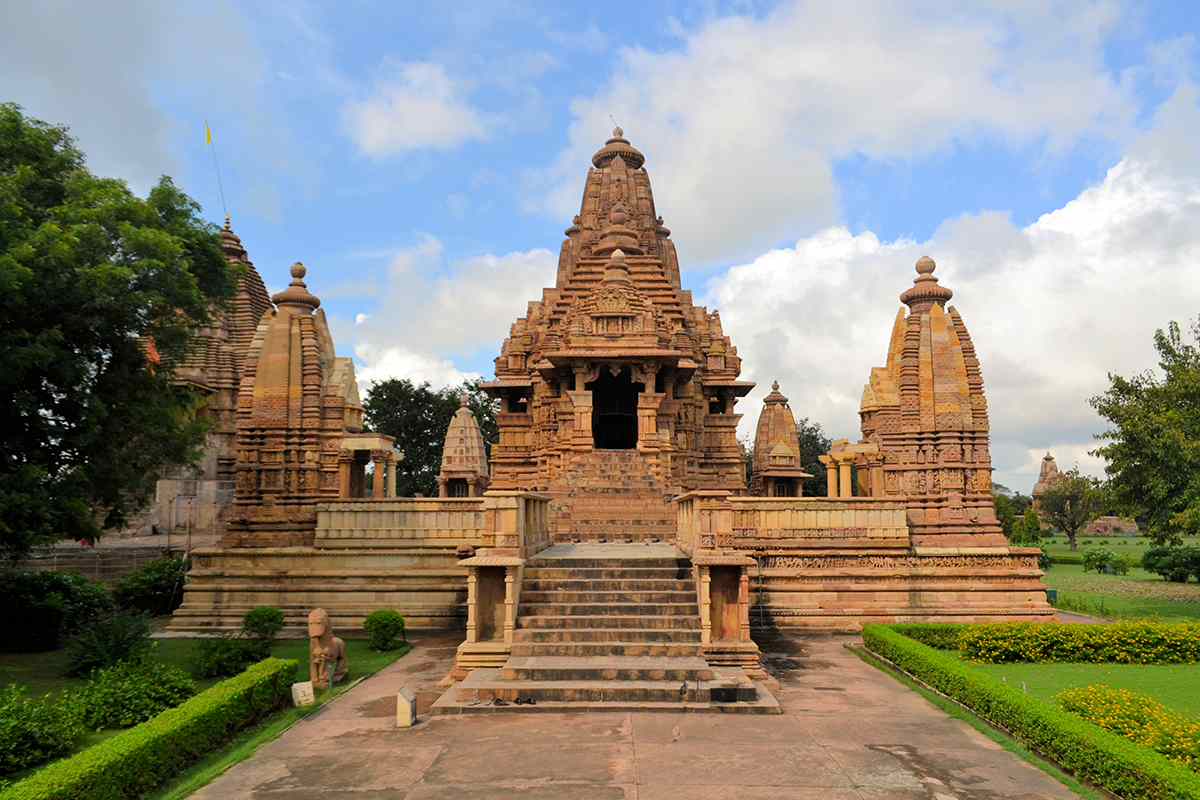
Lakshmana Temple, Khajuraho
Photo: khajuraho-temple-carvings.jpg
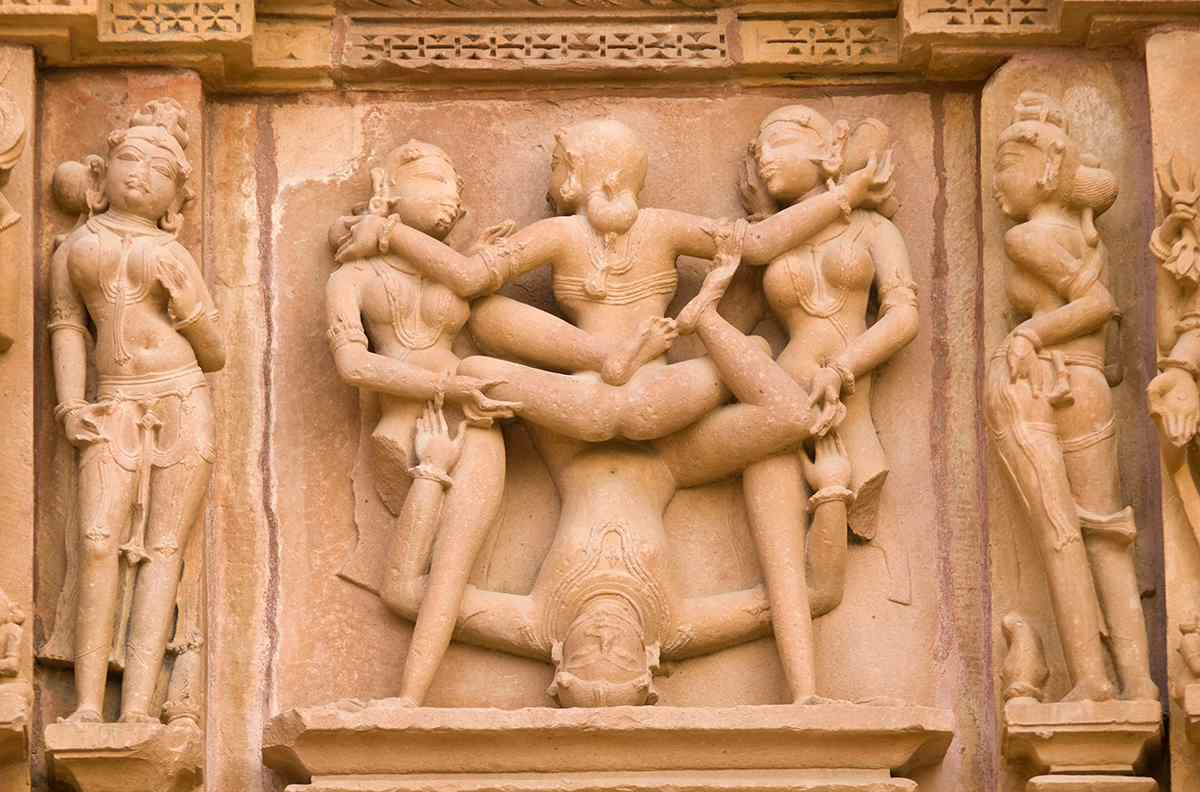
Temple carvings, Khajuraho
Photo: jain-temples-khajuraho.jpg
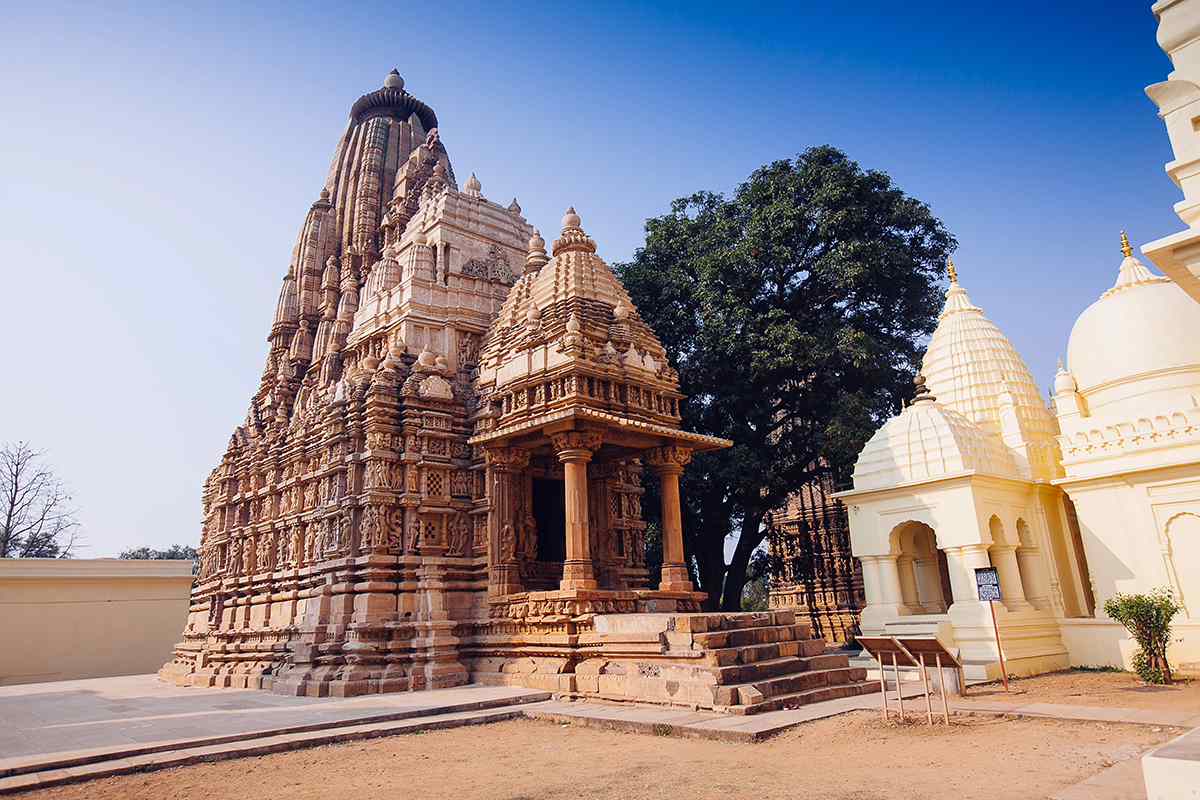
Eastern group of Jain temples, Khajuraho
Built by the Chandela kings between about 950 and 1050 AD, the temples of Khajuraho are a UNESCO World Heritage Site, celebrated for their soaring spires and finely carved sculptures of gods, dancers, musicians and everyday life. In the morning, visit the Western Group, the largest and finest, including the magnificent Kandariya Mahadeva Temple and the Lakshmana Temple. Then see the Eastern Group, with its beautiful Jain temples such as the Parsvanatha Temple.
Walk through the nearby village of Jatkara to see rural life, then visit the Southern Group, with the Duladeo and Chaturbhuj temples.
In the afternoon, drive to Panna (about 44 km, 1 hour) and check in to your jungle lodge.
Overnight: PannaDrive: about 44 kmIncludes: guide, car, all meals in Panna
Day 17
Panna – jeep safaris
Photo: sambar-deer-panna.jpg
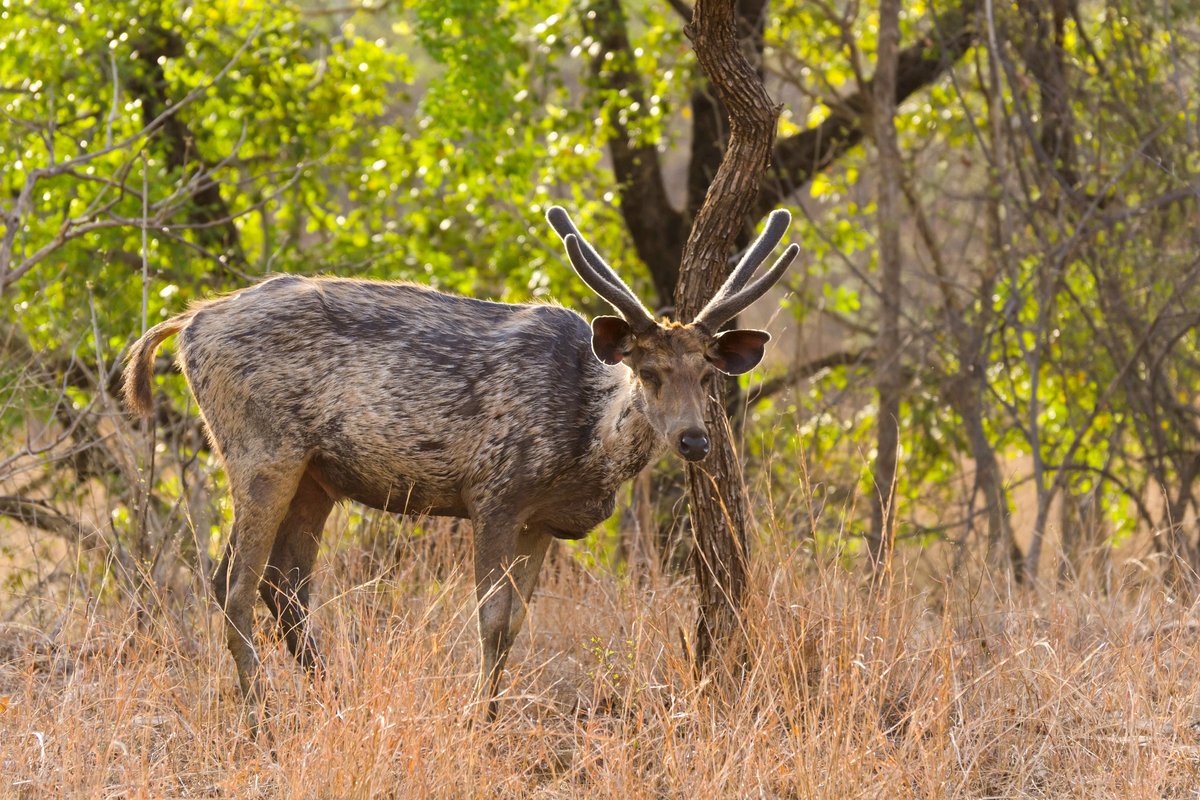
Sambar, Panna
Set out on morning and afternoon jeep safaris in Panna National Park, declared India's 22nd tiger reserve in 1994. Its plateaus, gorges and teak forests along the Ken river are home to tigers, leopards, sloth bears, wolves, chinkara, sambar and chital, and to several species of vultures.
Panna is also known for its diamonds, and its emerald-green forests have earned it the name of the Emerald Forest of Central India.
Overnight: PannaIncludes: 2 jeep safaris with naturalist, all meals
Day 18
Panna – more time in the forest
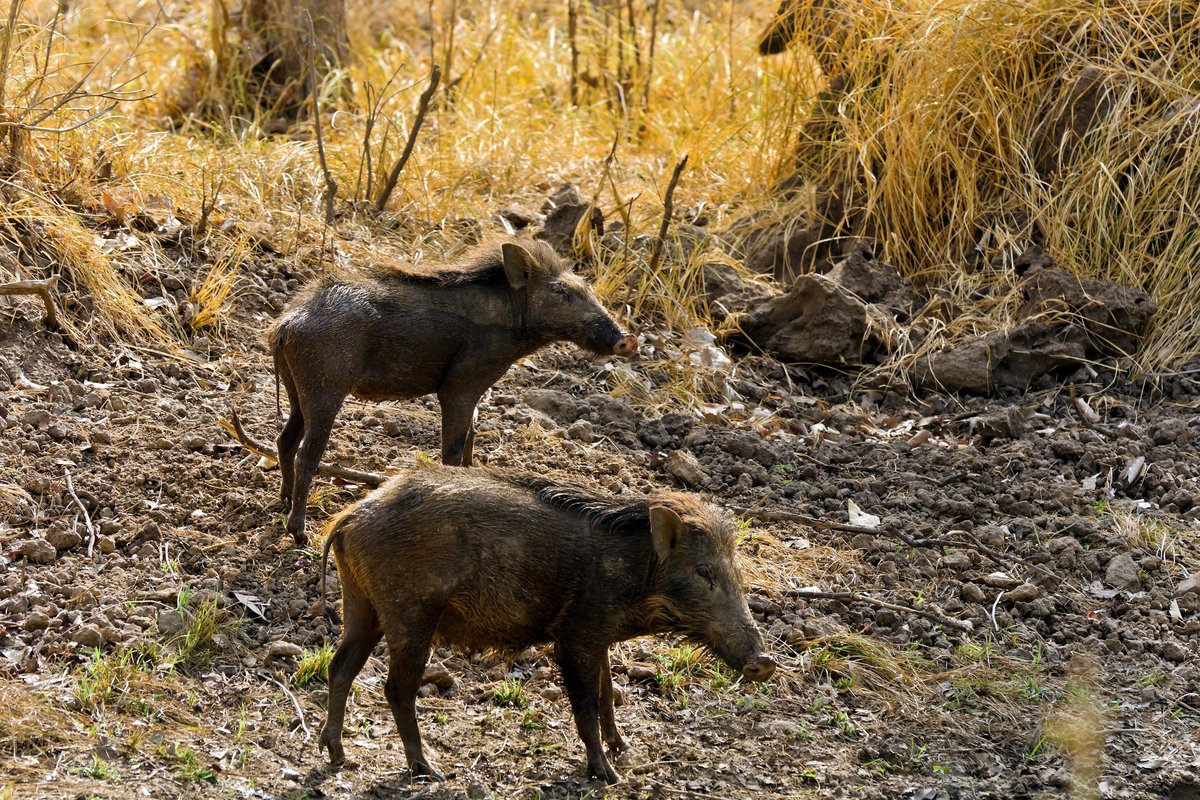
Photo: wild-boar-panna.jpg
Wild Boar, Panna
Two more jeep safaris in Panna National Park, in the early morning and the afternoon, for another chance to see its tigers, leopards and birds, and the wild boar, nilgai and sambar that roam its forests and grasslands.
Overnight: PannaIncludes: 2 jeep safaris with naturalist, all meals
Day 19
Panna to Bandhavgarh
Leave early and drive to Bandhavgarh (about 219 km, 4 hours 30 minutes). Check in to your jungle lodge.
In the afternoon, set out on your first jeep safari in Bandhavgarh National Park.
Overnight: BandhavgarhDrive: about 219 kmIncludes: jeep safari with naturalist, all meals
Day 20
Bandhavgarh – in search of the tiger
Photo: bandhavgarh-tiger.jpg
Tiger, Bandhavgarh
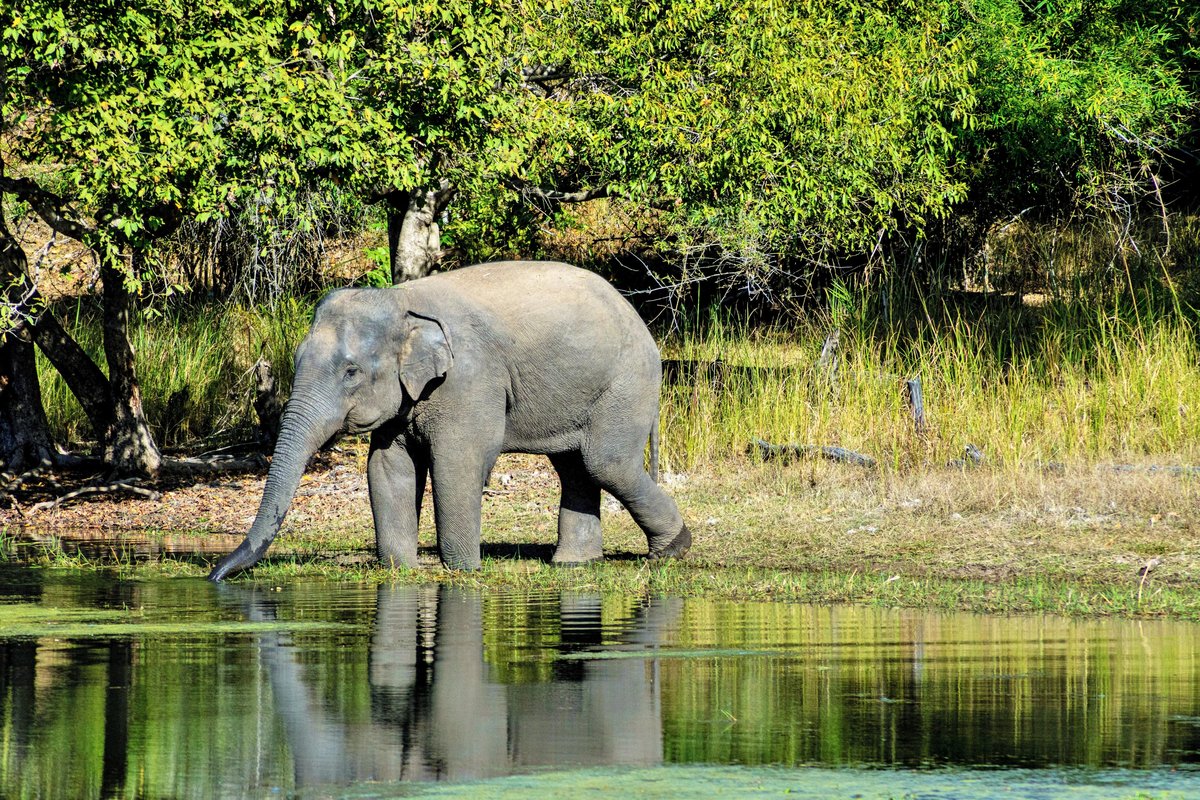
Photo: elephant-bandhavgarh.jpg
Wild Elephant, Bandhavgarh
Set out on morning and afternoon jeep safaris with an experienced naturalist. Bandhavgarh is a famous tiger reserve in Madhya Pradesh, in the heart of Kipling's country, and one of the best places to see the Royal Bengal Tiger. Thanks to the high density of tigers in its forests, sightings here are often very good. Cradled between the Vindhya range and the eastern flanks of the Satpura range of the Central Indian Highlands, it is best known as the ‘tiger land’ of India.
Besides tigers, look out for leopards, sloth bears, the wild elephants that have made the park their home in recent years, gaur, sambar and spotted deer, and over 250 species of birds, below the ancient Bandhavgarh Fort that crowns the hills at the centre of the park.
Overnight: BandhavgarhIncludes: 2 jeep safaris with naturalist, all meals
Day 21
Bandhavgarh to Jabalpur – the Marble Rocks
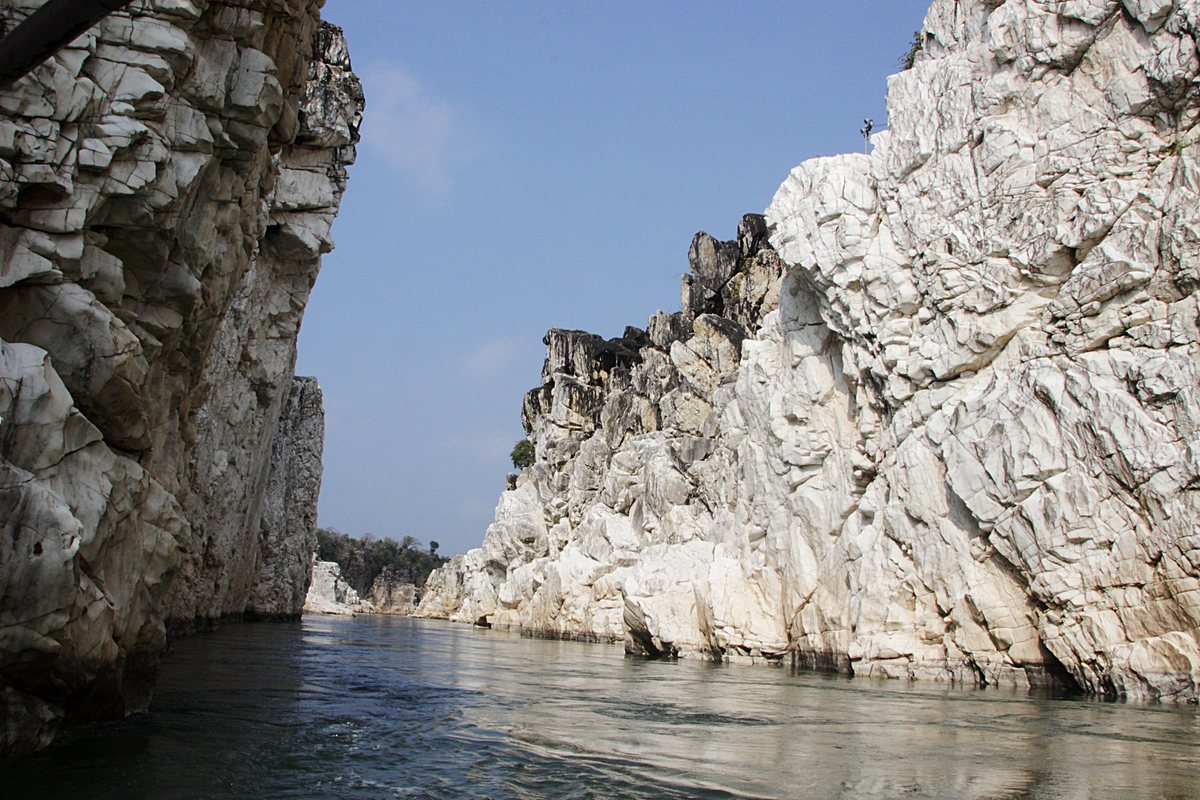
Photo: marble-rocks-bhedaghat-jabalpur.jpg
Marble Rocks, Bhedaghat, Jabalpur
Drive to Jabalpur (about 175 km, 4 hours) and check in to your hotel.
Visit Madan Mahal Fort, built on a hilltop in the 11th century by the Gond ruler Madan Shah and visible from most parts of the city. On the way, see the Balancing Rock, a large natural boulder poised on another rock.
Continue to Bhedaghat (about 25 km) for a boat ride on the holy Narmada river between the gleaming Marble Rocks, which rise up to 30 metres on either side of the gorge.
Overnight: JabalpurDrive: about 175 kmIncludes: guide, car, boat ride
Day 22
Jabalpur to Kanha
Drive to Kanha (about 179 km, 4 hours 15 minutes) and check in to your jungle lodge.
In the afternoon, set out on your first jeep safari in Kanha National Park.
Overnight: KanhaDrive: about 179 kmIncludes: jeep safari with naturalist, all meals
Day 23
Kanha – the land of the Jungle Book
Photo: kanha-national-park.jpg
Kanha National Park, Kanha
Photo: spotted-deer-kanha.jpg
Spotted Deer, Kanha
Spend the day on morning and afternoon jeep safaris in Kanha National Park, whose sal forests and open meadows inspired Rudyard Kipling's The Jungle Book. The park has a rich diversity of wildlife, including tigers, leopards, sloth bears, gaur, sambar, chital, barking deer and nilgai, with jackals, wild dogs and mongooses.
Kanha is also the home of the barasingha, the hard-ground swamp deer, which was saved here from the edge of extinction and is found nowhere else in the world.
Overnight: KanhaIncludes: 2 jeep safaris with naturalist, all meals
Day 24
Kanha to Tadoba
Photo: tiger-tadoba.jpg
Tiger, Tadoba
Leave early and drive south to Tadoba (about 312 km, 6 hours 45 minutes), in the Vidarbha region of Maharashtra. Check in to your jungle lodge.
In the afternoon, set out on a jeep safari in the Tadoba-Andhari Tiger Reserve, known as the Jewel of Vidarbha. Maharashtra's largest national park covers around 620 sq km of teak forest, lakes, valleys and grassland, and is home to a healthy tiger population.
Overnight: TadobaDrive: about 312 kmIncludes: jeep safari with naturalist, all meals
Day 25
Tadoba – tiger safaris
Photo: nilgai-tadoba.jpg
Nilgai, Tadoba
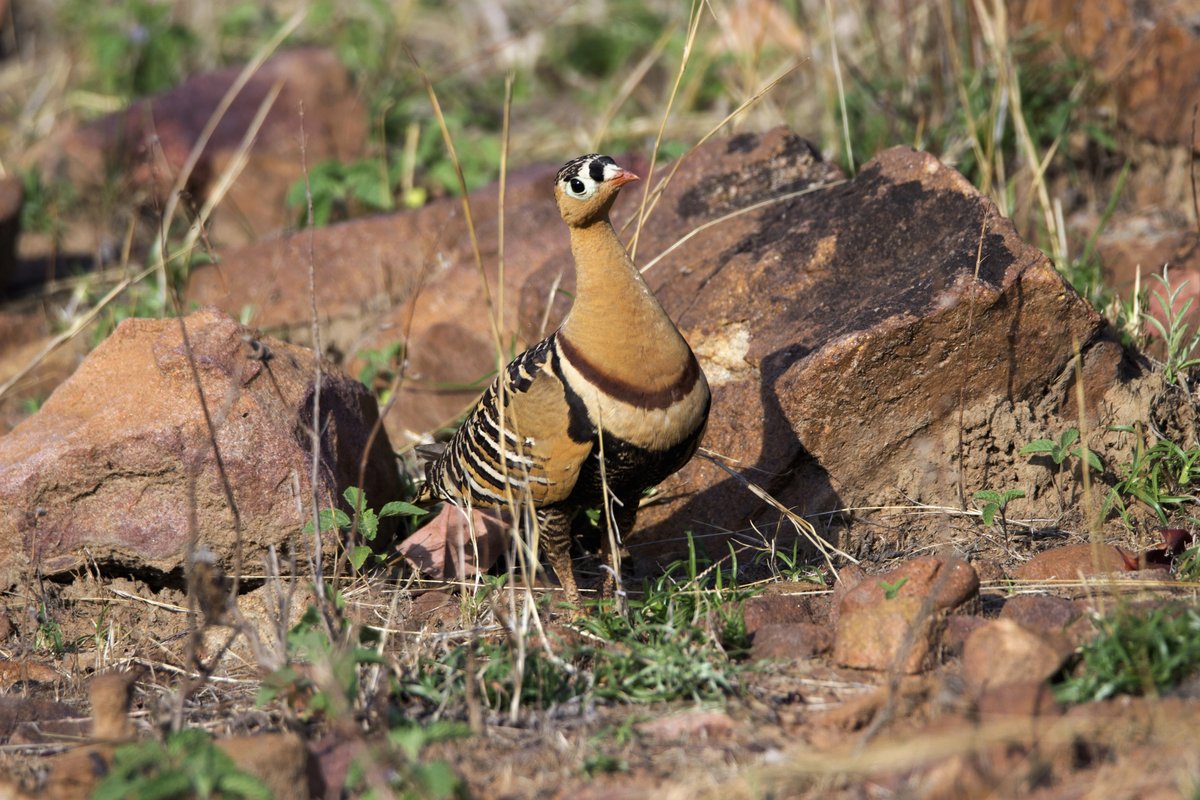
Photo: painted-sandgrouse-tadoba.jpg
Painted Sandgrouse, Tadoba
Spend the day on morning and afternoon jeep safaris in Tadoba. Besides tigers, look out for leopards, sloth bears, gaur, nilgai, sambar and spotted deer, crocodiles in the lakes and nearly 200 species of birds, among them the painted sandgrouse. The animals are most active in the early morning and late afternoon, when the safaris go out.
Overnight: TadobaIncludes: 2 jeep safaris with naturalist, all mealsPlease note: Tadoba is closed to visitors on Tuesdays
Day 26
Tadoba to Akola
After breakfast, drive west across the cotton country of Vidarbha to Akola (about 338 km, 6 hours), breaking the long journey to Ajanta. Check in to your hotel; the evening is free.
Overnight: AkolaDrive: about 338 km
Day 27
Akola to Aurangabad via the Ajanta Caves
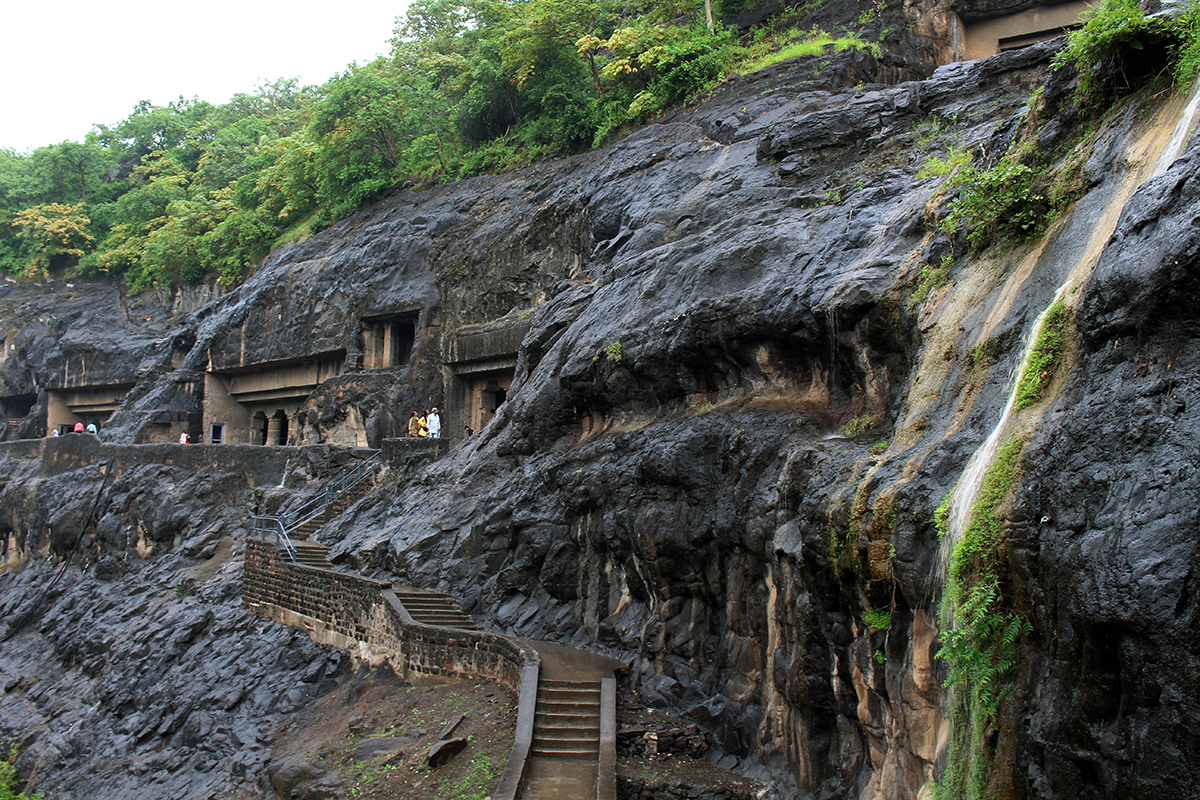
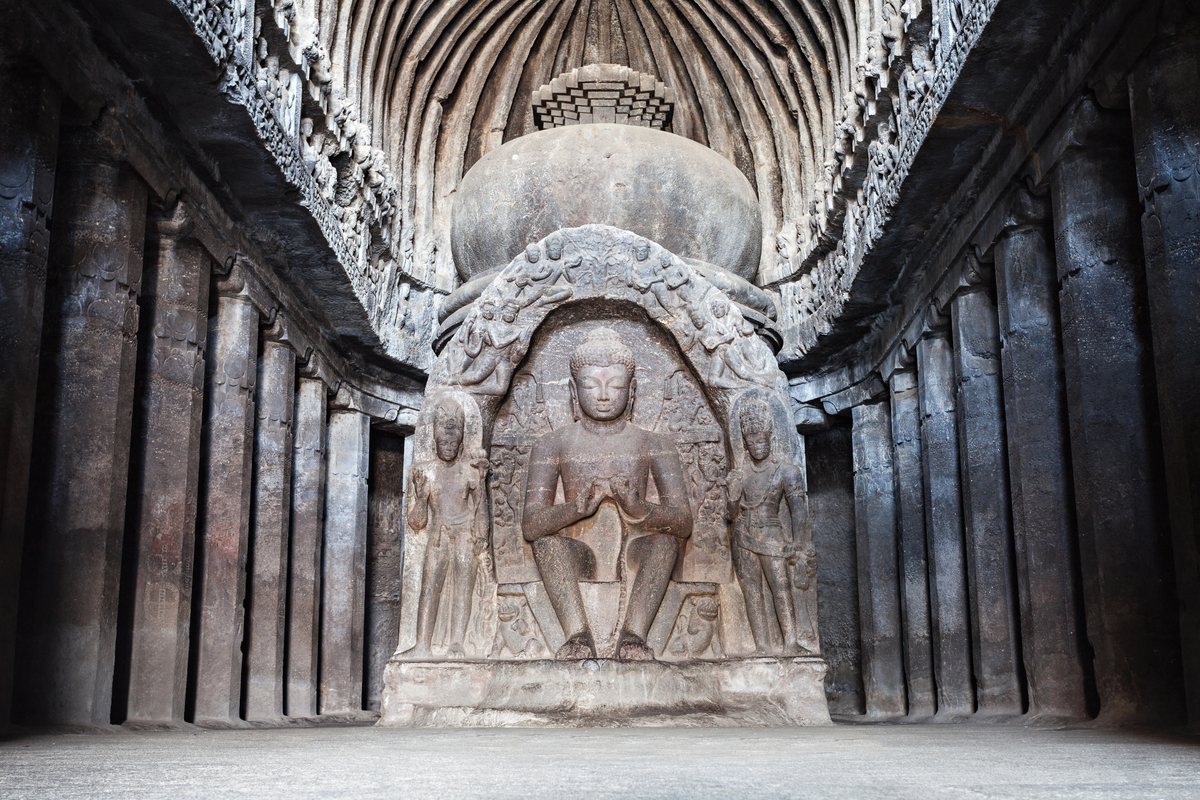
Photo: ajanta-caves.jpg
Ajanta Caves
Drive to the Ajanta Caves, a UNESCO World Heritage Site carved into a horseshoe-shaped cliff above the Waghora river. The 29 Buddhist caves, some dating from the 2nd century BC, were used as prayer halls (chaitya grihas) and monasteries (viharas) for about nine centuries, then abandoned and forgotten until 1819. Their murals and sculptures, among the finest of Buddhist art in India, show the life and former lives of the Buddha, with kings, dancers, animals and flowers drawn from everyday life.
Later, continue to Aurangabad (Chhatrapati Sambhaji Nagar) and check in to your hotel.
Overnight: AurangabadDrive: about 262 kmIncludes: guide at Ajanta, entrance feesPlease note: the Ajanta Caves are closed on Mondays
Day 28
Aurangabad – Ellora Caves and Daulatabad Fort
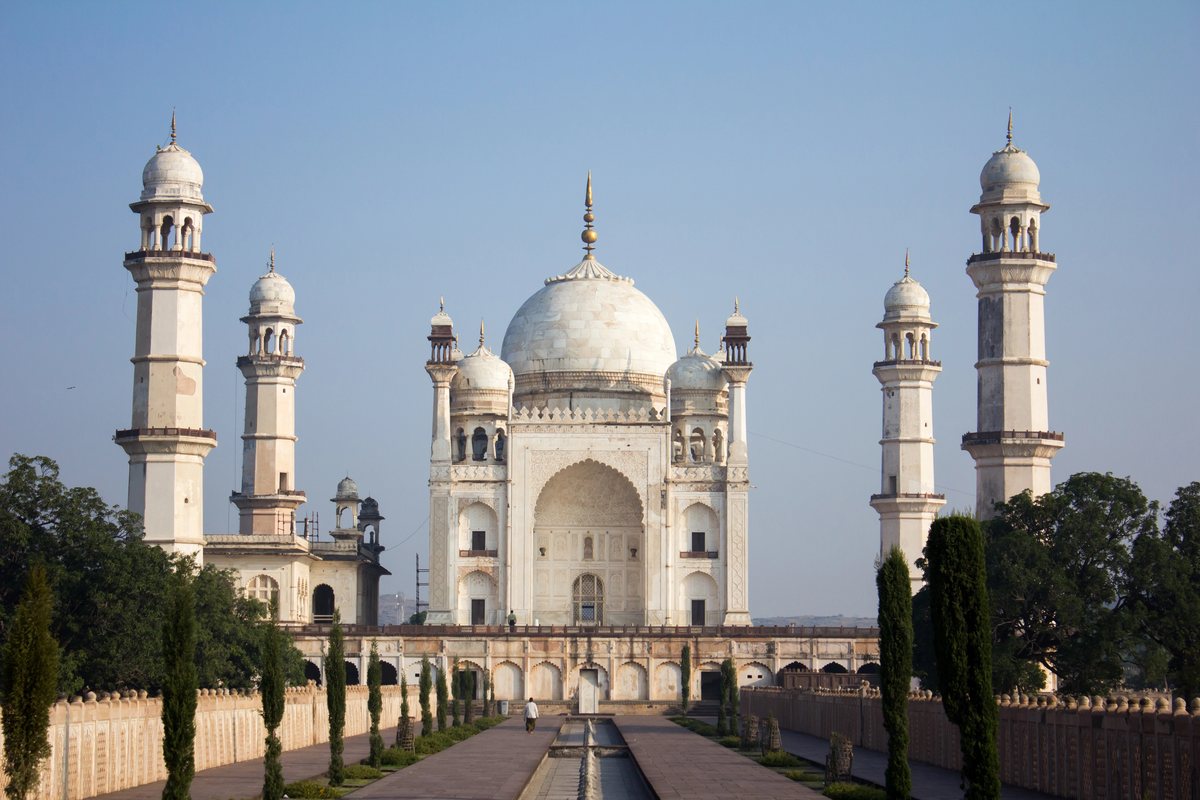
Photo: bibi-ka-maqbara-aurangabad.jpg
Bibi ka Maqbara, Aurangabad
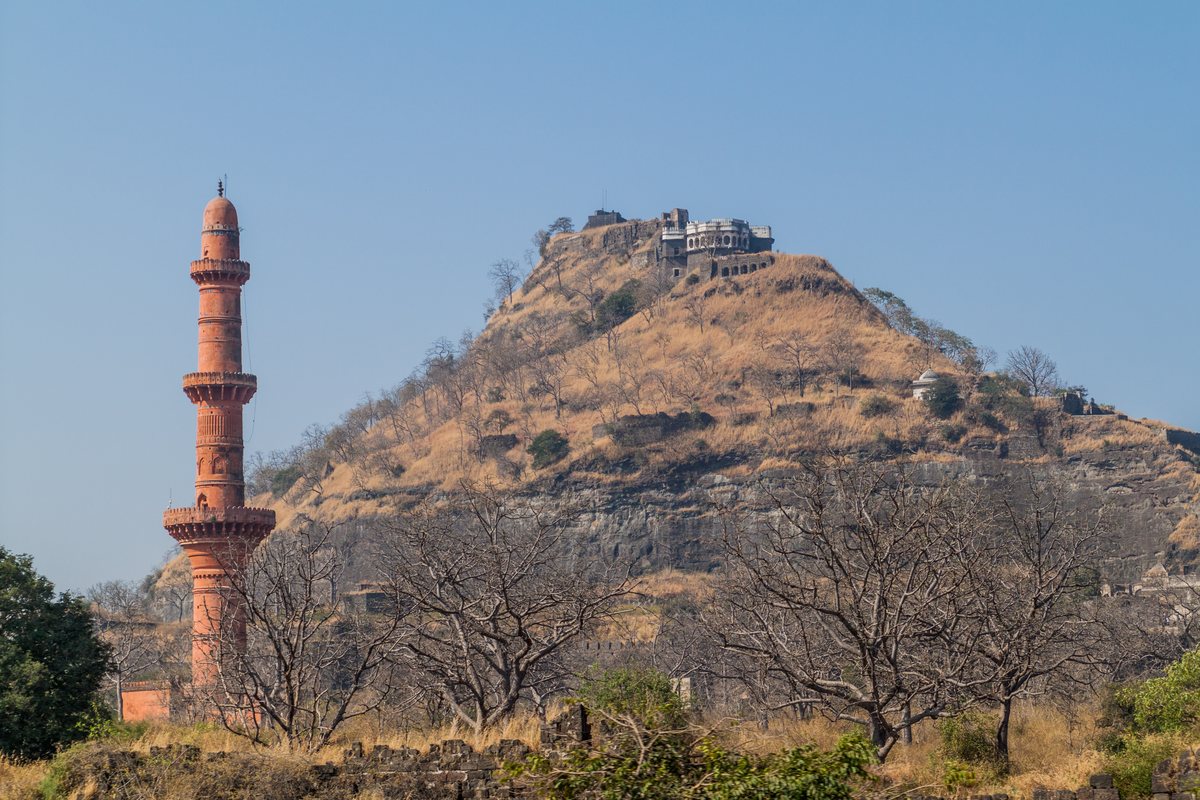
Photo: daulatabad-fort-aurangabad.jpg
Daulatabad Fort, Aurangabad
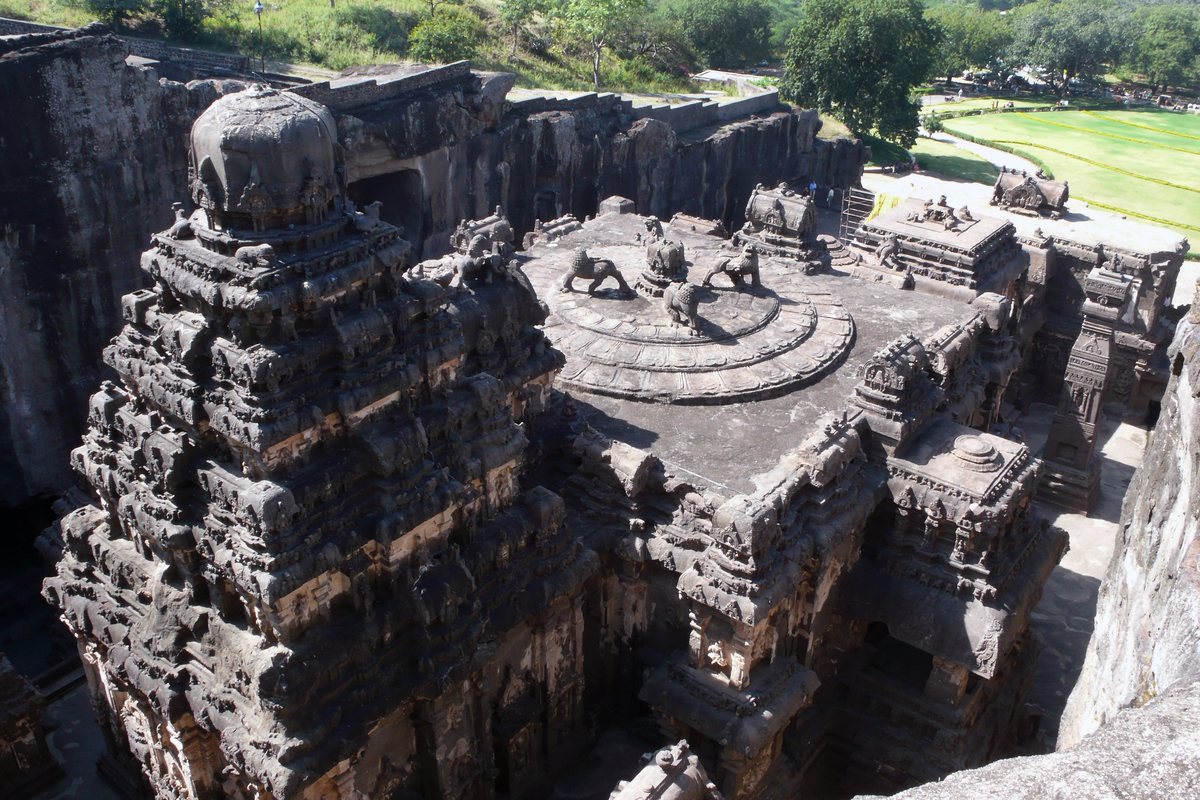
Photo: kailasa-temple-ellora.jpg
Kailasa Temple, Ellora
Photo: ellora-caves.jpg
Ellora Caves
In the morning, visit Bibi ka Maqbara, the mausoleum of Aurangzeb's queen, often called the ‘Mini Taj Mahal’ for its likeness to the Taj, and the Panchakki, a 17th-century water-powered flour mill.
Drive towards Ellora, stopping at Daulatabad Fort, once known as Devagiri, a magnificent 12th-century fortress crowning a conical hill, with the tall Chand Minar at its foot.
Continue to the Ellora Caves (about 31 km from Aurangabad), carved into the face of the Charanandri hills between the 6th and 10th centuries. There are 34 caves in all, 12 Buddhist, 17 Hindu and 5 Jain, a splendid picture of the religious tolerance of the time. The highlight is the Kailasa Temple in Cave 16, a whole temple carved from the top down out of a single rock: some 200,000 tonnes of stone were removed over about a hundred years. Ellora is a UNESCO World Heritage Site.
Overnight: AurangabadIncludes: guide, car, entrance feesPlease note: the Ellora Caves are closed on Tuesdays
Day 29
Aurangabad to Nashik – the Pandavleni Caves
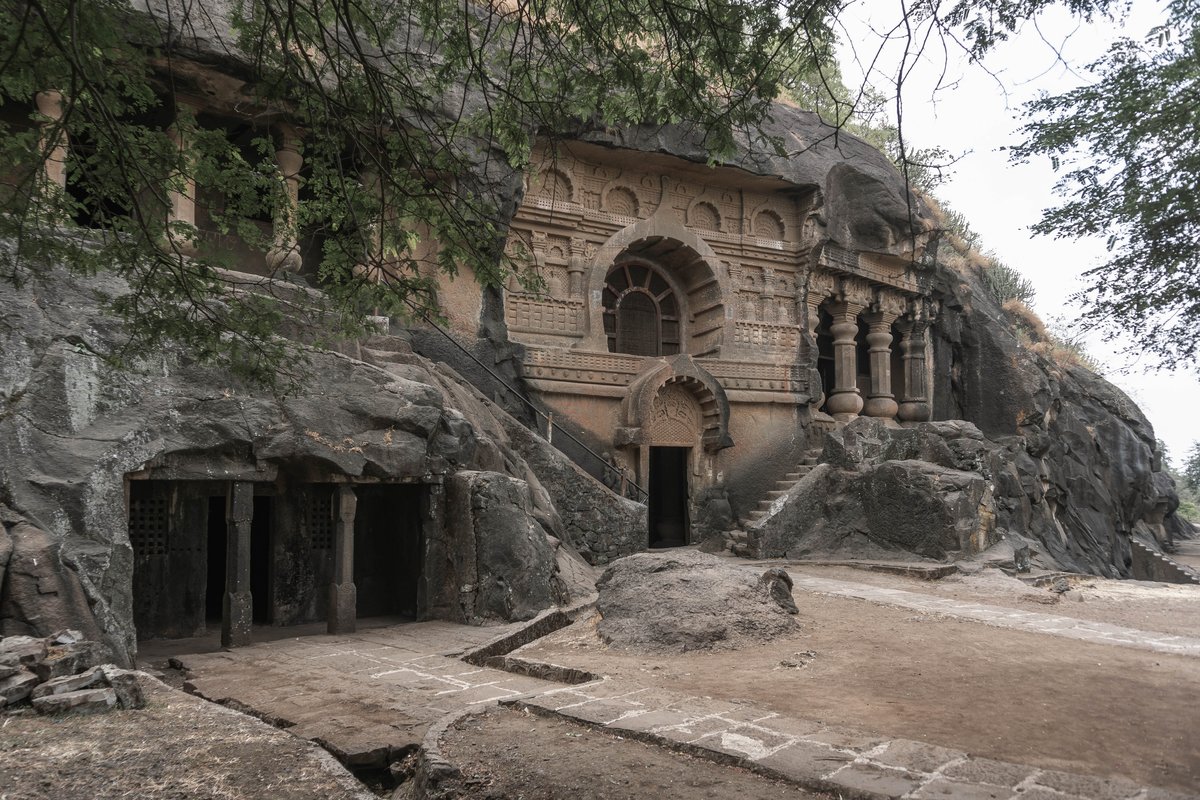
Photo: pandavleni-caves-nashik.jpg
Pandavleni Caves, Nashik
Drive to Nashik (about 192 km, 4 hours), the heart of India's wine country, and check in to your hotel among the vineyards.
In the afternoon, visit the Pandavleni Caves, a group of 24 rock-cut Buddhist caves on a conical hill about 8 km from the town, dating from the 1st and 2nd centuries BC, when Nashik lay on the trade routes between the Ganges plains and the ports of the west coast. A climb of about fifteen minutes leads to the caves, famous for their well-preserved Pali inscriptions and fine sculpture; Cave 18, the only chaitya (prayer hall), has a beautifully carved facade.
The grapes of Nashik have come a long way: in 1997 Sula Vineyards planted the first wine grapes here, and today the region's wineries produce Sauvignon Blanc, Chenin Blanc, Shiraz, Cabernet and sparkling wines.
Overnight: NashikDrive: about 192 kmIncludes: car, entrance fees
Day 30
Nashik to Pune – city tour
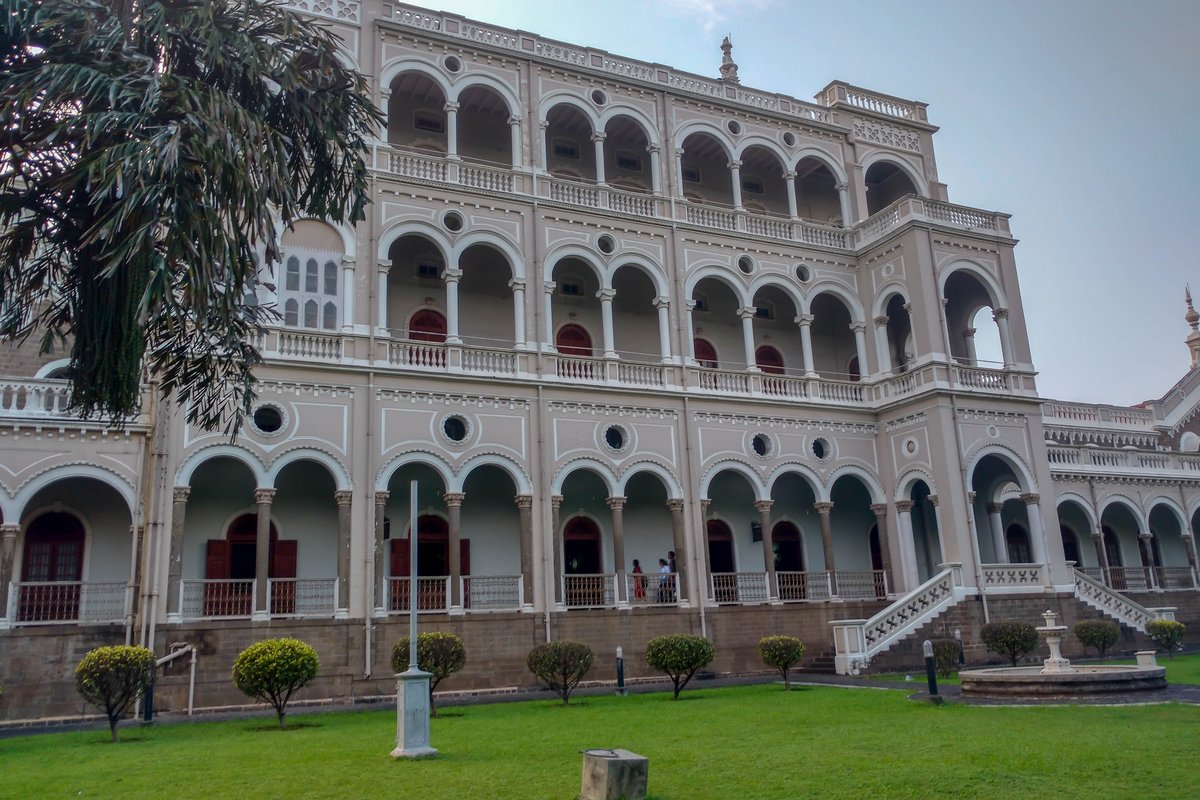
Photo: aga-khan-palace-pune.jpg
Aga Khan Palace, Pune
Drive to Pune (about 232 km, 6 hours), Maharashtra's second largest city, and check in to your hotel.
In the afternoon, visit the Aga Khan Palace, where Mahatma Gandhi, his wife Kasturba and his secretary Mahadev Desai were held by the British during the Quit India Movement of 1942; Kasturba and Mahadev Desai died here, and their memorials stand in the garden. See Shaniwar Wada, the palace of the Peshwas built by Baji Rao I in 1732, and drive up Parvati Hill for its temples and panoramic views over the city.
End at the Raja Dinkar Kelkar Museum, a remarkable private collection of sculpture, ivory, brass and silverware, lamps and fine musical instruments, gathered by Dr. Dinkar Kelkar in memory of his only son.
Overnight: PuneDrive: about 232 kmIncludes: guide, car, entrance fees
Day 31
Pune to Bijapur
After breakfast, drive south-east across the Deccan plateau into Karnataka to Bijapur (Vijayapura) (about 348 km, 6 hours 30 minutes). Check in to your hotel; the evening is free.
Overnight: BijapurDrive: about 348 km
Day 32
Bijapur – the Agra of the south
Photo: gol-gumbaz-bijapur.jpg
Gol Gumbaz, Bijapur
Photo: ibrahim-roza-bijapur.jpg
Ibrahim Rauza, Bijapur
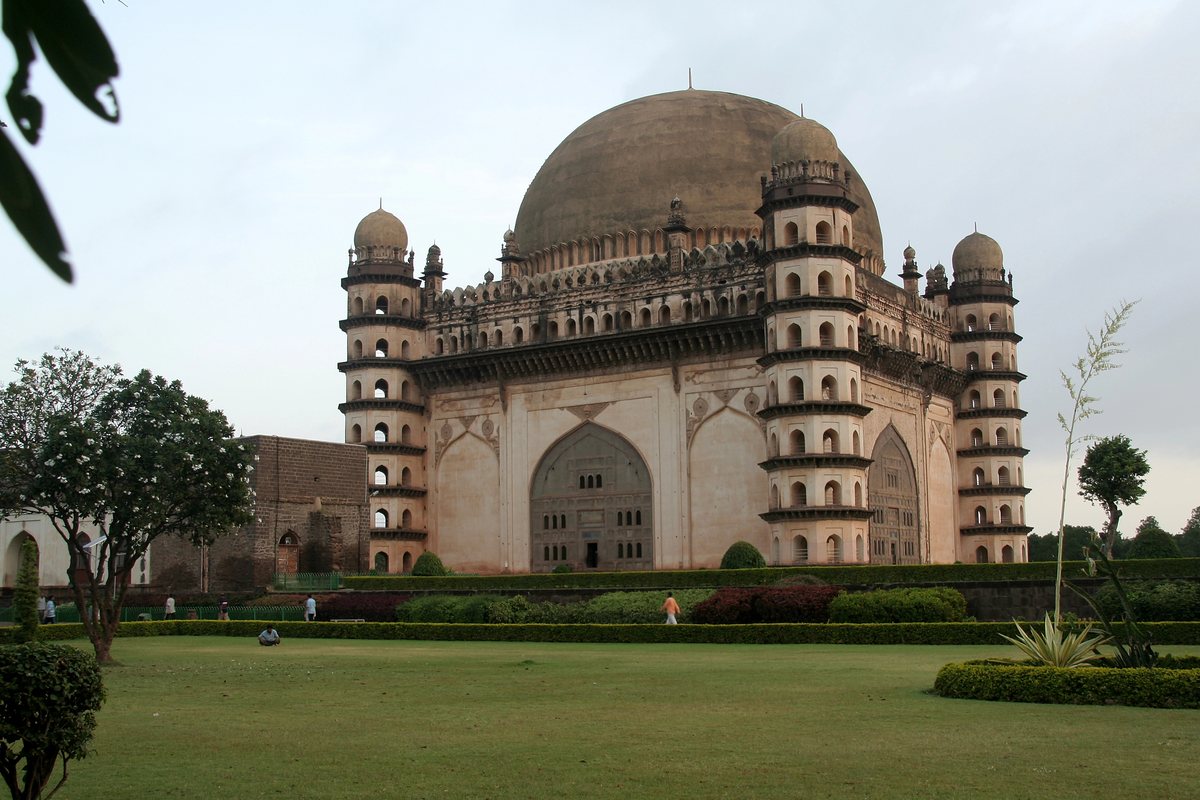
Often called the Agra of the south, Bijapur was the capital of the Adil Shahi sultans, and is full of 15th to 17th-century Islamic architecture: mosques, mausoleums, palaces and fortifications. Visit the Gol Gumbaz, the mausoleum of Mohammed Adil Shah, completed in 1656, whose great dome is one of the largest in the world; its whispering gallery carries the faintest sound around the dome.
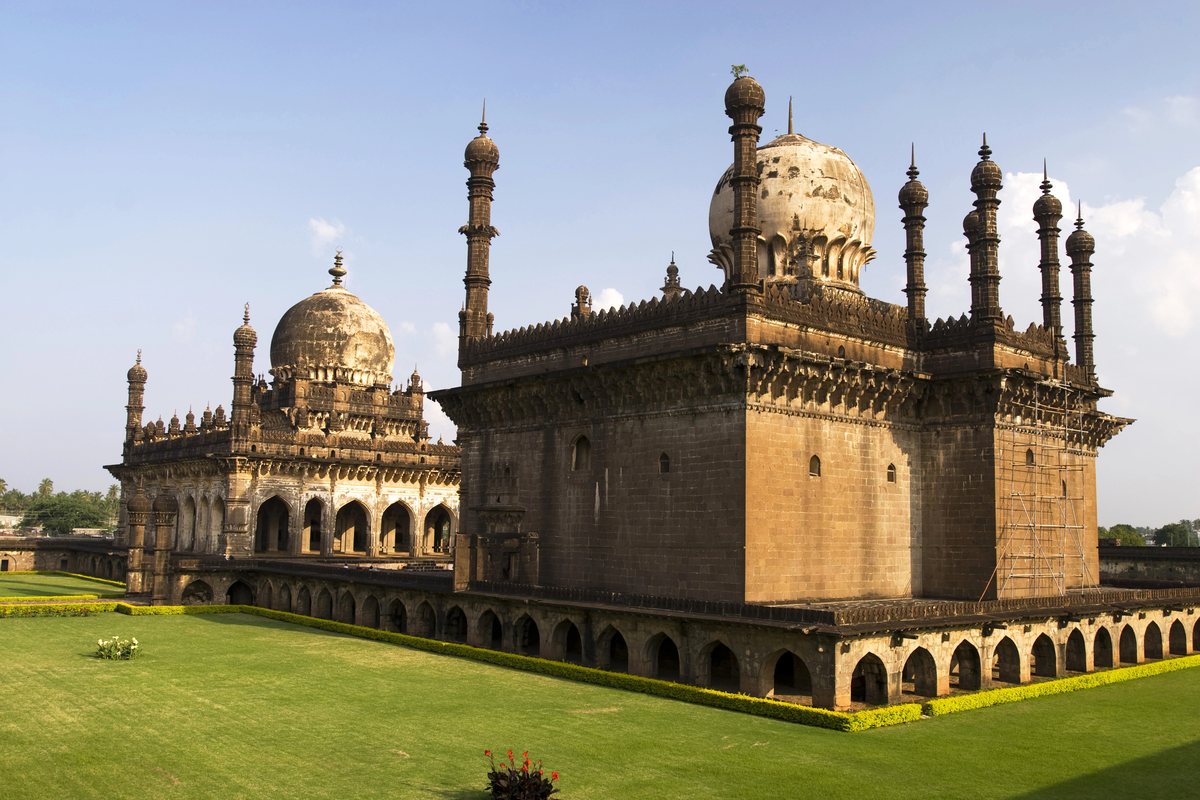
See the Ibrahim Rauza, an elegant tomb and mosque said to have inspired the Taj Mahal, the Jami Masjid, the Asar Mahal, built in 1646 as a hall of justice, and the richly carved Mehtar Mahal. On the ramparts stands the Malik-e-Maidan, one of the largest medieval cannons ever made, weighing 55 tonnes.
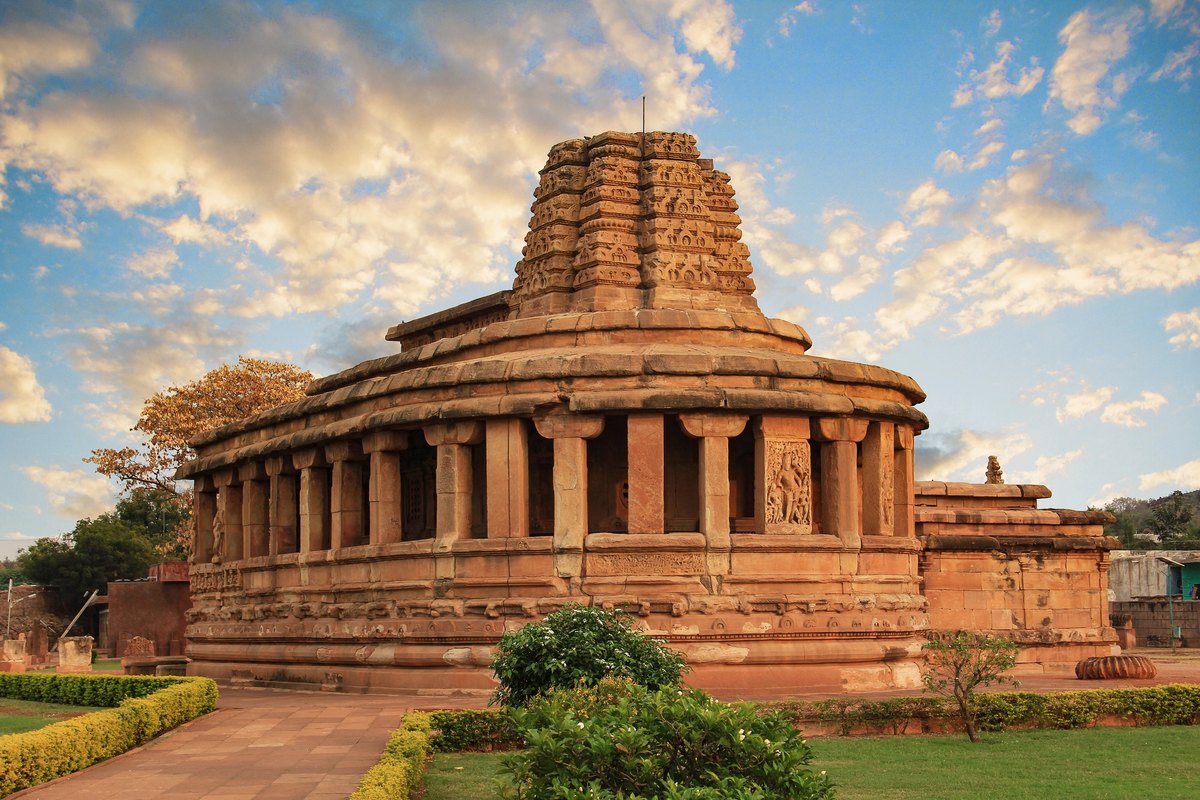
Leave early and drive to Aihole (about 122 km, 2 hours 30 minutes). Aihole was the first Chalukyan capital, developed over more than 600 years from the 6th century. There are about 140 temples, half of them within the fort walls. Visit the Durga Temple, elevated on a lofty plinth, and the nearby Ladkhan Temple, recognisable by the tiers of sloping slabs that roof its spacious hall and entrance porch. See the Meguti Temple and the rock-cut Ravala Phadi Cave, dating to the late 6th century, its interior enhanced with splendid carvings of Hindu divinities.
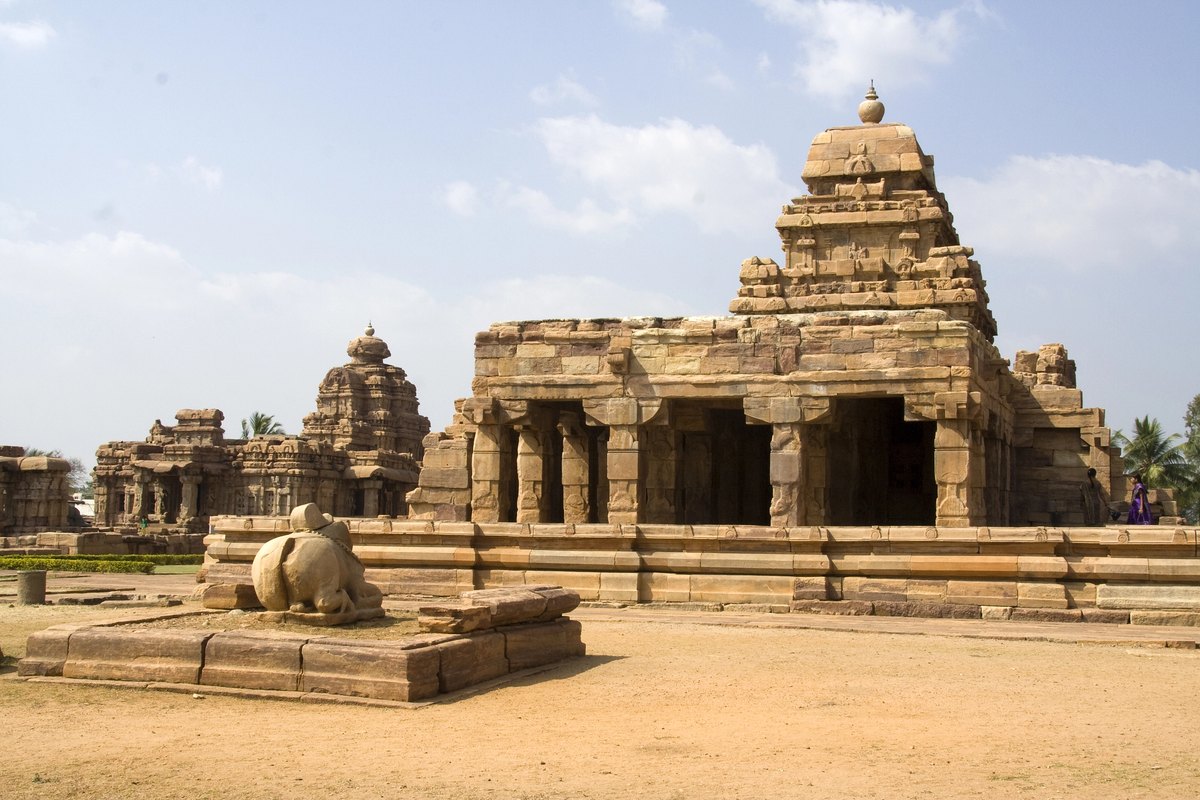
Continue to Pattadakal (about 14 km, 30 minutes). This sacred 8th-century complex on the banks of the Malaprabha River reflects the artistic achievements of the Chalukya kings, and is a UNESCO World Heritage Site. The temples are built in a combination of North Indian and South Indian styles. The Sangameshvara Temple, the earliest in the complex, was erected by the Chalukya king Vijayaditya, who died in AD 733 before it was completed. The largest temples are the twin Virupaksha and Mallikarjuna Temples, both dedicated to Shiva and constructed in AD 745.
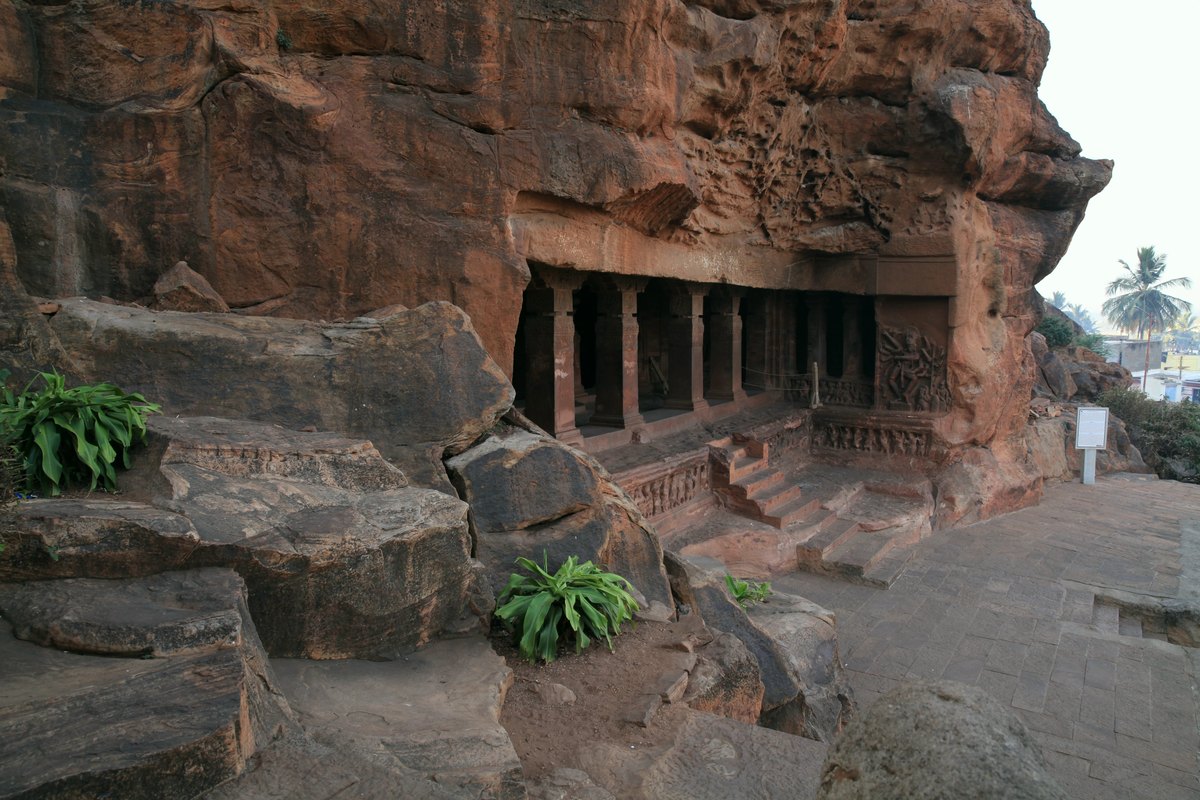
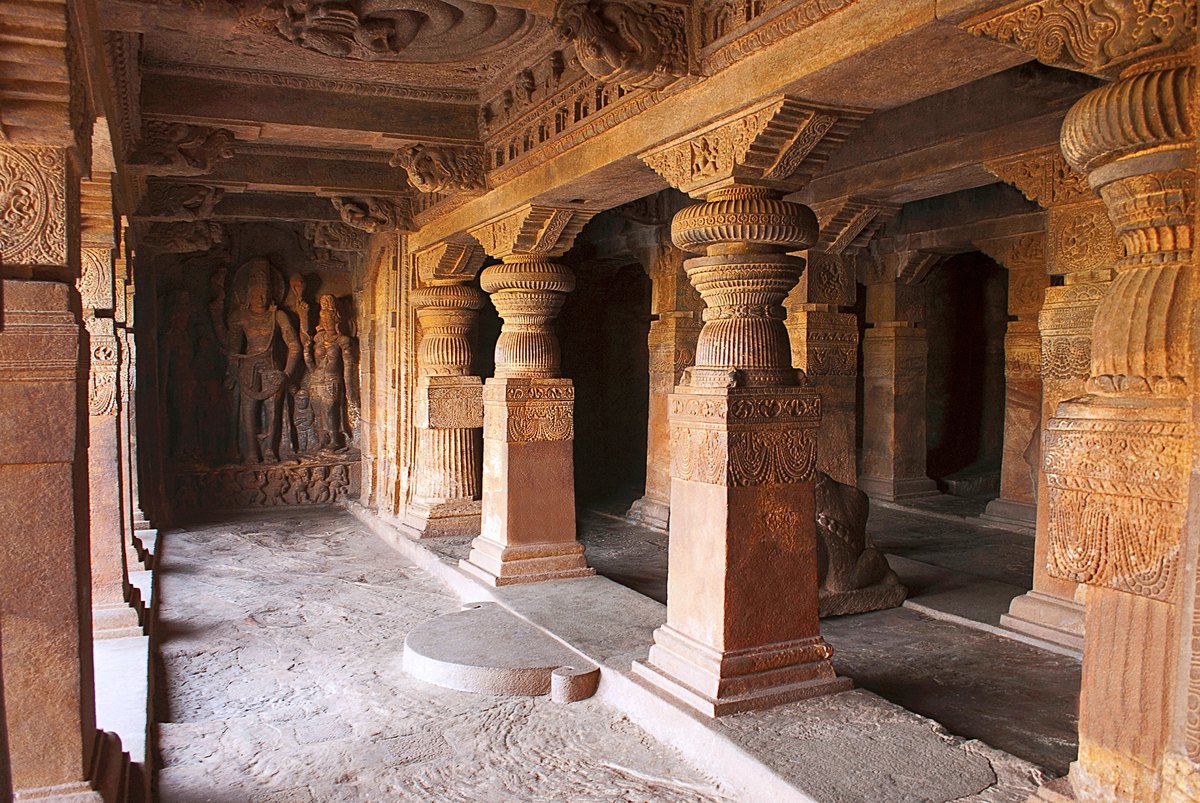
Drive on to Badami (about 22 km, 30 minutes) and check in to your hotel. This historic town was the capital of the powerful early Chalukya kings, who ruled the Deccan during the 6th and 7th centuries AD. In the afternoon, visit the Badami cave temples, four shrines carved into the red sandstone cliffs above the town, with superb sculptures of Shiva, Vishnu and the Jain tirthankaras. Visit the Bhutanatha Temple, scenically located at the end of the lake and built in several phases; several boulders around it have reliefs of a sleeping Vishnu and a seated Jain figure. The Archaeological Museum, on the north side of the lake, displays a magnificent triangular panel depicting Brahma surrounded by elaborate foliage.
Overnight: BadamiDrive: about 158 kmIncludes: guide, entrance feesPlease note: the Archaeological Museum in Badami is closed on Fridays
Day 34
Badami to Dandeli
Photo: coracle-ride-kali-river-dandeli.jpg
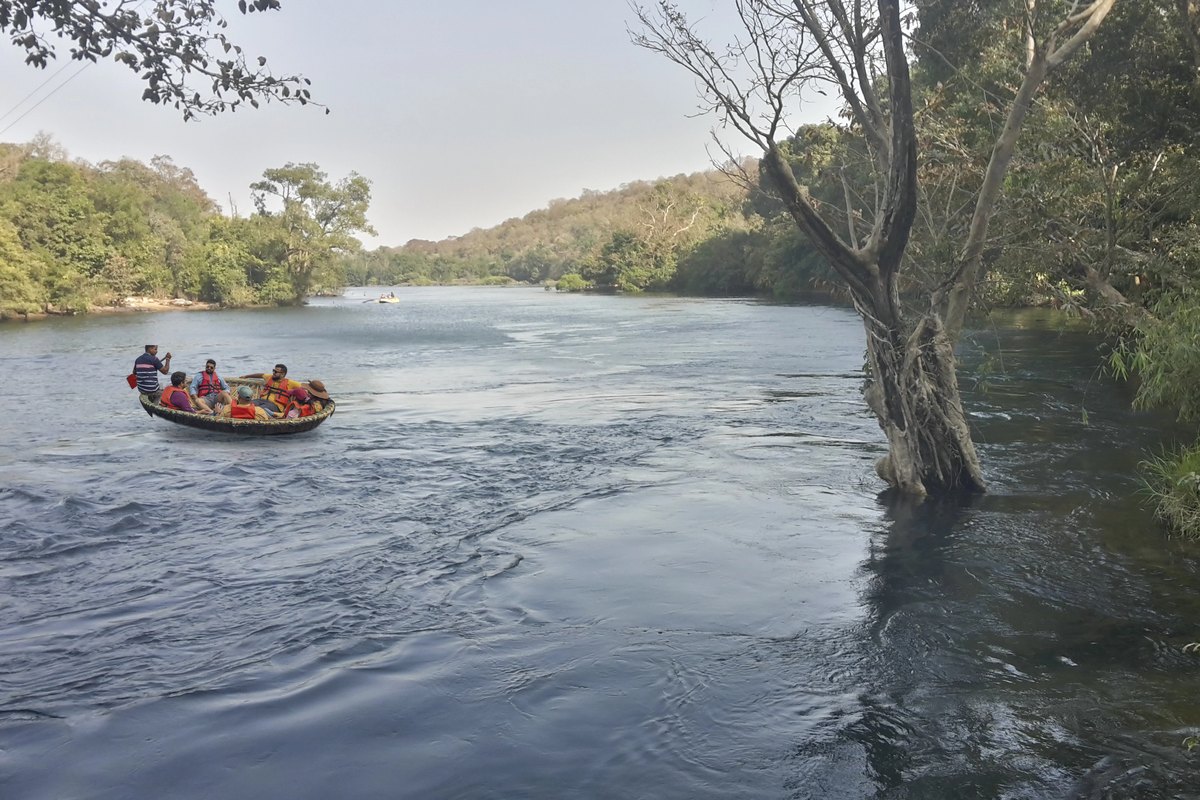
Coracle Ride, Kali River, Dandeli
Photo: malabar-pied-hornbill-dandeli.jpg
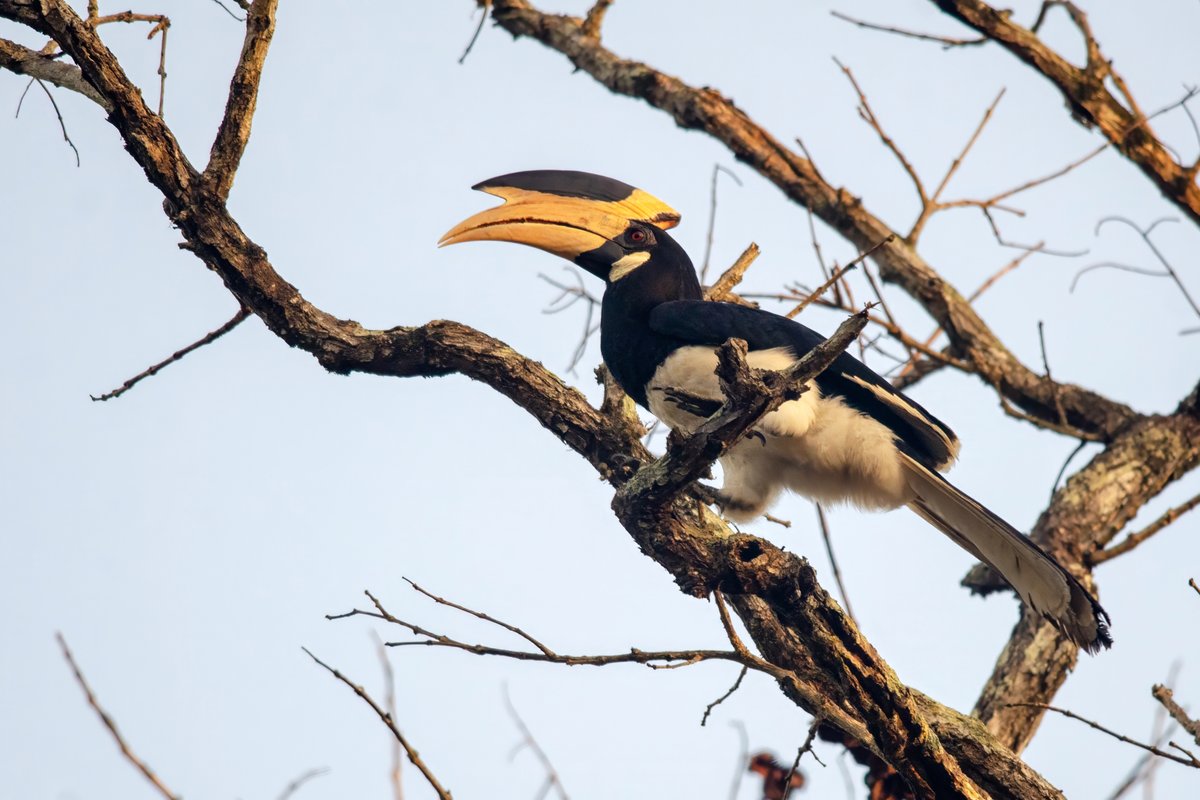
Malabar Pied Hornbill, Dandeli
Drive west to Dandeli (about 171 km, 4 hours 15 minutes), set in the forests of the Western Ghats on the banks of the Kali river, and check in to your riverside camp.
In the afternoon, explore the countryside around Dandeli. The Dandeli Wildlife Sanctuary is one of the finest birdwatching areas in Karnataka, with about 300 species, including the rare Malabar pied hornbill; four of the world's nine species of hornbill are found here, a sign of how thick and healthy the forest is.
Overnight: DandeliDrive: about 171 kmIncludes: car, all meals
Day 35
Dandeli to Hampi
Drive east to Hampi (about 240 km, 5 hours) and check in to your hotel.
A UNESCO World Heritage Site on the south bank of the Tungabhadra River, Hampi holds the evocative ruins of the 14th-century imperial capital of Vijayanagara, the ‘City of Victory’, from a time when art and architecture flourished. It was the capital of three generations of Hindu rulers for more than 200 years. The site, which comprises the Sacred and Royal Centres, has a superb setting, with rocky ridges and granite boulders acting as natural defences, and ancient canals still running through the valley between them.
In the afternoon, begin with the Virupaksha Temple, still a living temple, and the Market Place with its ancient, roofless stalls.
Overnight: HampiDrive: about 240 kmIncludes: guide, entrance fees
Day 36
Hampi – ruins of Vijayanagara
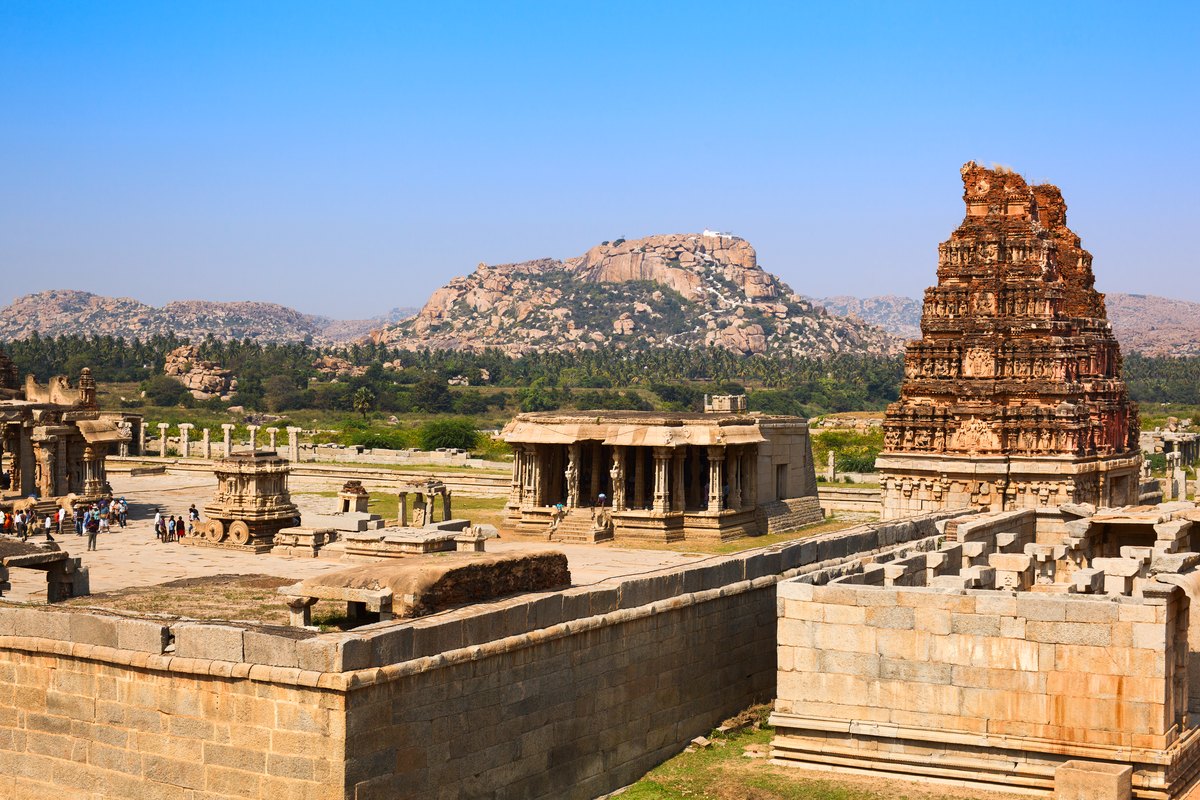
Photo: stone-chariot-vittala-temple-hampi.jpg
Stone Chariot, Vittala Temple, Hampi
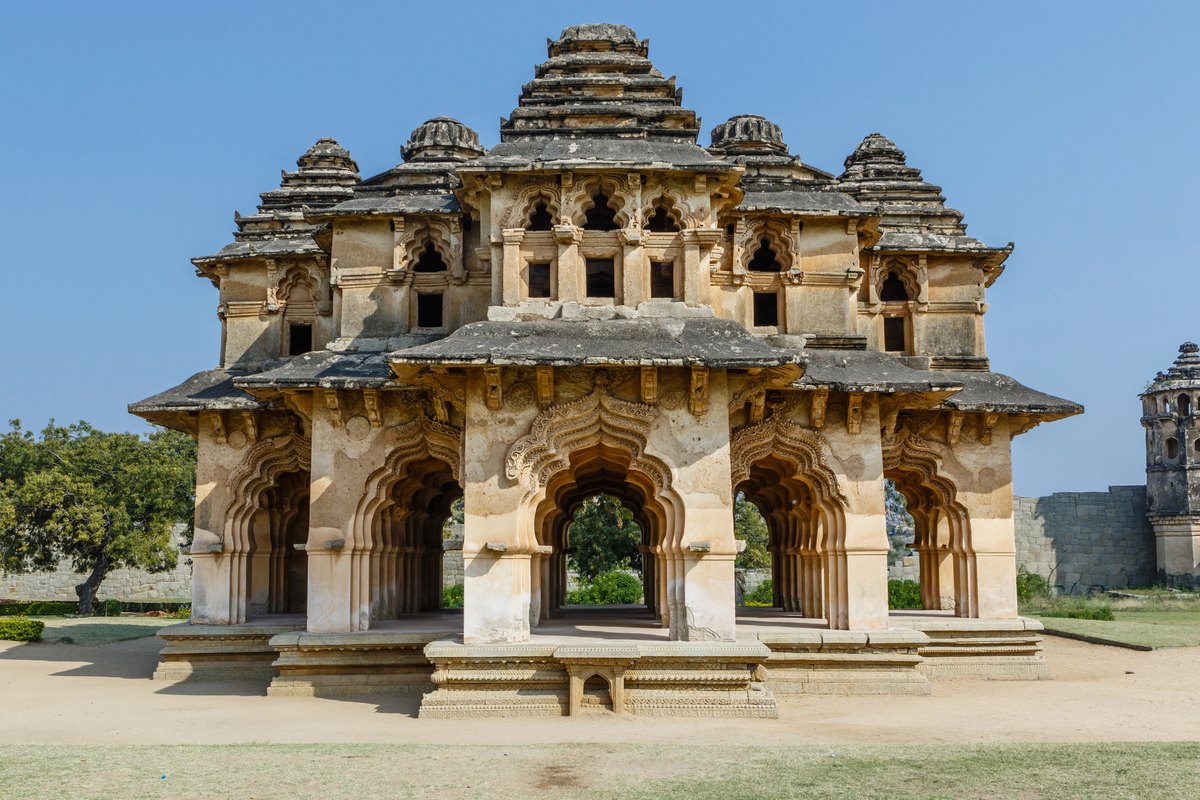
Photo: lotus-mahal-hampi.jpg
Lotus Mahal, Hampi
Enjoy a full day of visits. See the Vittala Temple, dedicated to Lord Vishnu, with its famous stone chariot and slender columns that echo with music when struck. Visit the Queen’s Bath, open to the sky and surrounded by a moat, and the Narasimha, Krishna and Hazara Rama temples. Also visit the Elephant Stables, the Step Well and the Lotus Mahal, a skilful blend of Hindu and Islamic architecture.
Overnight: HampiIncludes: guide, entrance fees
Day 37
Hampi to Chikmagalur
Leave early and drive south across the Deccan plateau to Chikmagalur (about 292 km, 6 hours), climbing into the hills of the Western Ghats. Check in to your hotel among the coffee estates.
Set in the hills of the Western Ghats, Chikmagalur is the birthplace of coffee in India: legend has it that in the 17th century the Sufi saint Baba Budan brought seven coffee beans back from Yemen and planted them on the hills here.
In the afternoon, drive up to Mullayanagiri, at 1,930 metres the highest peak in Karnataka, where about 500 steps lead to a small temple at the summit, and continue to the Baba Budangiri range, with its winding roads and sweeping views, and the scenic Hirekolale Lake, surrounded by hills and coffee estates.
Overnight: ChikmagalurDrive: about 292 kmIncludes: car
Day 38
Chikmagalur – coffee estate
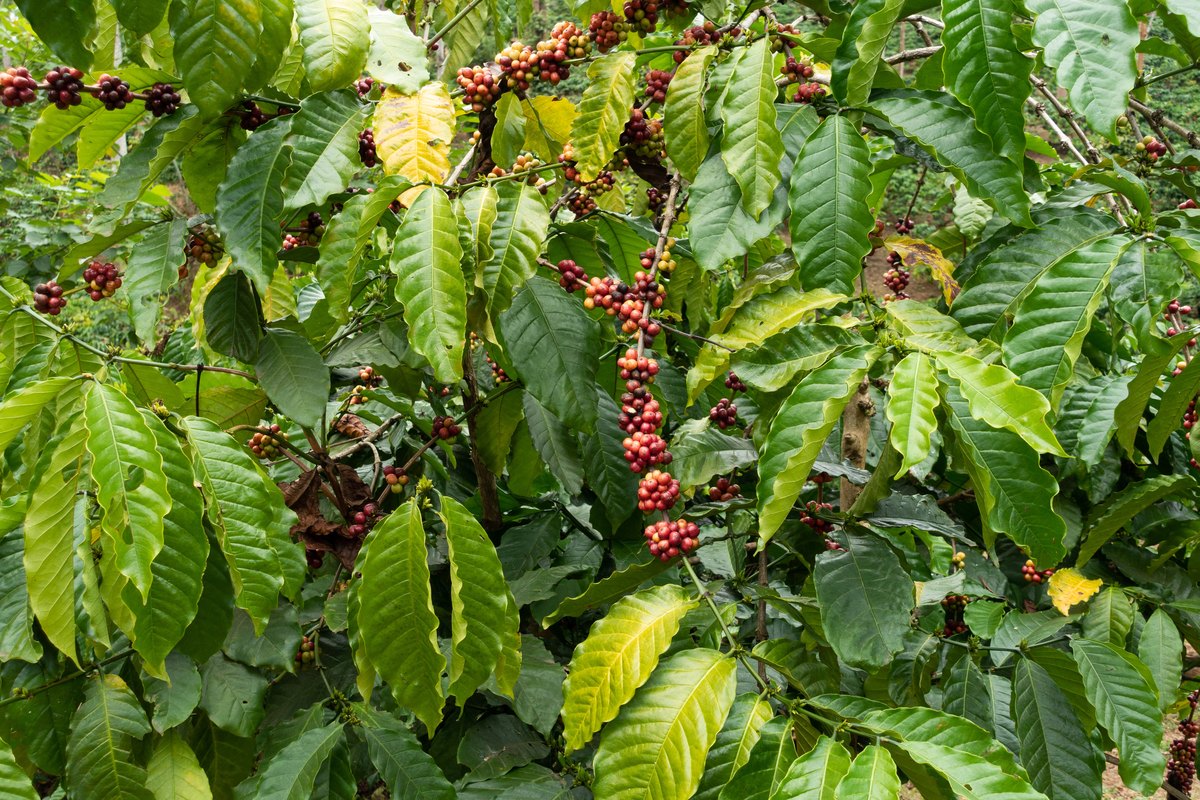
Photo: coffee-plantation-chikmagalur.jpg
Coffee Plantation, Chikmagalur
Enjoy a coffee plantation tour and follow the journey of coffee from bean to cup, through the estate and the curing and roasting process, ending with a tasting.
The rest of the day is free to enjoy the peace of the estate.
Overnight: ChikmagalurIncludes: coffee plantation tour
Day 39
Chikmagalur to Coorg via Belur and Halebid
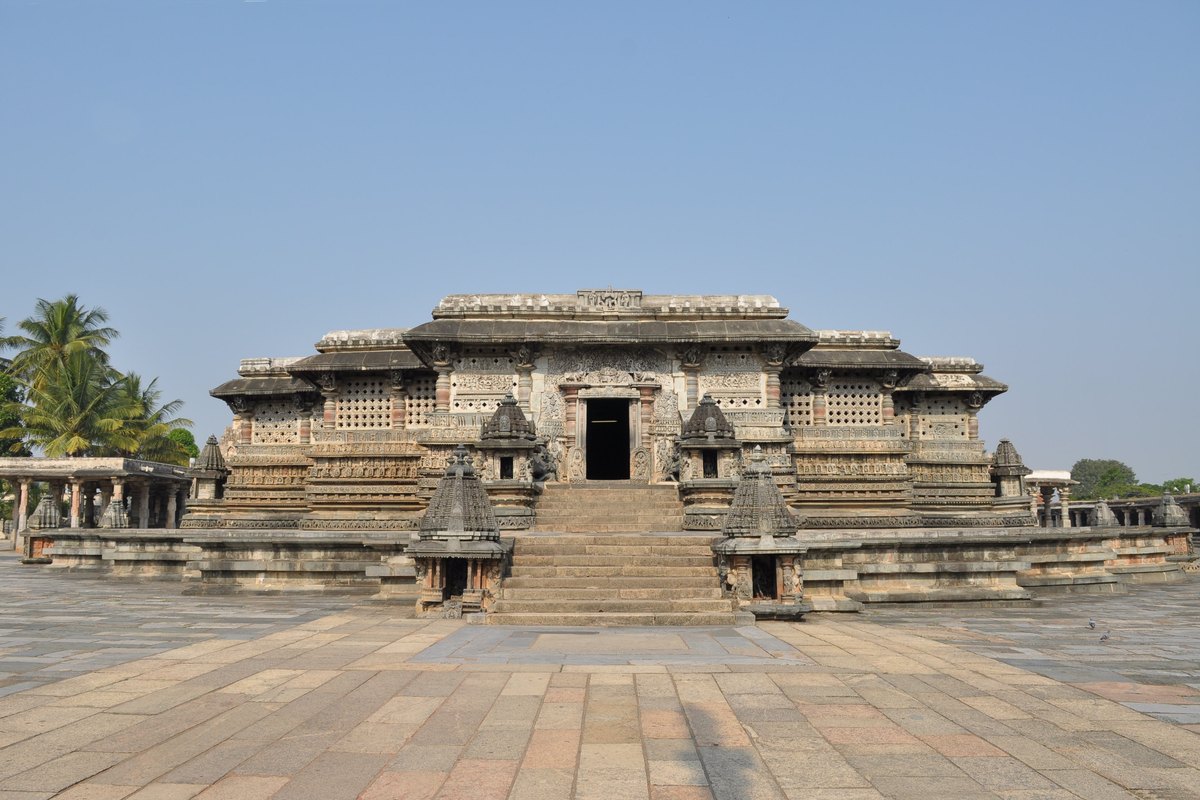
Photo: chennakeshava-temple-belur.jpg
Chennakeshava Temple, Belur
Photo: hoysaleswara-temple-halebid.jpg
Hoysaleswara Temple, Halebid
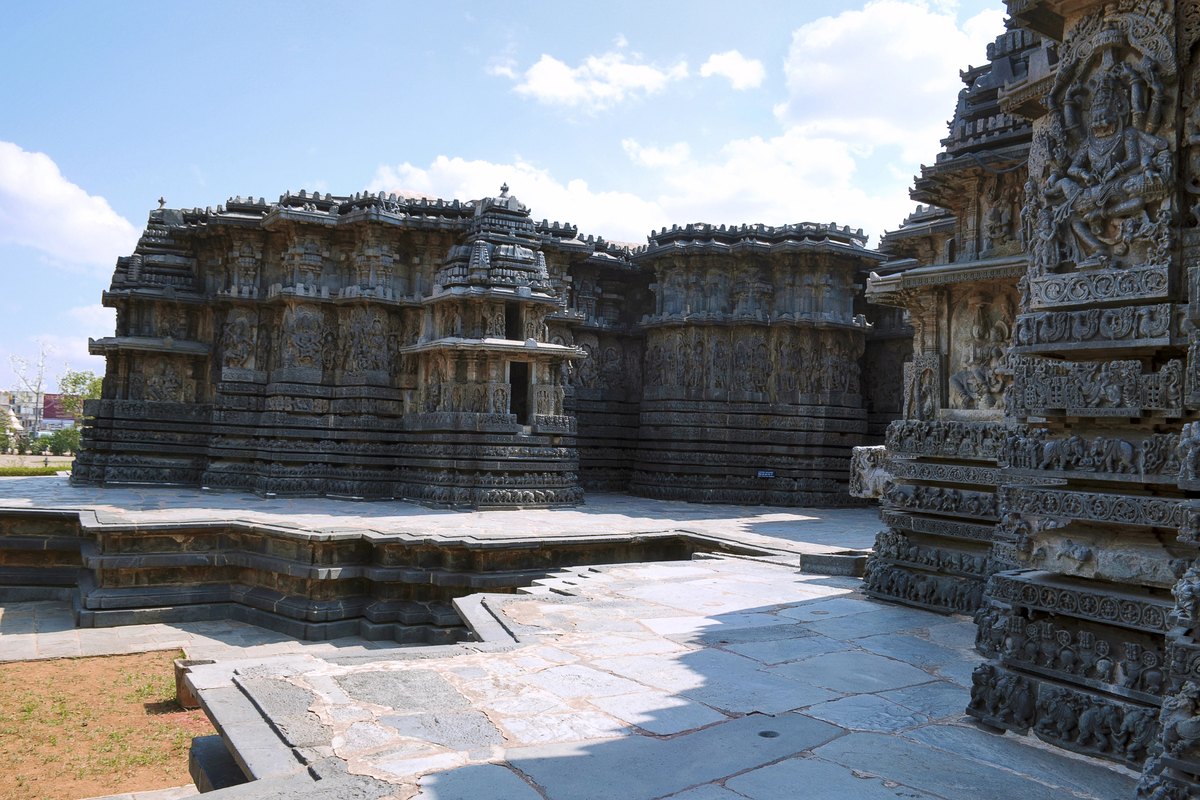
After breakfast, drive to Belur (about 28 km, 45 minutes), best known for the Chennakeshava Temple, one of the jewels of South Indian architecture. Built in the 12th century by Vishnuvardhana to commemorate the Hoysala triumph over the Cholas, it is remarkable for its sculptures, reliefs and friezes, and took 103 years to complete.
Continue to Halebid (about 16 km, 30 minutes), the Hoysala capital in the 12th and 13th centuries. The main attraction is the Hoysaleshvara Temple, begun in 1121 by King Vishnuvardhana, which is astounding for its wealth of sculptural detail. Its walls are covered with an endless variety of scenes from Hindu mythology, animals, birds and dancing figures, yet no two sculptures are the same.
Later, drive to Coorg (Kodagu) (about 140 km, 3 hours 45 minutes), a land of misty hills, coffee and spice plantations, and check in to your resort.
Overnight: CoorgDrive: about 184 kmIncludes: guide in Belur and Halebid, entrance fees
Day 40
Coorg to Kabini
After breakfast, drive to Kabini (about 118 km, 3 hours) and check in to your jungle lodge on the banks of the Kabini River.
In the afternoon, set out on a jeep safari in Nagarhole National Park.
Overnight: KabiniDrive: about 118 kmIncludes: shared jeep safari
Day 41
Kabini – Nagarhole safaris
Photo: elephants-kabini-river.jpg
Elephants by the Kabini River
Photo: leopard-nagarhole-kabini.jpg
Leopard, Nagarhole
Photo: kabini-boat-safari.jpg
Boat Safari, Kabini
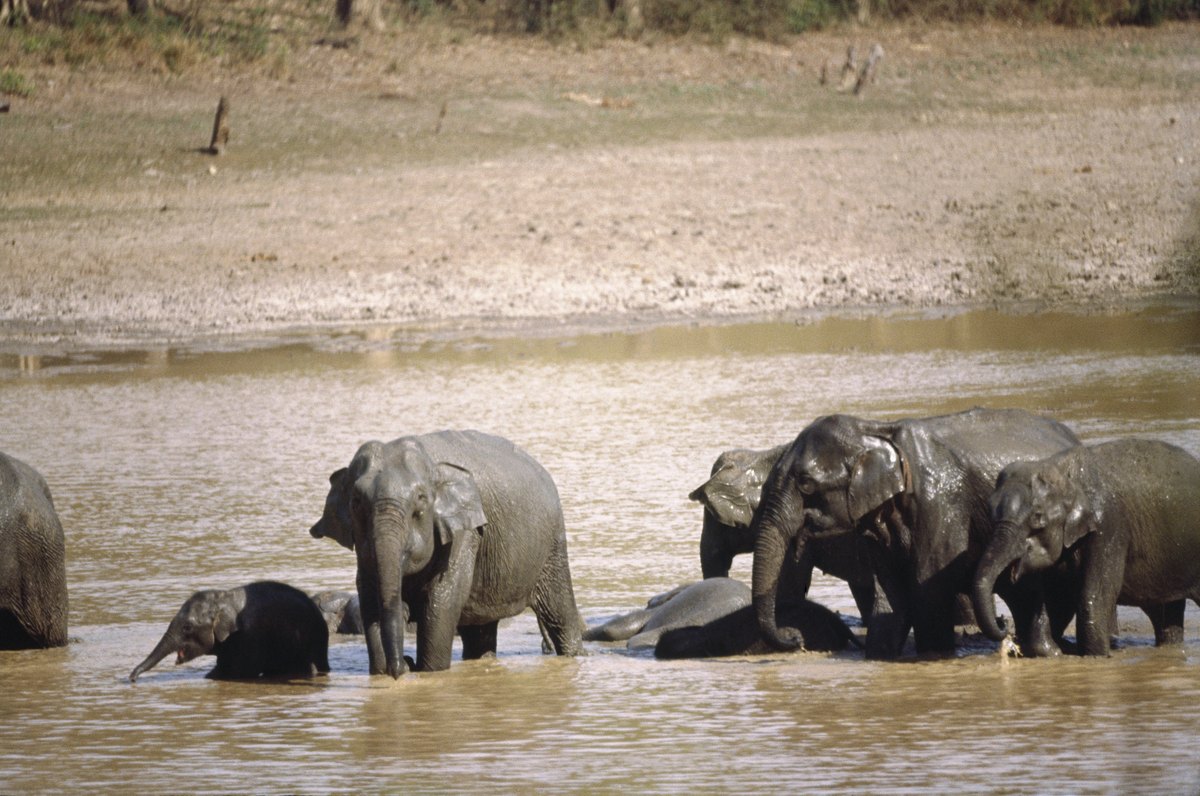
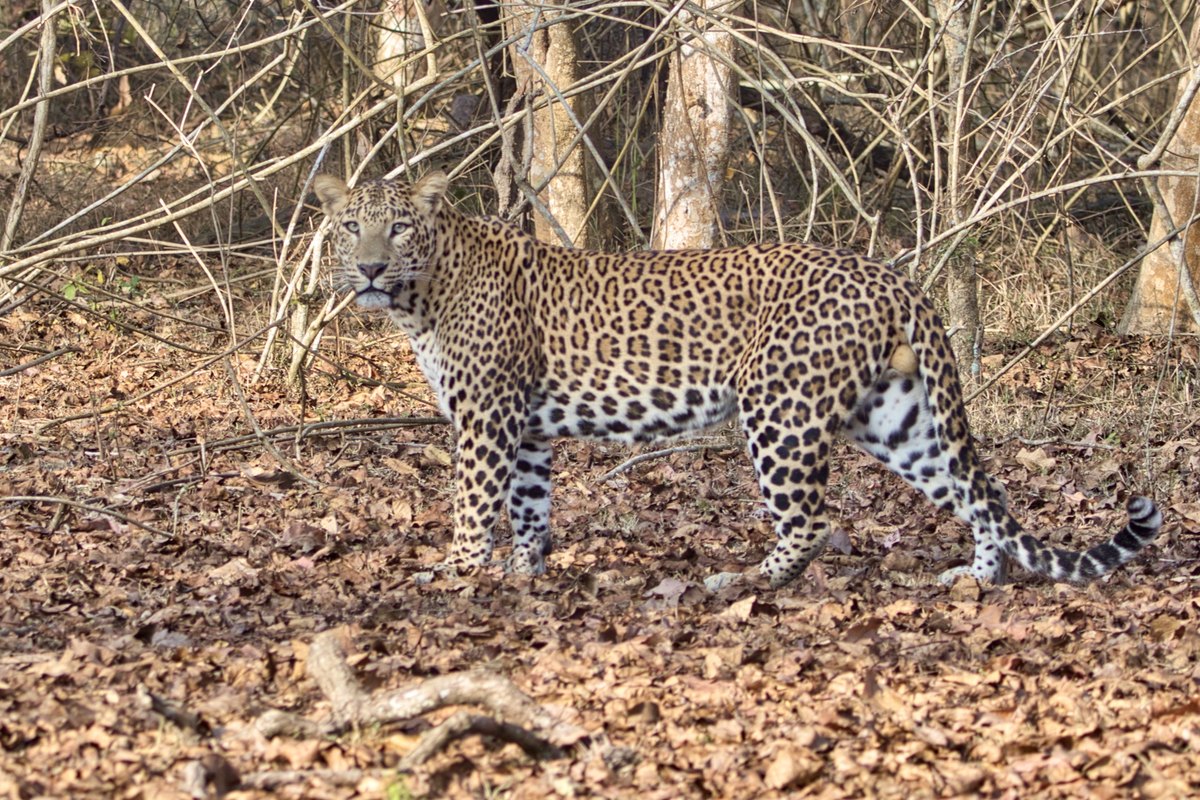
Nagarhole National Park (Rajiv Gandhi National Park), the hunting retreat of the Mysore Maharajas, is a perfect destination for wildlife lovers in South India. Set out on a morning jungle safari into the heart of the park, where you are sure to spot wild animals in their natural habitat. Popular sightings include elephant, gaur, sambar, chital and wild boar, and the more elusive tiger and leopard.
A bird watcher’s paradise, the park is home to over 300 species of birds, many of them endemic to these jungles. In the dry months, large herds of elephants gather along the backwaters of the Kabini River.
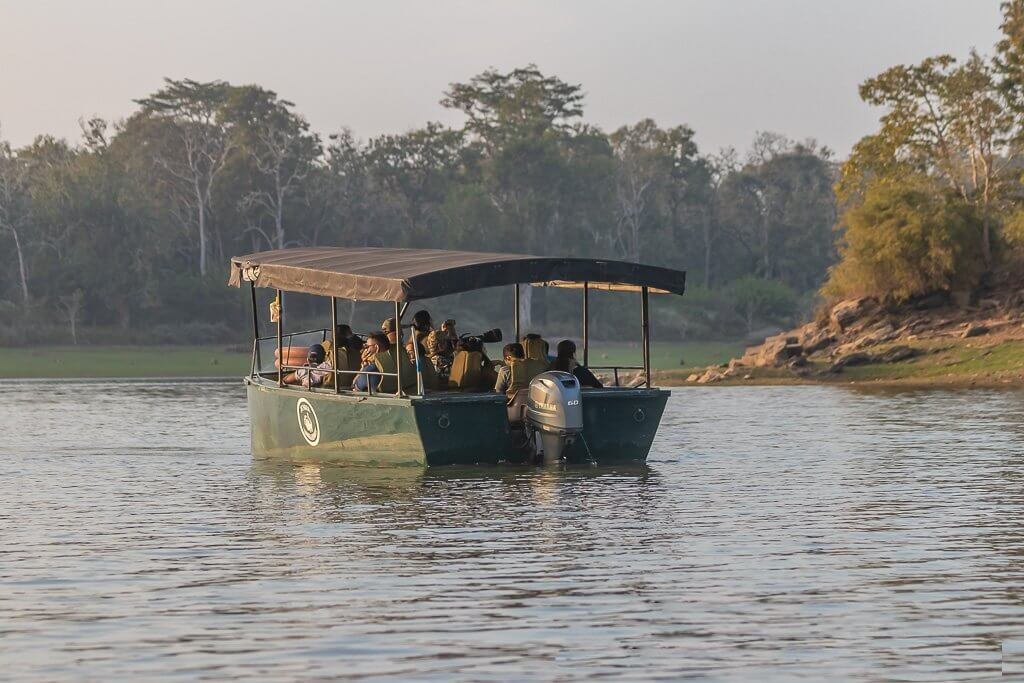
In the afternoon, enjoy a boat safari on the river, with its fabulous scenery and wildlife along the lush green banks.
Drive into Kerala to Sultan Bathery (about 100 km, 2 hours 30 minutes), in the hills of Wayanad.
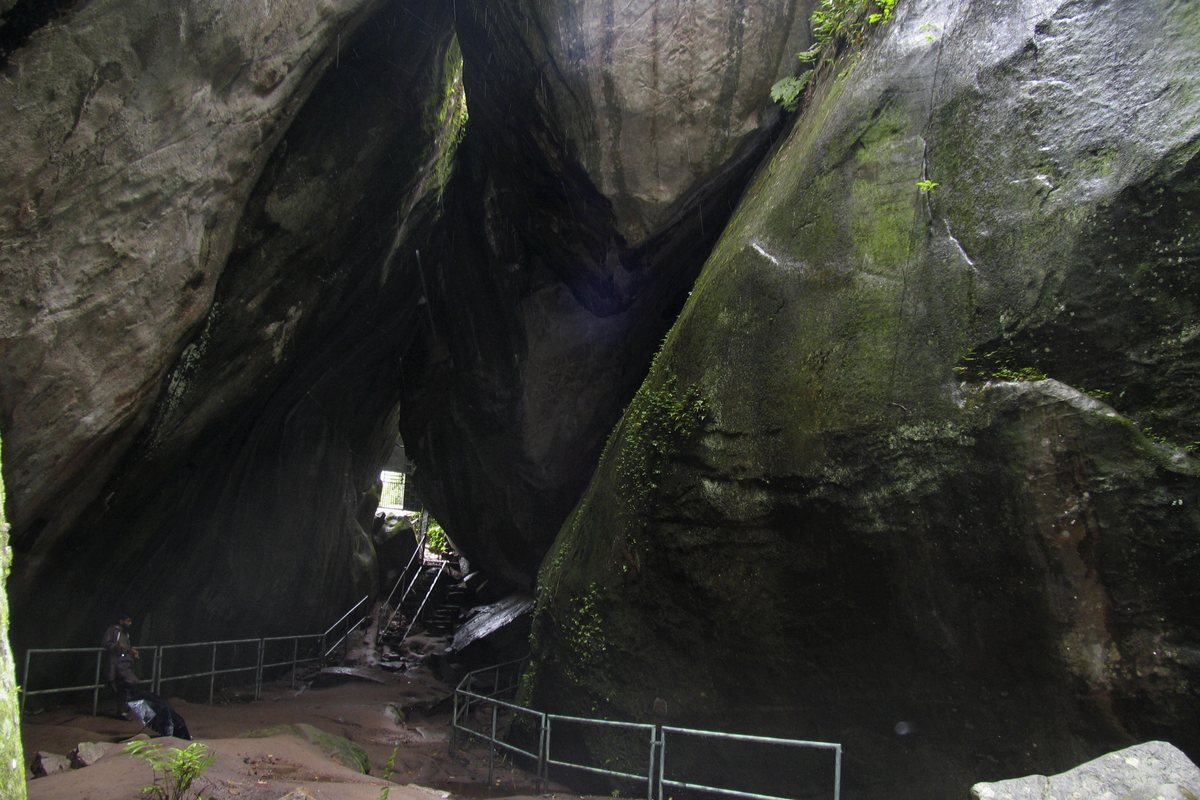
Climb to the Edakkal Caves, set at about 1,000 metres on Ambukuthi Mala. The walls of these natural rock shelters are covered with prehistoric carvings of human and animal figures and symbols, some thought to be several thousand years old. Nearby, the Wayanad Heritage Museum at Ambalavayal displays tools, weapons, pottery and carvings, including Neolithic axes and medieval hero stones, telling the story of Wayanad and its Adivasi communities.
Later, continue to your lakeside resort (about 24 km, 45 minutes).
Overnight: WayanadDrive: about 124 kmIncludes: car, entrance feesPlease note: the Edakkal Caves are closed on Mondays
Day 43
Wayanad to Ooty
Photo: botanical-garden-ooty.jpg
Botanical Gardens, Ooty
Drive to Ooty (about 117 km, 3 hours 45 minutes), climbing into the Nilgiri Hills, and check in to your hotel. Ooty, known as the ‘Queen of Hill Stations’, is a feast for the eyes, with its lofty eucalyptus-covered mountains, dense forests and acres of tea estates.
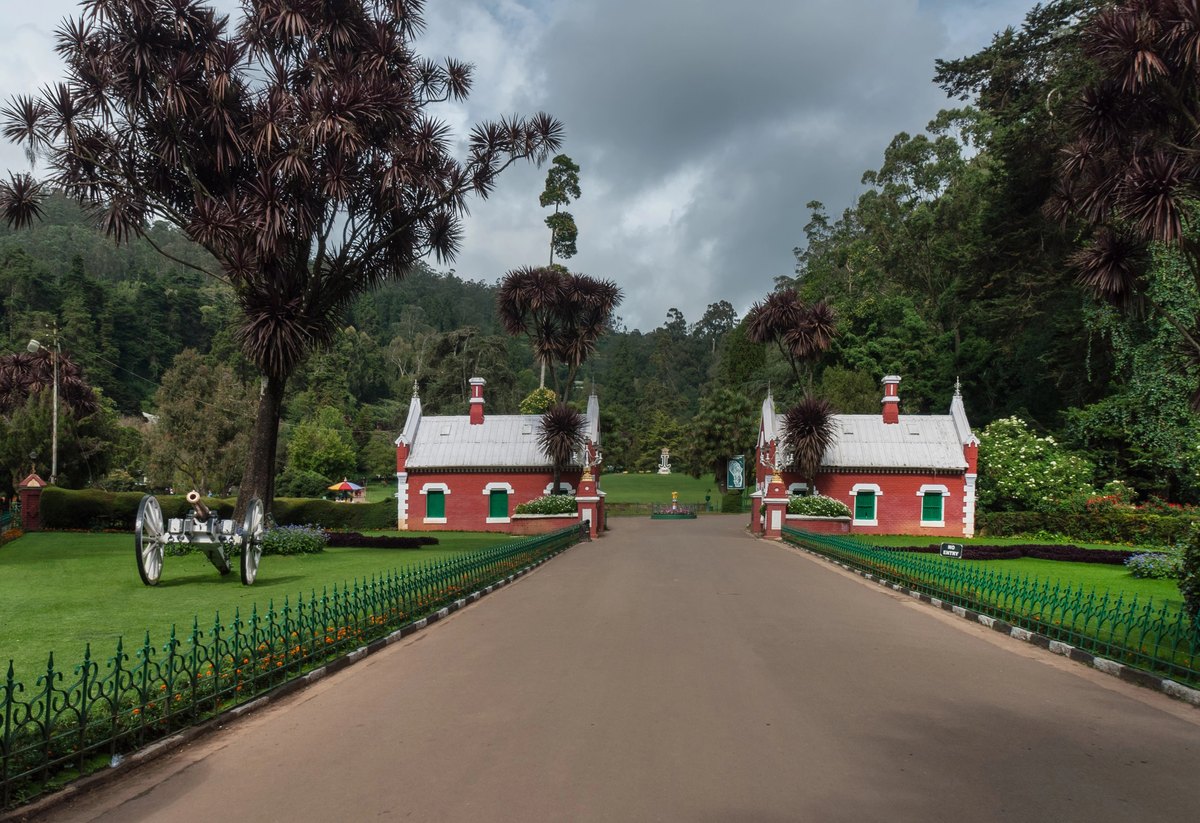
In the afternoon, stroll around the Botanical Gardens, covering 22 acres, with varieties of trees, ferns, orchids and flowerbeds laid out in the Italian style, and see Raj Bhavan, the cream-coloured Government House built in 1877, overlooking the gardens. Drive up to Doddabetta Peak, at 2,623 metres the highest point in the Nilgiris, for beautiful views over the hills.
Overnight: OotyDrive: about 117 kmIncludes: guide, entrance fees
Day 44
Ooty – Nilgiri Mountain Railway to Coonoor
Photo: nilgiri-toy-train-ooty.jpg
Nilgiri Mountain Railway, Ooty
Photo: tea-estate-ooty.jpg
Tea Estate, Ooty
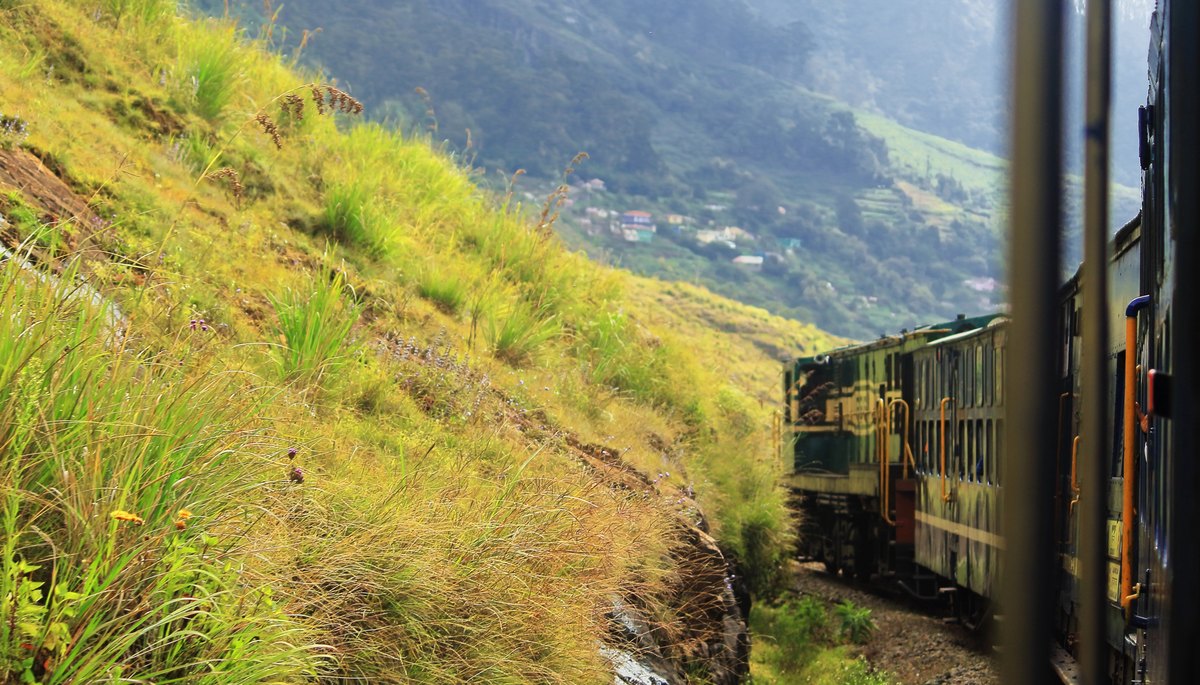
In the morning, transfer to the station to board the Nilgiri Mountain Railway toy train to Coonoor (about 1 hour), a UNESCO World Heritage Site that winds through tea gardens, forests and tunnels.
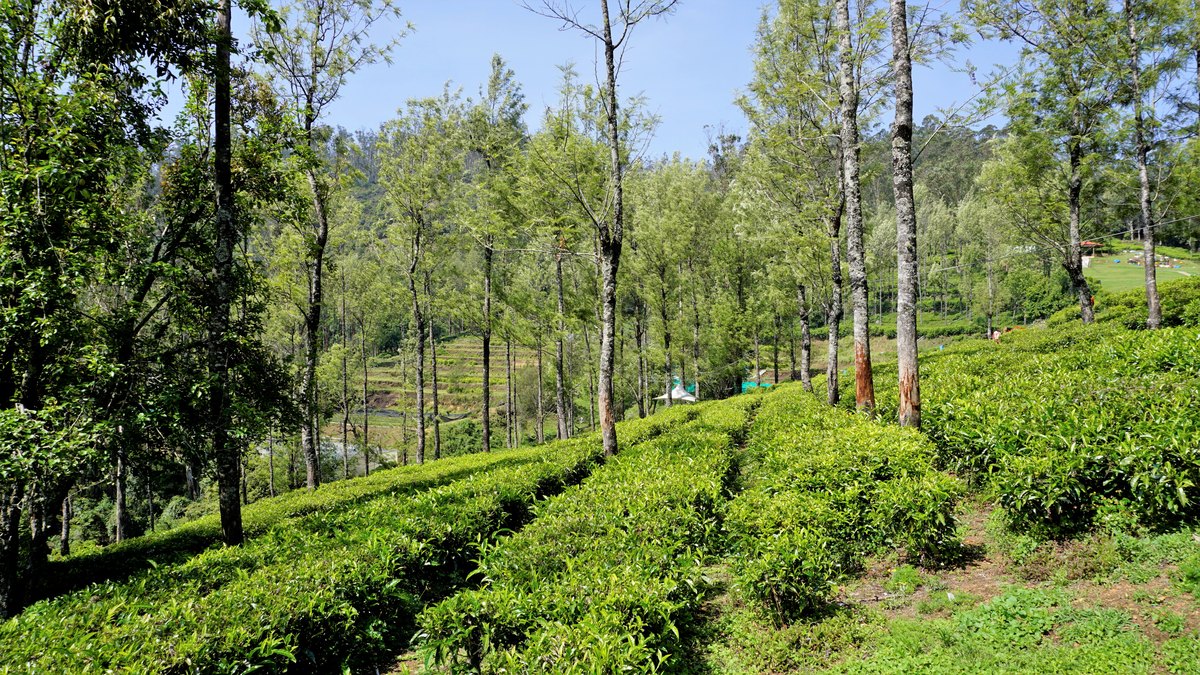
Visit Coonoor, another colonial hill station close to Ooty, surrounded on all sides by hills and slopes of tea with old colonial houses; tea auctions are held here. Enjoy a tea plantation tour and visit Sim’s Park and the viewpoints around the town.
In the afternoon, drive back to Ooty (about 20 km, 45 minutes).
Overnight: OotyIncludes: toy train tickets, tea plantation tour, guide
Day 45
Ooty to Munnar
Photo: tea-gardens-munnar.jpg
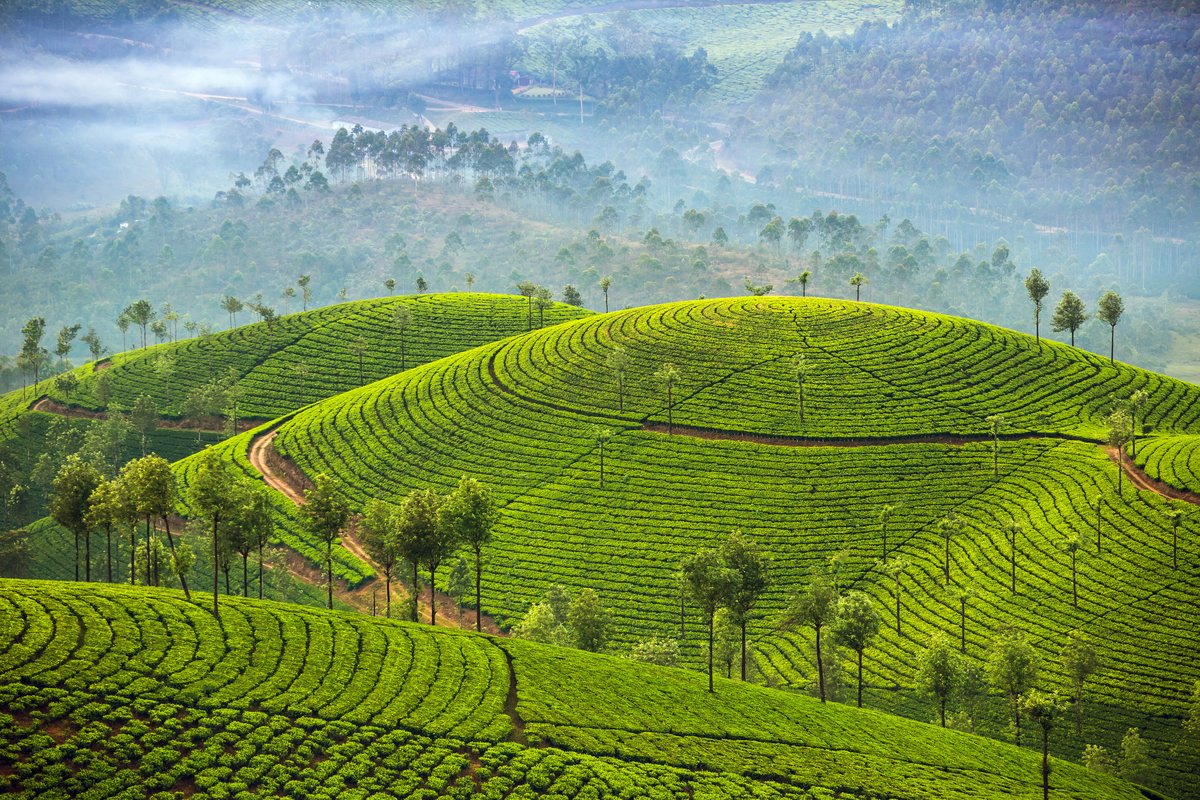
Tea Gardens, Munnar
After breakfast, drive down from the Nilgiris and across to the hills of Kerala to Munnar (about 243 km, 7 hours 30 minutes). Check in to your hotel.
Set at about 1,600 metres, where three mountain streams meet, Munnar was once the summer retreat of the British in South India. Today it is Kerala’s best-loved hill station, surrounded by endless rolling tea estates, misty peaks and patches of shola forest, with a cool, refreshing climate all year round.
Overnight: MunnarDrive: about 243 km
Day 46
Munnar – Laxmi Hill ridge walk
Photo: laxmi-hill-ridge-walk-munnar.jpg
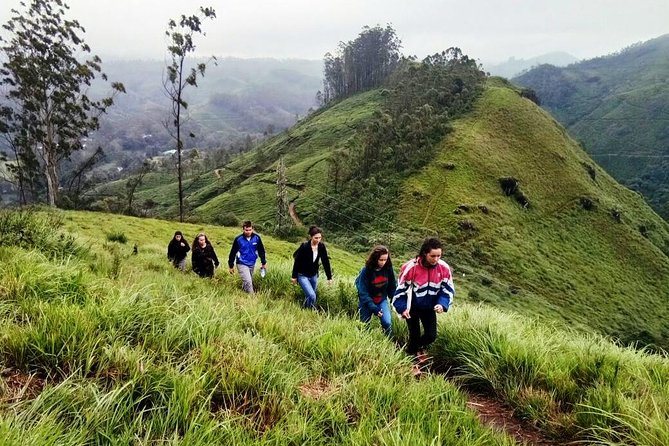
Laxmi Hill Ridge Walk, Munnar
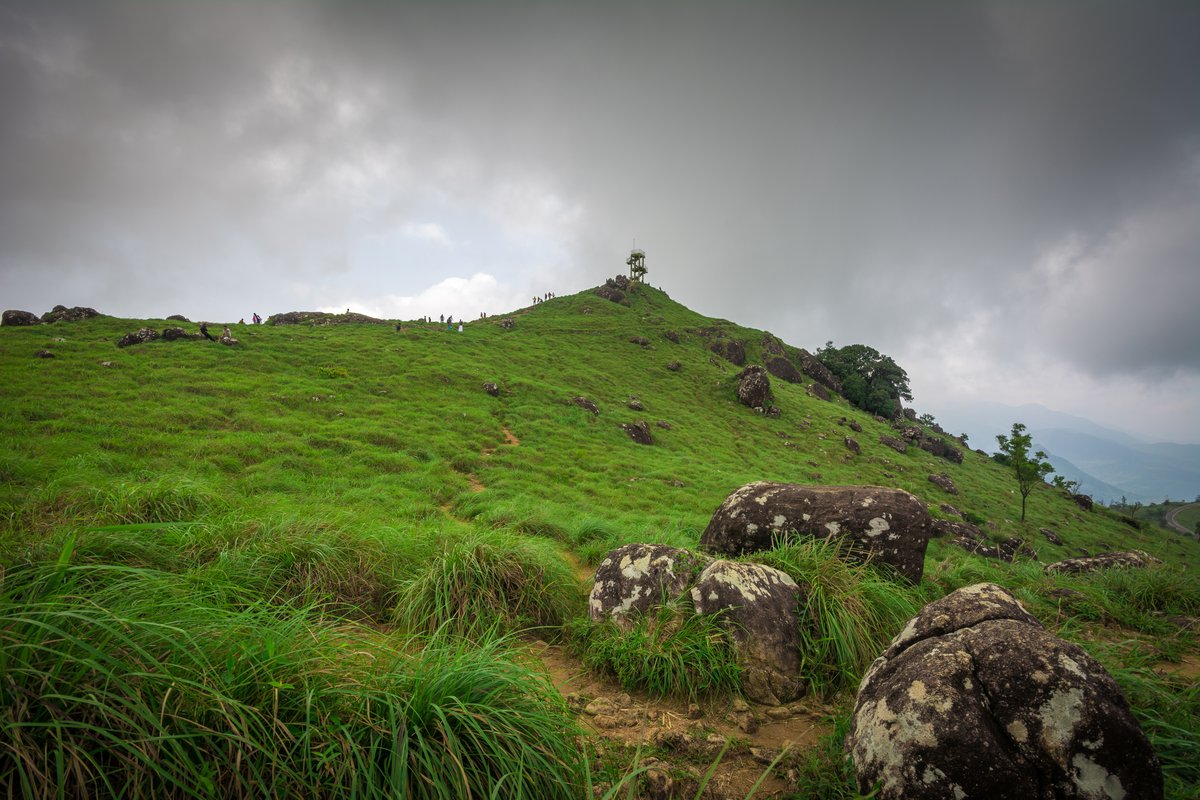
In the morning, set out on the Laxmi Hill ridge walk (about 3 hours 30 minutes to 4 hours). The trek starts at around 1,450 metres with a walk through the tea plantations for about 30 to 40 minutes. From the top, it follows the ridge for a couple of hours through beautiful grasslands, with rocky mountain slopes on one side and tea plantations on the other, interspersed with patches of shola forest. On a clear day you can see Anamudi, the highest peak in South India. The trail also passes through a private coffee and cardamom plantation, with a good chance of spotting some of the region’s endemic birds, and refreshments are served along the way. The highest point is about 1,950 metres.
The afternoon is free to relax.
Overnight: MunnarIncludes: guided ridge walk
Day 47
Munnar – Eravikulam National Park and the tea trail
Photo: nilgiri-tahr-eravikulam-munnar.jpg
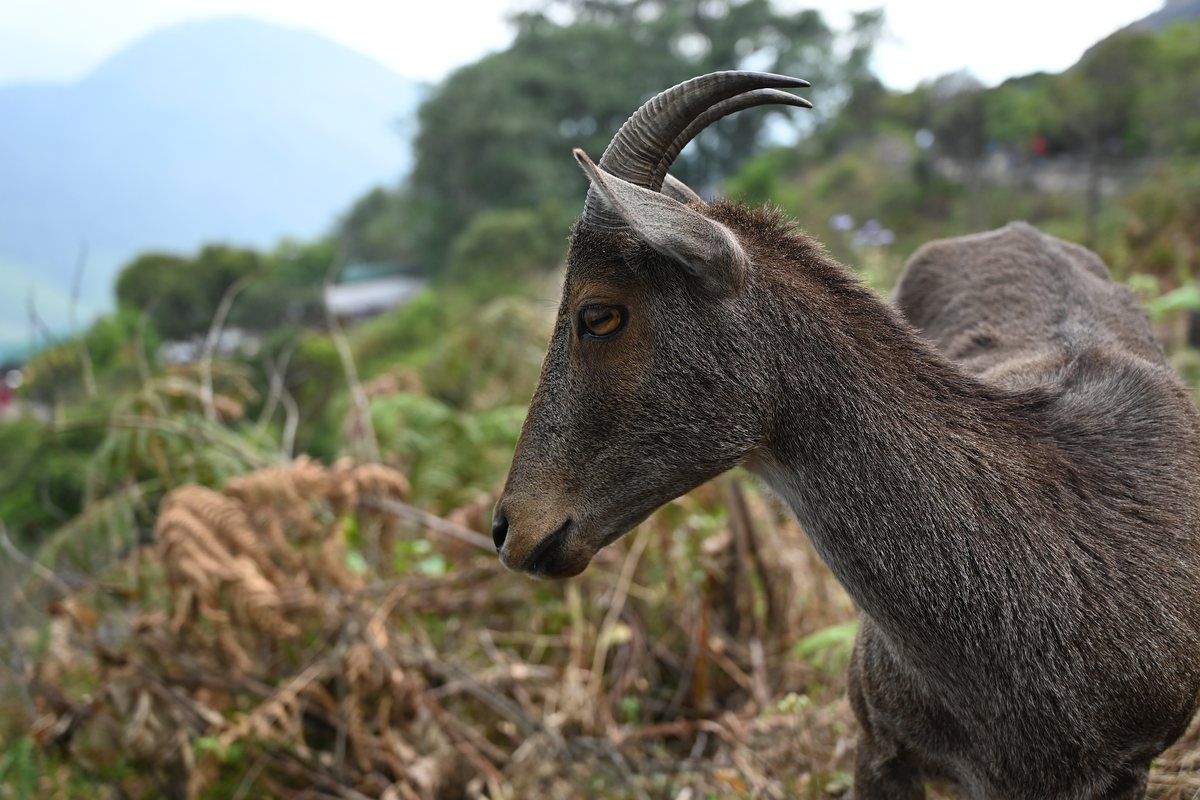
Nilgiri Tahr, Eravikulam, Munnar
In the morning, visit Eravikulam National Park, set among rolling grasslands and shola forest below Anamudi, the highest peak in South India. It is home to the Nilgiri tahr, a rare mountain goat found only in the Western Ghats, which grazes calmly by the road through the park.
In the afternoon, follow the tea trail through the Lockhart Tea Estate, with stunning views over the green, carpeted slopes. Meet the women picking tea, and see how the leaf is processed at the Lockhart tea factory.
Overnight: MunnarIncludes: entrance fees, tea trailPlease note: Eravikulam National Park is closed during the calving season of the Nilgiri tahr, usually from February to March
Day 48
Munnar to Thekkady – spice plantation and Kalaripayattu
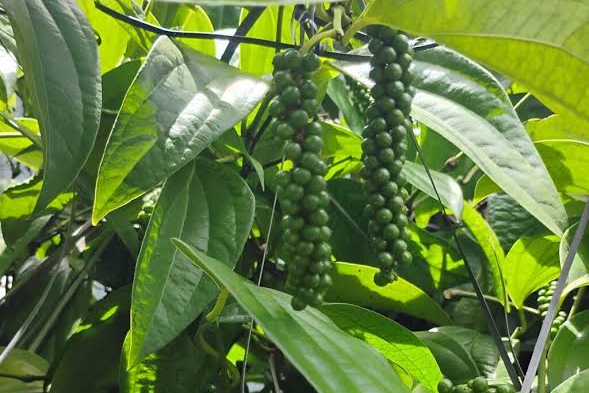
Photo: spice-plantations.jpg
Spice Plantation, Thekkady
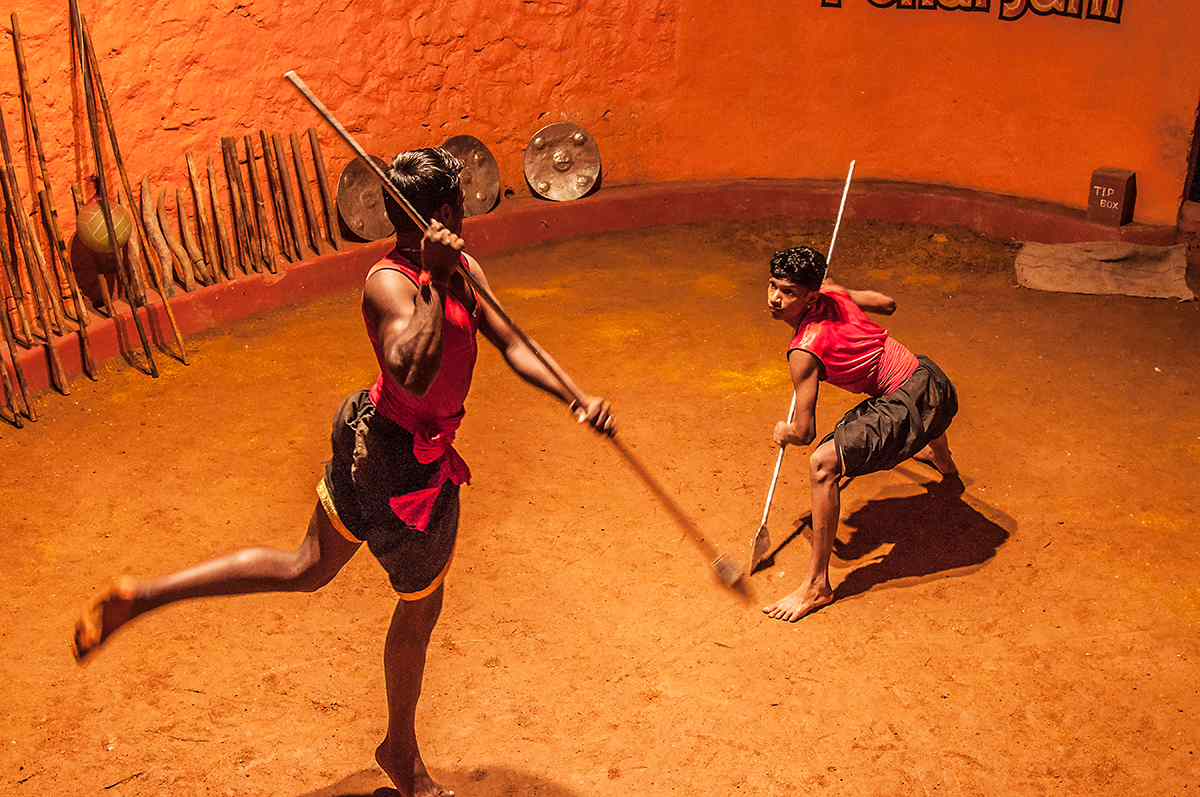
Photo: kalaripayattu-thekkady.jpg
Kalaripayattu, Thekkady
After breakfast, drive through the hills to Thekkady (about 85 km, 4 hours), past tea, coffee and cardamom estates. Check in to your hotel.
In the afternoon, visit a spice plantation for an introduction to the fascinating range of spices, coffee, cocoa and fruits grown organically on a local estate. Spices grown around Thekkady include pepper, clove, cardamom, nutmeg, ginger, turmeric, vanilla and curry leaves.
In the evening, watch a Kalaripayattu performance. Kerala’s ancient martial art is counted among the oldest fighting systems in the world, and its agile leaps, kicks and strikes, and its bouts with sticks, swords and shields, are thrilling to watch in the close setting of the kalari arena.
Overnight: ThekkadyDrive: about 85 kmIncludes: spice plantation visit, Kalaripayattu show
Day 49
Thekkady – Periyar nature walk and boat ride
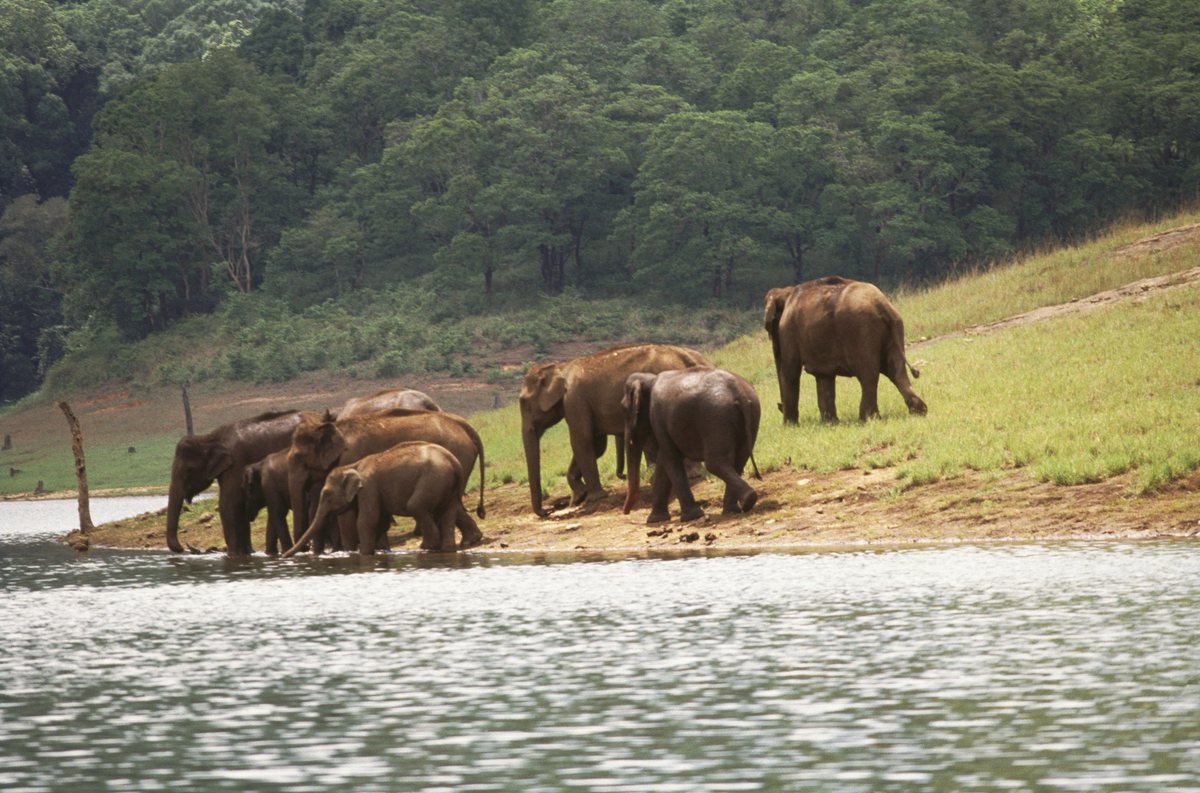
Photo: periyar-lake-elephants-thekkady.jpg
Elephants by Periyar Lake, Thekkady
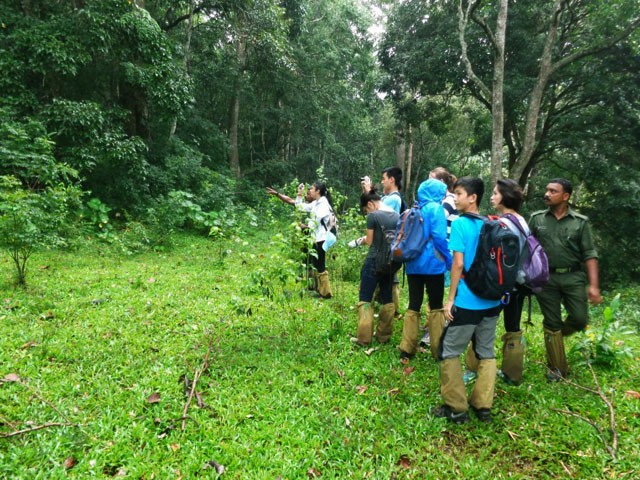
Photo: nature-walk-thekkady.jpg
Nature Walk, Thekkady
In the morning, set out on a guided nature walk (about 2 hours 30 minutes, 4–5 km) in the Periyar forest, looking for birds, butterflies and other wildlife. The trails pass through evergreen and moist deciduous forest interspersed with grassland.
In the afternoon, take a boat ride (about 1 hour 30 minutes) on Periyar Lake to watch wildlife along its banks. Nestled in the southern Western Ghats, Thekkady is home to the Periyar Tiger Reserve, which spreads over 777 sq km of forest and shelters thousands of species of plants and animals, including rare and endangered ones. The lake at its heart, about 26 sq km, was created when the Mullaperiyar dam was built in 1895; it winds around the wooded hills and gives the elephants, gaur, sambar and other wildlife a permanent source of water.
Overnight: ThekkadyIncludes: guided nature walk, boat ride on Periyar Lake
Day 50
Thekkady to Alleppey – houseboat cruise
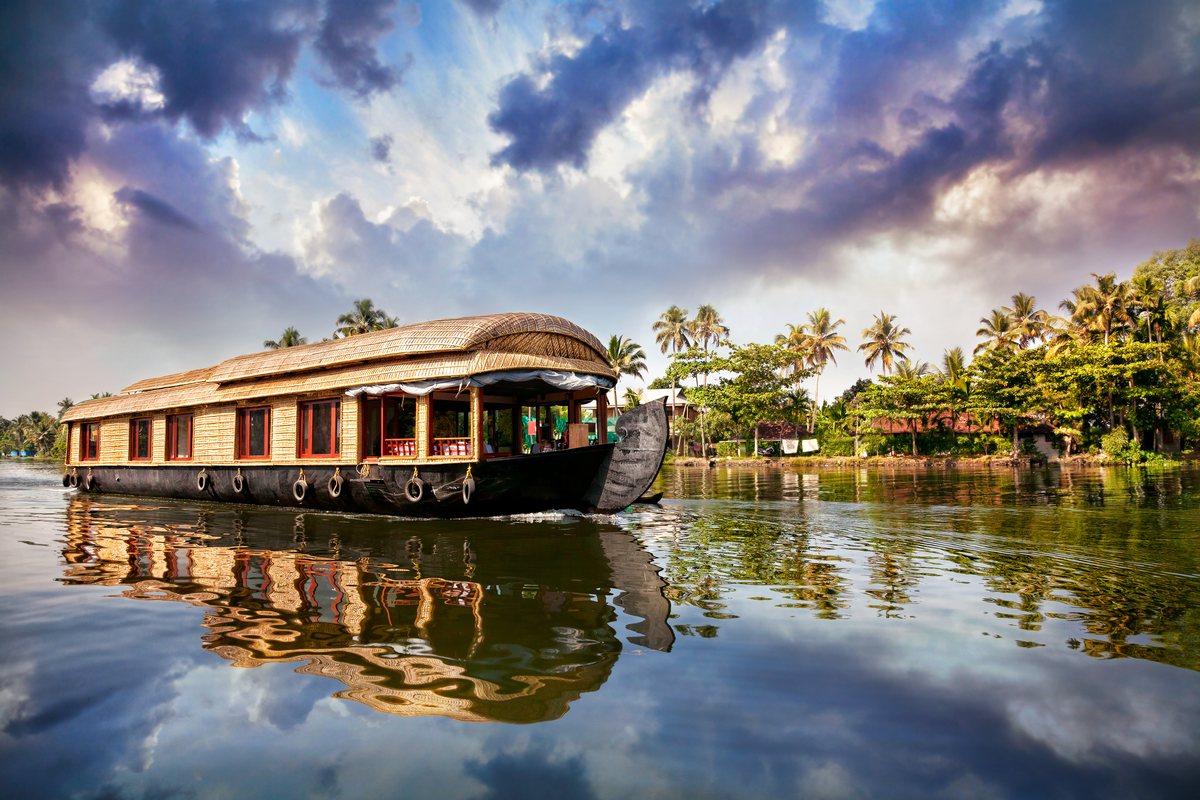
Photo: houseboat-alleppey.jpg
Houseboat, Alleppey
Photo: kerala-backwaters.jpg
Backwaters, Kerala
After breakfast, drive down from the hills to Alleppey (about 131 km, 4 hours) and board your traditional kettuvallam (houseboat) for a cruise on the backwaters, with all meals served on board and a night on the water.
Alleppey, the ‘Venice of the East’, has a large network of canals winding through the town and its villages, and is famous for the Snake Boat Race held every August. Glide along palm-fringed canals past vast paddy fields and tiny hamlets, with flocks of ducks along the banks and fishing eagles and kingfishers overhead. You share the water with country boats carrying people from every walk of rural Kerala life, from the milkman and the newspaper boy to priests and wedding parties.
Later, enjoy a shikara ride through the narrow canals, past paddy fields, coconut groves and tiny hamlets, and visit a fishing village for a glimpse of everyday life on the backwaters.
Overnight: on the houseboatDrive: about 131 kmIncludes: houseboat cruise with all meals, shikara ride
Day 51
Alleppey to Varkala via Kayamkulam
Photo: varkala-beach.jpg
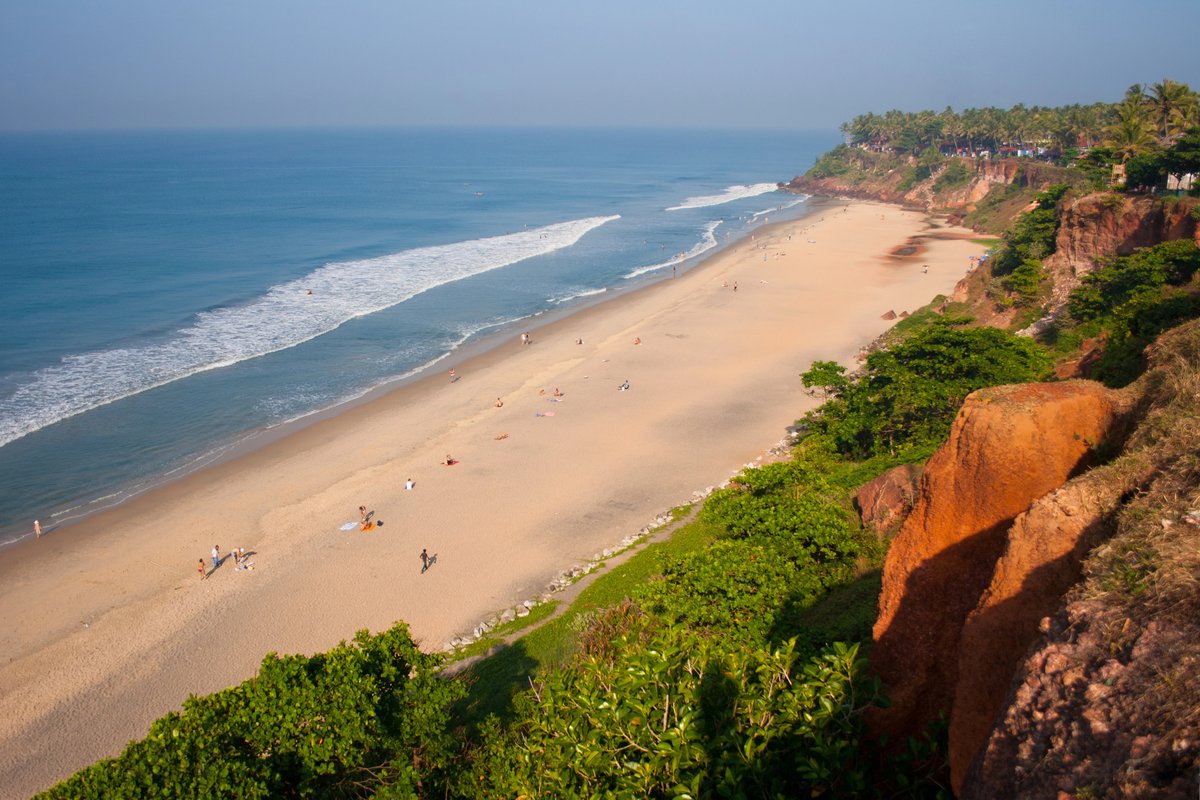
Varkala Beach, Varkala
In the morning, leave the houseboat and drive towards Kayamkulam. Visit Mannarasala, the best known of Kerala's snake temples, dedicated to Nagaraja, the king of snakes, its shrines set in a dense grove with thousands of stone serpents among the trees, and the Chettikulangara Bhagavathy Temple, dedicated to Bhadrakali and believed to be more than 1,200 years old.
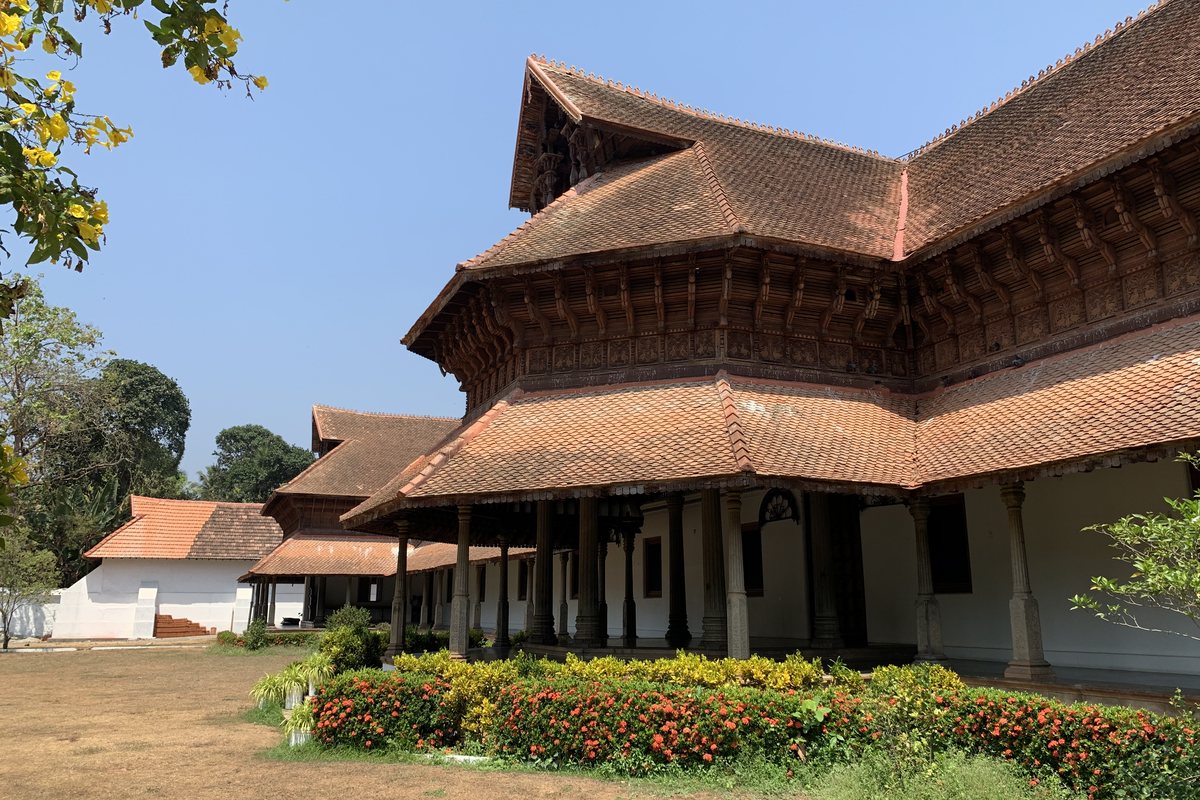
See the Krishnapuram Palace, a restored 18th-century palace and one of the finest examples of Keralan architecture, with gabled roofs and a famous 3-metre mural of the Gajendra Moksha.
Continue to Varkala (about 72 km, 2 hours 15 minutes) and check in to your hotel. Varkala is the only place in southern Kerala where cliffs rise straight from the Arabian Sea, above Papanasam Beach and the 2,000-year-old Janardana Swami Temple.
Overnight: VarkalaDrive: about 116 kmIncludes: guide, entrance feesPlease note: the Krishnapuram Palace is closed on Mondays
Day 52
Varkala – Ponmudi hill station
Photo: ponmudi-hills.jpg
Ponmudi Hills, Ponmudi
Spend the day in the hills at Ponmudi, meaning ‘golden crown’, in the Western Ghats. The winding road climbs past forests, spice plantations and tea estates to grassy hilltops with views across to the coast.
Return to Varkala in the late afternoon to watch the sunset from the cliffs.
Overnight: VarkalaIncludes: car
Day 53
Varkala to Kanyakumari via Trivandrum, Padmanabhapuram and Suchindram
Photo: padmanabhaswamy-temple-trivandrum.jpg
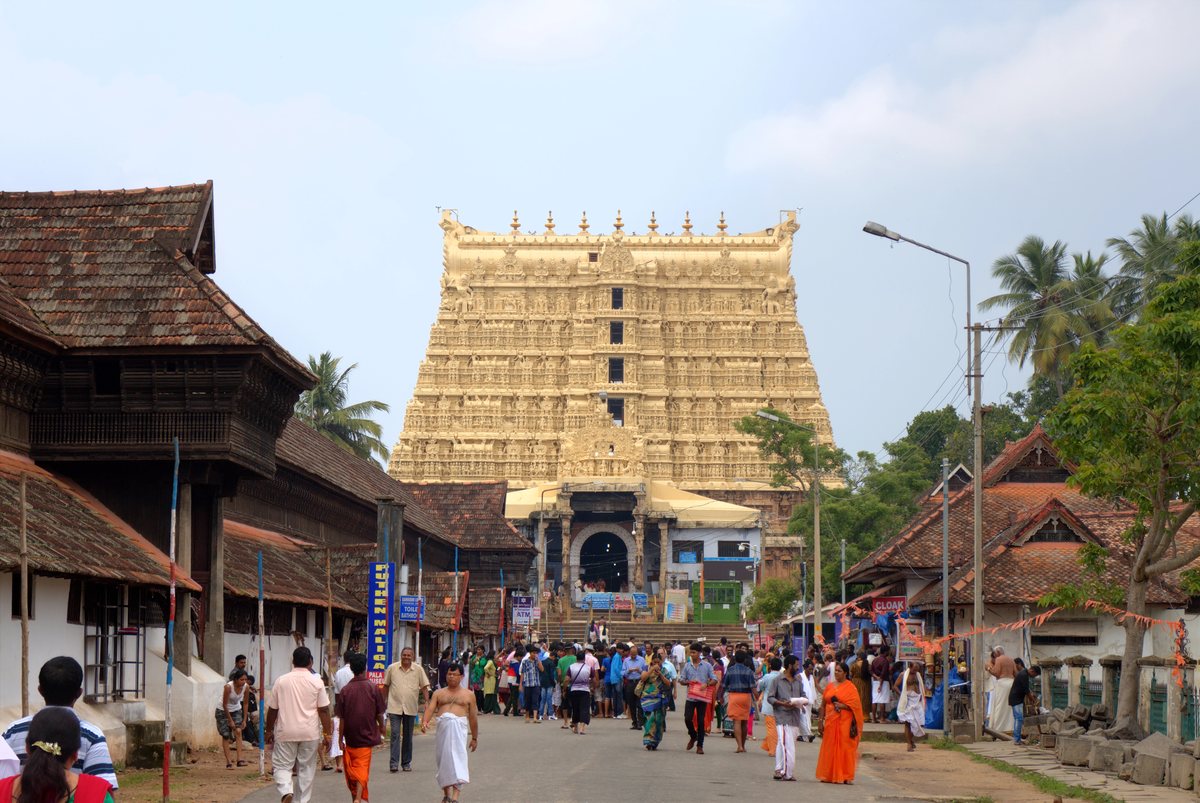
Sree Padmanabhaswamy Temple, Trivandrum
Photo: padmanabhapuram-palace.jpg
Padmanabhapuram Palace
Drive south to Trivandrum (Thiruvananthapuram), the capital of Kerala. See the towering gateway of the Sree Padmanabhaswamy Temple, dedicated to Lord Vishnu reclining on the serpent Anantha (entry for Hindus only), and visit the Kuthiramalika Palace by the temple tank, built by the Maharaja of Travancore, with its carved wooden ceilings and royal collections.
Continue to Padmanabhapuram Palace, the magnificent 16th-century wooden palace of the rulers of Travancore and a fine example of Kerala's traditional architecture, with intricate rosewood carvings, 17th and 18th-century murals and ceilings carved with 90 different flower designs.
Stop at Suchindram to see the Thanumalayan Temple, dedicated to the Hindu trinity of Brahma, Vishnu and Shiva, with its brightly coloured gopuram and musical pillars, each carved from a single block of granite. Arrive in Kanyakumari in the evening and check in to your hotel.
Overnight: KanyakumariDrive: about 148 kmIncludes: guide, entrance feesPlease note: the palaces in Trivandrum and Padmanabhapuram are closed on Mondays
Day 54
Kanyakumari – land's end
Photo: vivekananda-rock-kanyakumari.jpg
Vivekananda Rock Memorial, Kanyakumari
Kanyakumari (Cape Comorin) is the southernmost tip of mainland India, where the Bay of Bengal, the Arabian Sea and the Indian Ocean meet, famous for its sunrise and sunset over the water. Visit the Kumari Amman Temple on the shore, dedicated to the virgin goddess who did penance to win Lord Shiva's hand.
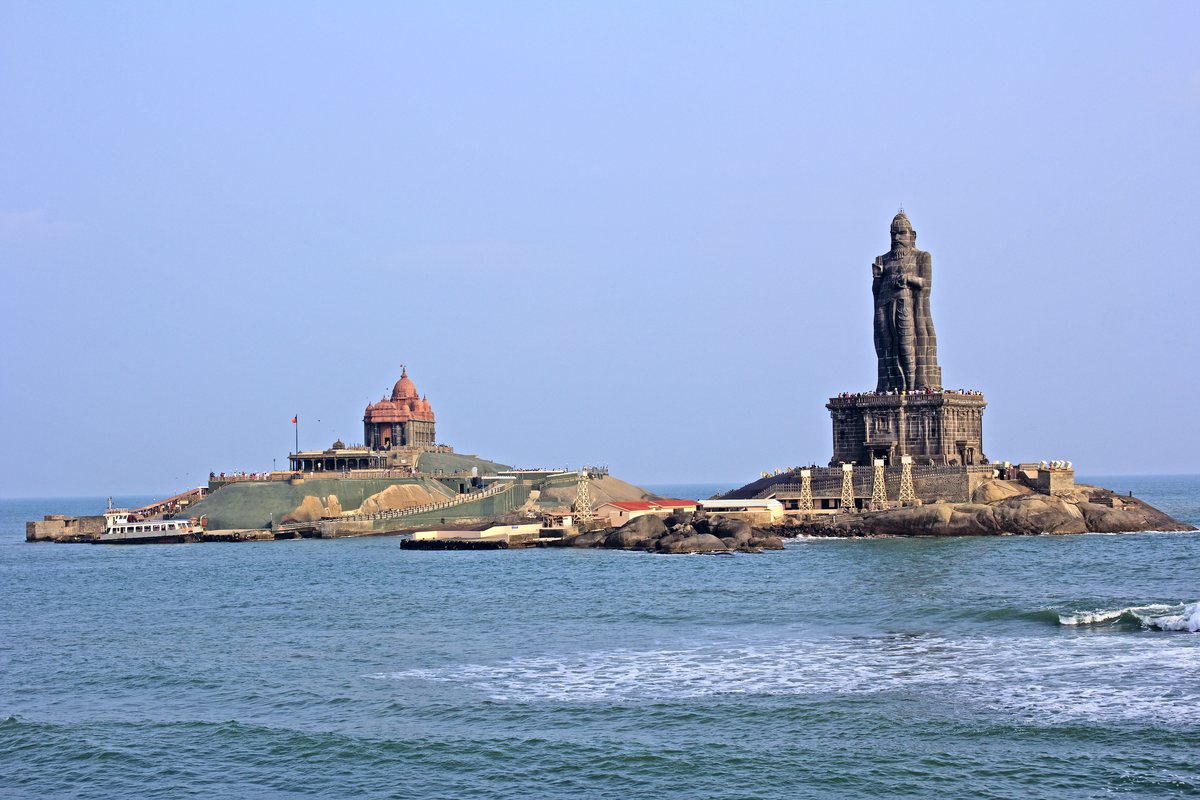
Take the ferry to the Vivekananda Rock Memorial, built in 1970 on the rock where Swami Vivekananda meditated, next to the great statue of the Tamil poet Thiruvalluvar. Back on shore, see the Gandhi Memorial, built where the urn holding the Mahatma's ashes was kept before immersion; on his birthday, 2 October, the sun's rays fall on the very spot.
Drive north to Madurai (about 270 km, 5 hours) and check in to your hotel. One of South India’s great temple towns, Madurai stands on the banks of the river Vaigai. It was the capital of the Pandya kings and an important cultural and commercial centre as early as 550 AD.
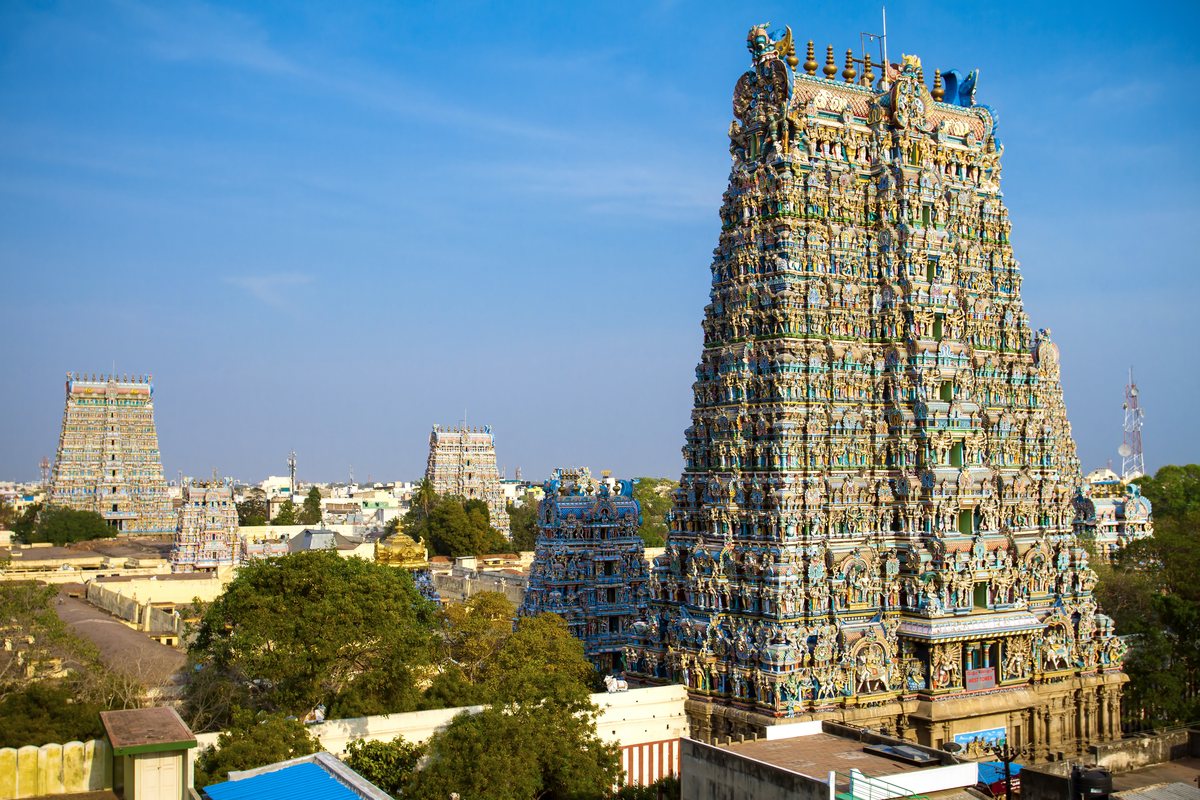
In the afternoon, enjoy a cycle rickshaw ride through the old city to the Meenakshi Temple, the heart and lifeline of this 2,500-year-old city. The complex has 14 magnificent gopurams (towers), including two golden ones over the main shrines, covered with thousands of brightly painted figures of gods, goddesses and mythical creatures. Ancient Tamil classics describe the temple as the centre of the city, with the streets radiating out from it like the petals of a lotus.
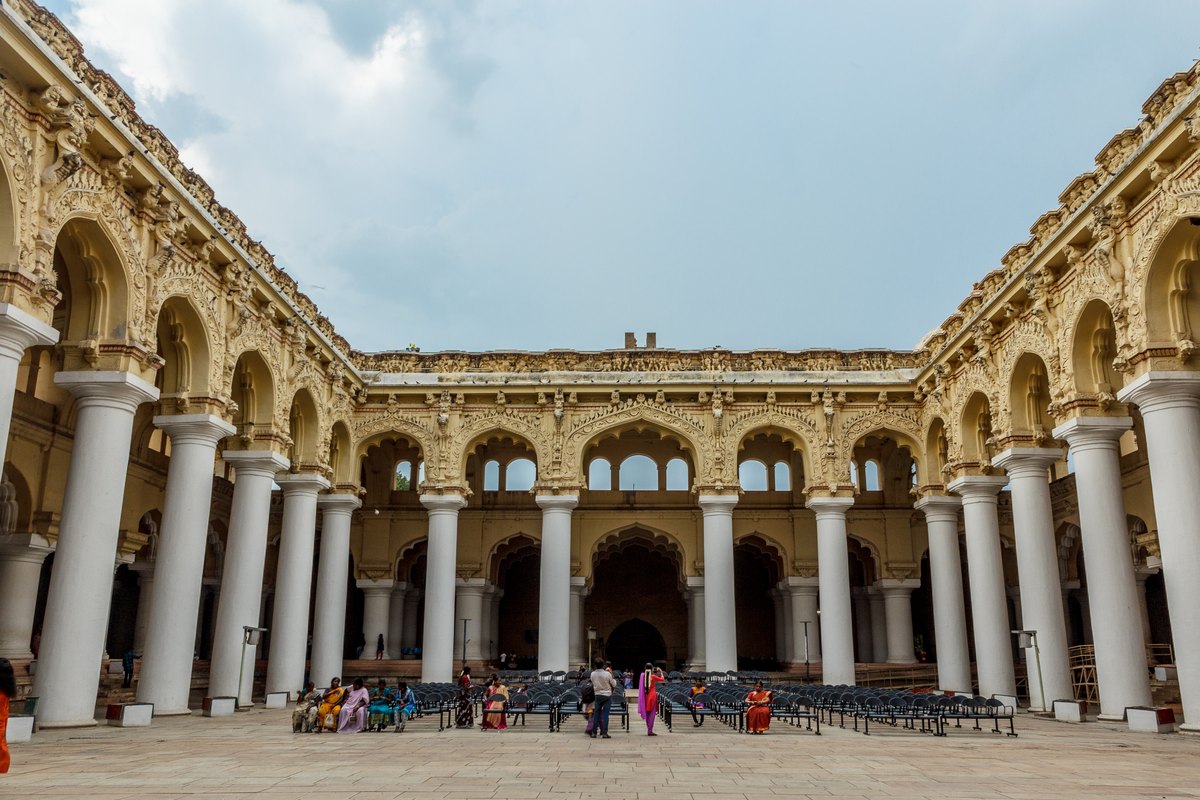
Visit the Thirumalai Nayak Palace, built in 1636 and a classic fusion of Dravidian, Islamic and European styles; the Swarga Vilasam, its audience hall, has a dome that rises 20 metres without any support. Continue to the Gandhi Memorial Museum in the Tamukkam Palace, which tells the story of the freedom movement. It was in Madurai that Gandhi first adopted the simple loincloth he wore for the rest of his life.
In the evening, return to the Meenakshi Temple to witness the evening prayer ceremony, when the image of Lord Sundareswarar is carried in procession to the shrine of his consort Meenakshi.
Overnight: MaduraiDrive: about 270 kmIncludes: guide, rickshaw ride, entrance feesPlease note: the Meenakshi Temple is closed to visitors from about 12.30 pm to 4 pm
Day 56
Madurai to Tanjore via Trichy
Photo: rock-fort-temple.jpg
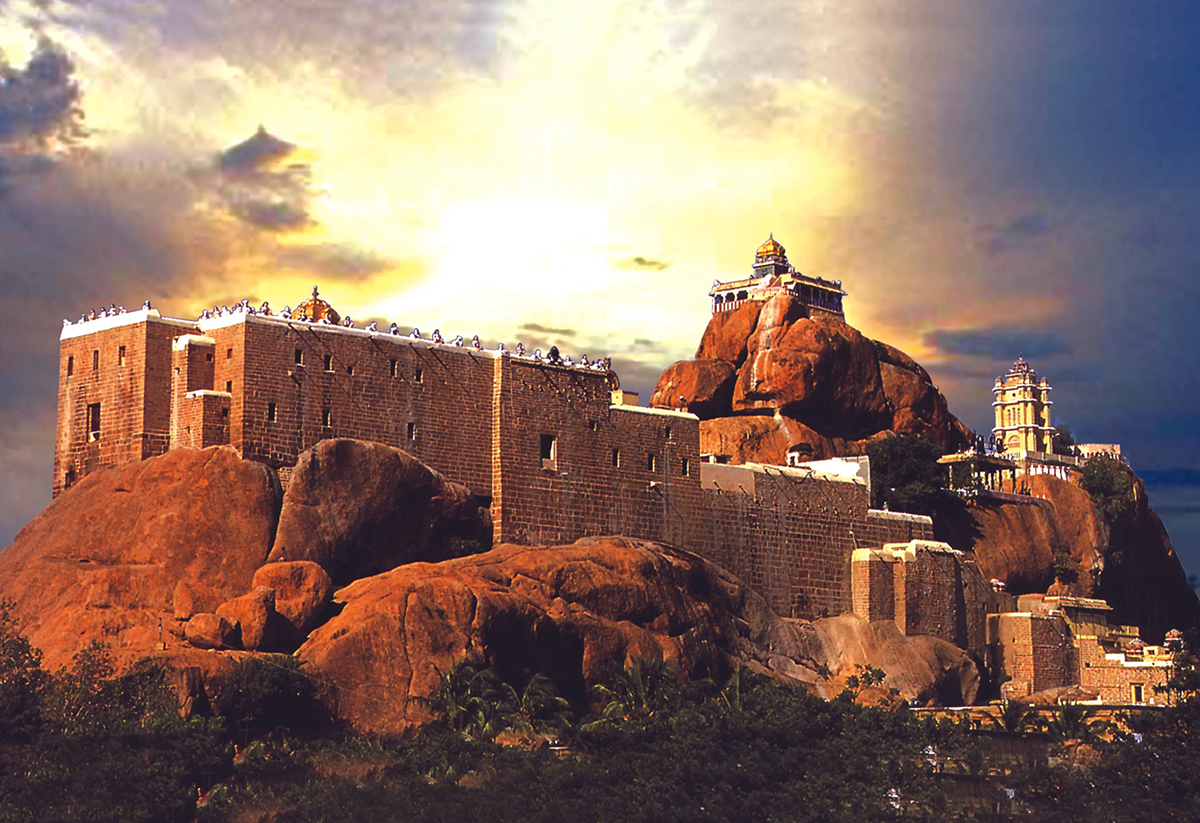
Rock Fort Temple, Trichy
Photo: srirangam-temple-trichy.jpg
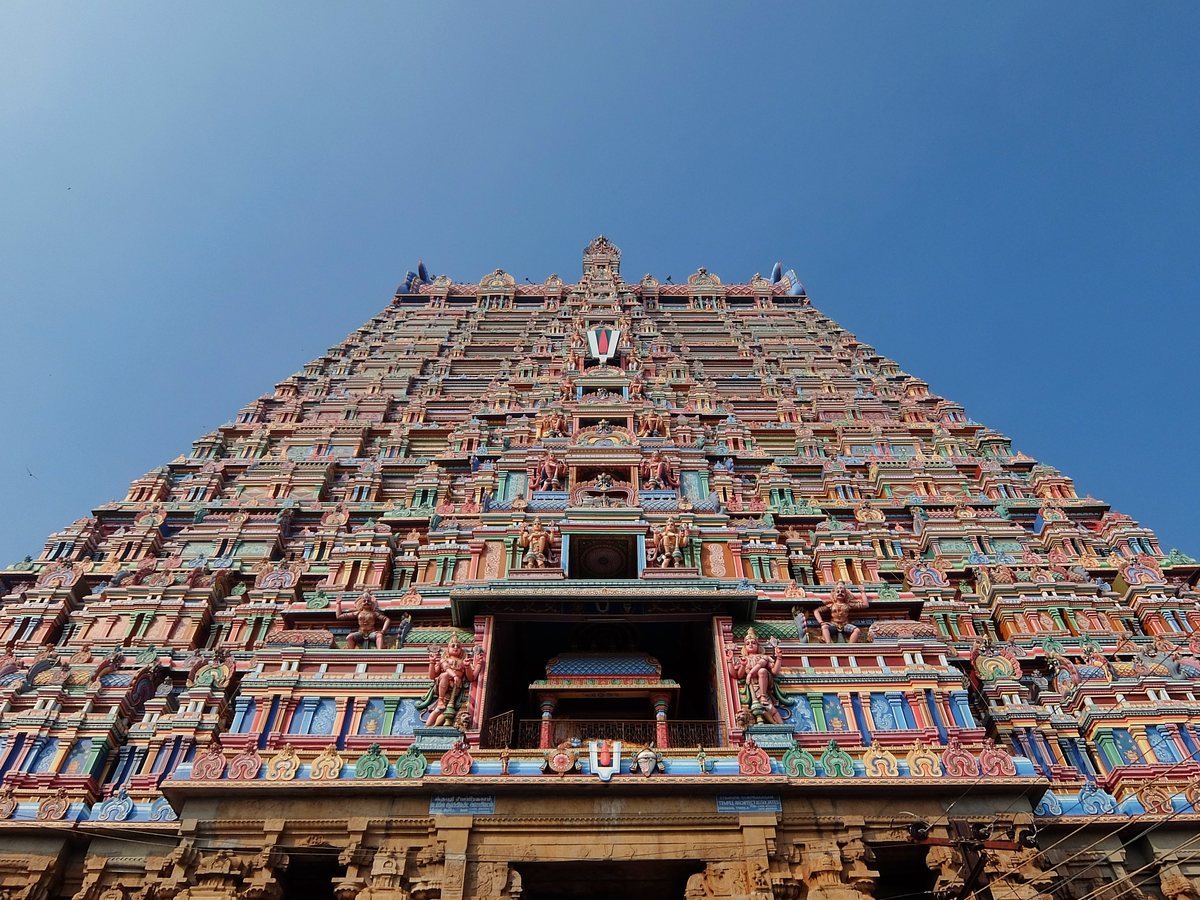
Srirangam Temple, Trichy
Photo: brihadeeswarar-temple-tanjore.jpg
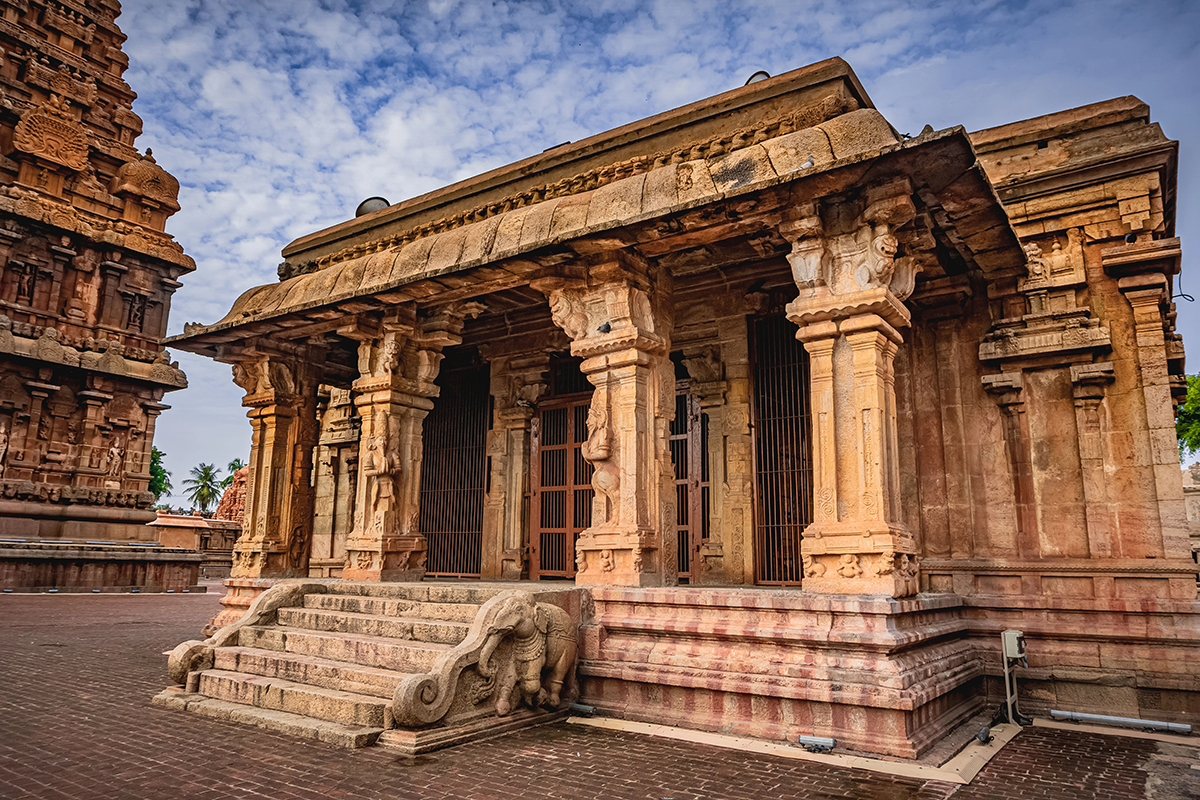
Brihadeeswarar Temple, Tanjore
After breakfast, drive to Trichy (Tiruchirappalli) (about 142 km, 3 hours) for a half-day tour. Set on the banks of the river Cauvery, the town and its fort were built by the Nayaks of Madurai. Visit the Rock Fort Temple, a spectacular monument perched on a massive rocky outcrop that rises abruptly from the plain to tower over the old city; at the very top is an ancient temple dedicated to Ganapati.
Continue to Srirangam, the foremost of the eight self-manifested shrines of Lord Vishnu and the most important of the 108 main Vishnu temples. The temple complex covers 156 acres, with seven concentric walls and 21 gopurams (towers). Entry to the innermost sanctum is for Hindus only.
Later, continue to Tanjore (Thanjavur) (about 57 km, 1 hour 15 minutes) and check in to your hotel. The centre of Tamil learning and culture, Tanjore was the royal city of the Cholas, Nayaks and Marathas, the original home of Dravidian art and architecture, and the centre of the classical dance Bharatanatyam.
In the afternoon, visit the Brihadeeswarar Temple, also known as the Big Temple, the crowning glory of Rajaraja Chola’s reign, completed in 1010 AD and a UNESCO World Heritage Site. Chola art is known for its enormous scale, intricate detailing and outstanding workmanship. The temple has a gigantic lingam about 8.7 metres high, and a huge monolithic Nandi bull guards the shrine. The tower over the sanctum is crowned by a massive dome resting on a single block of granite. Continue to the Tanjore Palace, a vast complex built partly by the Nayaks and partly by the Marathas from around 1550 AD, whose royal museum, art gallery, library, music hall and audience hall display relics of royalty such as clothes, hunting weapons and headgear.
Overnight: TanjoreDrive: about 199 kmIncludes: guide, entrance fees
Day 57
Tanjore to Chennai via Mahabalipuram
Photo: shore-temple-mahabalipuram.jpg
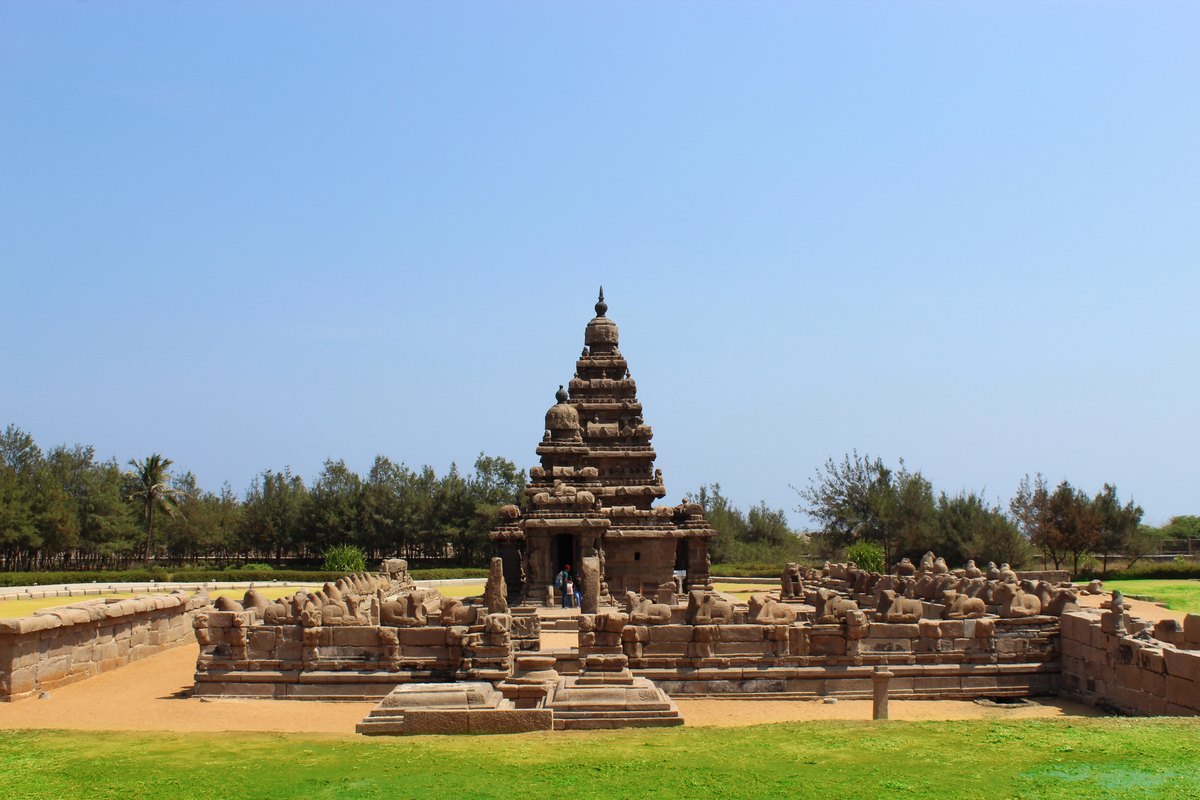
Shore Temple, Mahabalipuram
Photo: five-rathas-mahabalipuram.jpg
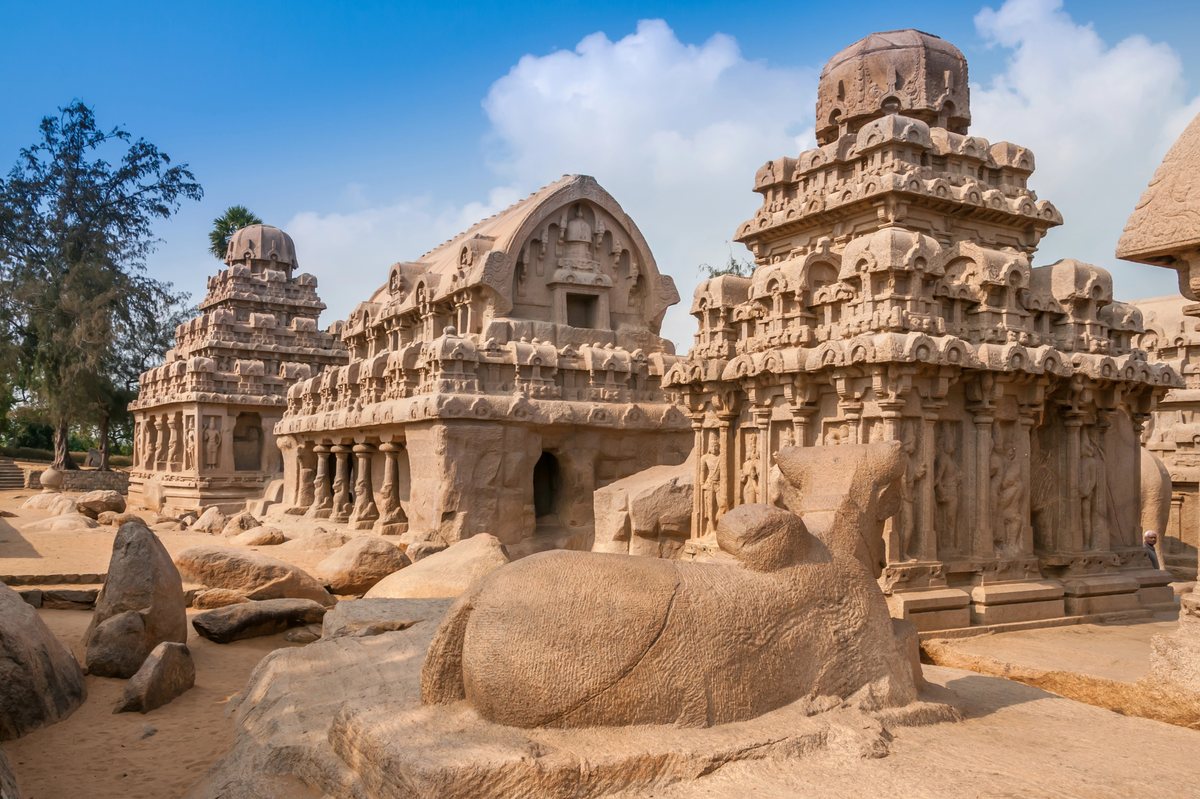
Pancha Rathas, Mahabalipuram
Photo: arjunas-penance-mahabalipuram.jpg
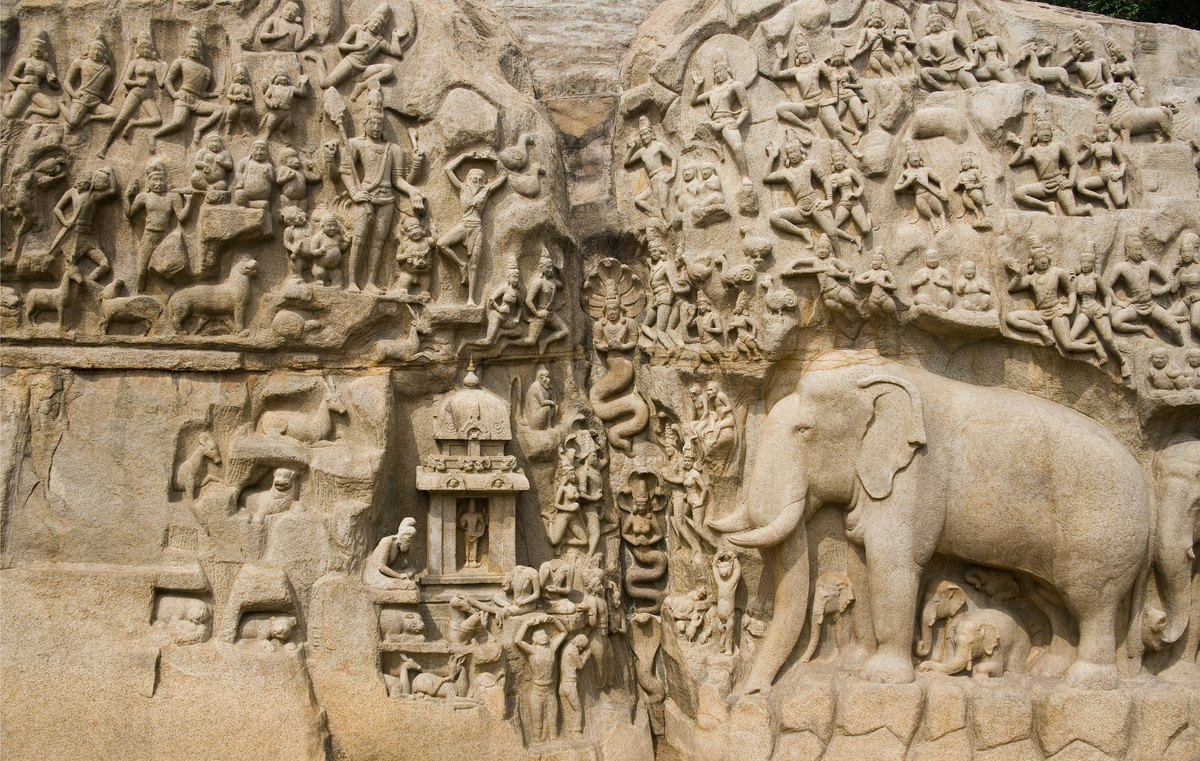
Arjuna’s Penance, Mahabalipuram
Leave early and drive north-east to Mahabalipuram (about 260 km, 5 hours).
Explore Mahabalipuram, a well-established seaport on the Coromandel Coast between the 7th and 10th centuries. Visit the Pancha Rathas, the most important of the nine monolithic rock-cut temples here, dedicated to the five Pandava brothers of the Mahabharata; the Dharmaraja Ratha, named after the eldest Pandava, is the largest. See Arjuna’s Penance, a massive rock-cut bas-relief 27 metres long and 9 metres high, and the Shore Temple, a five-storeyed structure of finely cut granite and one of the earliest structural temples in South India. The monuments of Mahabalipuram are a UNESCO World Heritage Site.
Later, continue to Chennai (about 60 km, 1 hour 15 minutes) and check in to your hotel.
Overnight: ChennaiDrive: about 320 kmIncludes: guide, entrance fees
Day 58
Chennai – city tour
Photo: kapaleeshwarar-temple-chennai.jpg
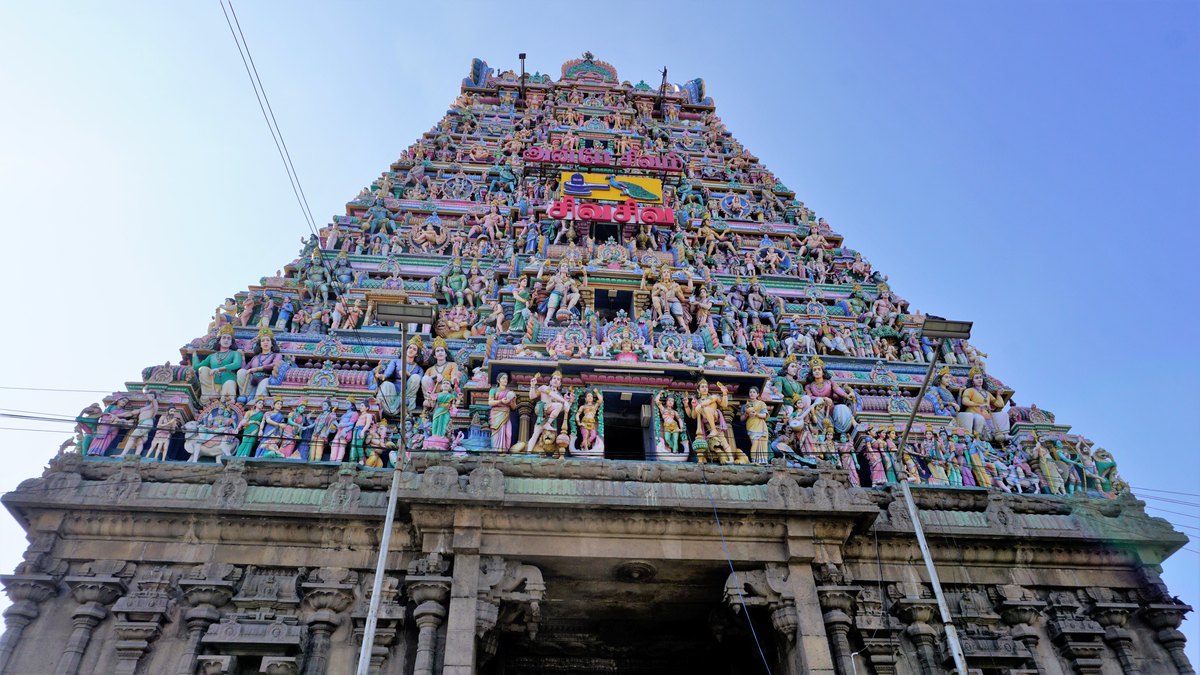
Kapaleeshwarar Temple, Chennai
Photo: san-thome-cathedral-chennai.jpg
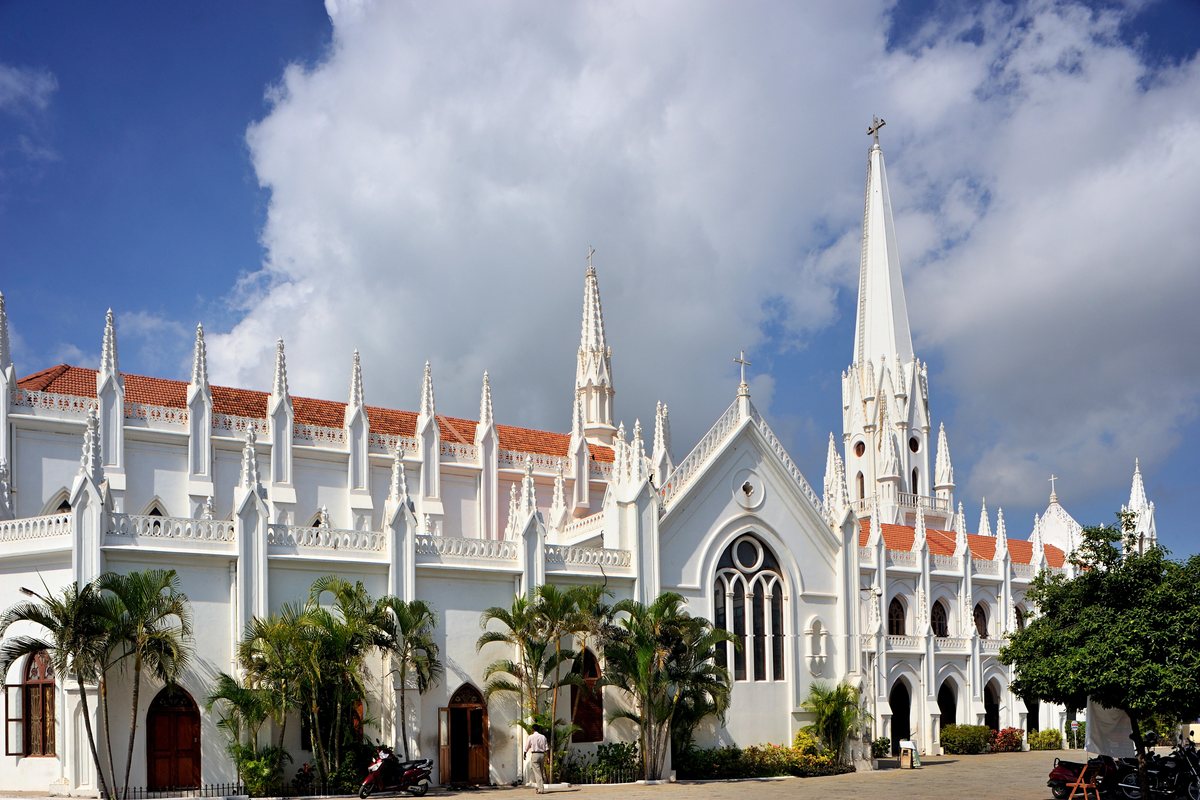
San Thome Cathedral, Chennai
Today, enjoy a tour of Chennai. Visit the Kapaleeshwarar Temple, dedicated to Lord Shiva, whose gopuram (entrance tower) rises to about 120 feet, covered with sculptures from Puranic legends; its outer courtyard is adorned with bronze images of the 63 Nayanmars (Shaivite saints). Next, visit the San Thome Cathedral, named after St Thomas the Apostle, at the southern end of Marina Beach, with a beautiful stained-glass window telling his story.
Later, visit the Sri Parthasarathy Temple, built by the Pallavas in the 8th century and the oldest temple in the city, dedicated to Lord Krishna as the charioteer of Arjuna, and end the day with a drive along Marina Beach, one of the longest urban beaches in the world, where the city comes out to stroll in the evening breeze.
Overnight: ChennaiIncludes: guide, entrance fees
Day 59
Chennai – Fort St George, and depart
Photo: fort-st-george-chennai.jpg
Fort St George, Chennai
In the morning, visit Fort St George, built in the 17th century, which houses St Mary’s Church, the oldest Anglican church in India with some of the oldest British tombstones in the country, and a museum of paintings and rare military paraphernalia such as weapons, uniforms, coins and medals.
Later, transfer to Chennai airport in time for your flight home, or onward to your next destination in India. Tour ends with happy memories!
Vehicle: car, airport transferPlease note: Fort St George is closed on Fridays; the morning visit suits an afternoon or evening flight
What's included
Package includes
Meet and assist on arrival and departure transfers at all airports
58 nights in hotels, jungle lodges and a houseboat of your chosen category, with daily breakfast
All meals in Ranthambore, Panna, Bandhavgarh, Kanha, Tadoba and Dandeli, and on the houseboat
Private air-conditioned car with driver for all transfers and sightseeing as per itinerary
English-speaking local guides for sightseeing as per itinerary
Cycle rickshaw ride in Chandni Chowk, Delhi
Camel ride at the Sam Sand Dunes, Jaisalmer
Audio guide at Ranakpur Jain Temple
Boat ride on Lake Pichola, Udaipur
Jeep safaris with naturalist: 3 in Ranthambore, 4 in Panna, 3 in Bandhavgarh, 3 in Kanha and 3 in Tadoba
Boat ride at Bhedaghat, Jabalpur
Coffee plantation tour, Chikmagalur
2 shared jeep safaris and a boat safari in Kabini
Toy train from Ooty to Coonoor and tea plantation tour
Laxmi Hill ridge walk and Lockhart tea trail, Munnar
Spice plantation visit, Kalaripayattu show, guided nature walk and boat ride on Periyar Lake, Thekkady
Houseboat cruise with an overnight stay, shikara ride and fishing village visit, Alleppey
Ferry to the Vivekananda Rock Memorial, Kanyakumari
Cycle rickshaw ride, Madurai
Entrance fees to monuments as per itinerary
All applicable taxes
Package excludes
International airfares and airport taxes
India visa fees and travel insurance
Lunches, dinners and drinks, except where mentioned
Camera and video fees at monuments and national parks
Tips to guides and drivers
Personal expenses such as laundry, telephone and shopping
Anything not mentioned under “Package includes”
Driving times are approximate and depend on road and traffic conditions. Safari permits are booked well in advance and zones are allotted by the park authorities. Itineraries can be adjusted for monument closing days, your travel dates and special interests.
A private tour, quoted individually for 1 traveller or more. Tell us your dates and preferred hotels, and we will send a detailed quote, usually within 24 hours.